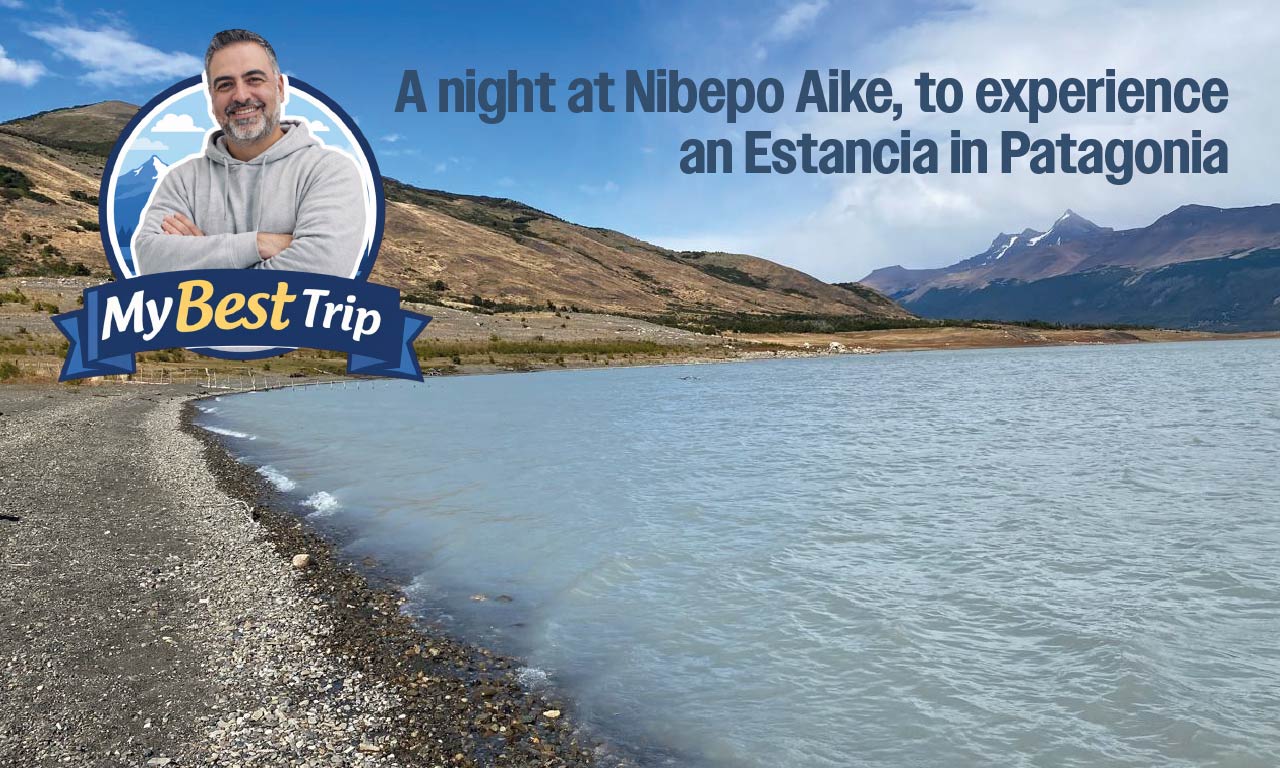
There are places in Patagonia that you simply visit… and there are others that you truly experience. Estancia Nibepo Aike, located inside Los Glaciares National Park, clearly belongs to the second category. It is not just another excursion from El Calafate; it is an experience that allows you to understand how life really unfolds in these southern lands, where the landscape is immense, the weather can change within minutes, and time seems to move at a different pace.
I left early in the morning in my rental car from my hotel in El Calafate. It was the middle of the Patagonian summer. In January, the days here feel almost endless. The sun rises before five in the morning and does not disappear until close to ten at night. This extended daylight completely transforms the experience of traveling: you feel that the day has room for everything.
I departed early, after enjoying a relaxed breakfast at the hotel. The air had that characteristic southern blend: fresh, pure, with that subtle scent of the steppe that always appears when you leave the town behind.

Estancia Nibepo Aike Tour from El Calafate
Experience rural Patagonia through hands-on traditions and local cuisine.
From Price: USD155
Estancia Nibepo Aike is located approximately 55 kilometers from El Calafate, inside Los Glaciares National Park, very close to the southern arm of Lake Argentino. Most of the drive crosses open Patagonian steppe landscapes before reaching areas where the forest begins to appear.
The first kilometers follow the provincial road heading west from El Calafate. Gradually the town fades away and the landscape opens up. The Patagonian steppe appears in its full dimension.
It is a landscape that many consider empty, but when you observe it carefully you discover that it is actually full of life. The colors change constantly: shades of yellow, ochre, muted greens, and during summer small flowers appear between the low shrubs.
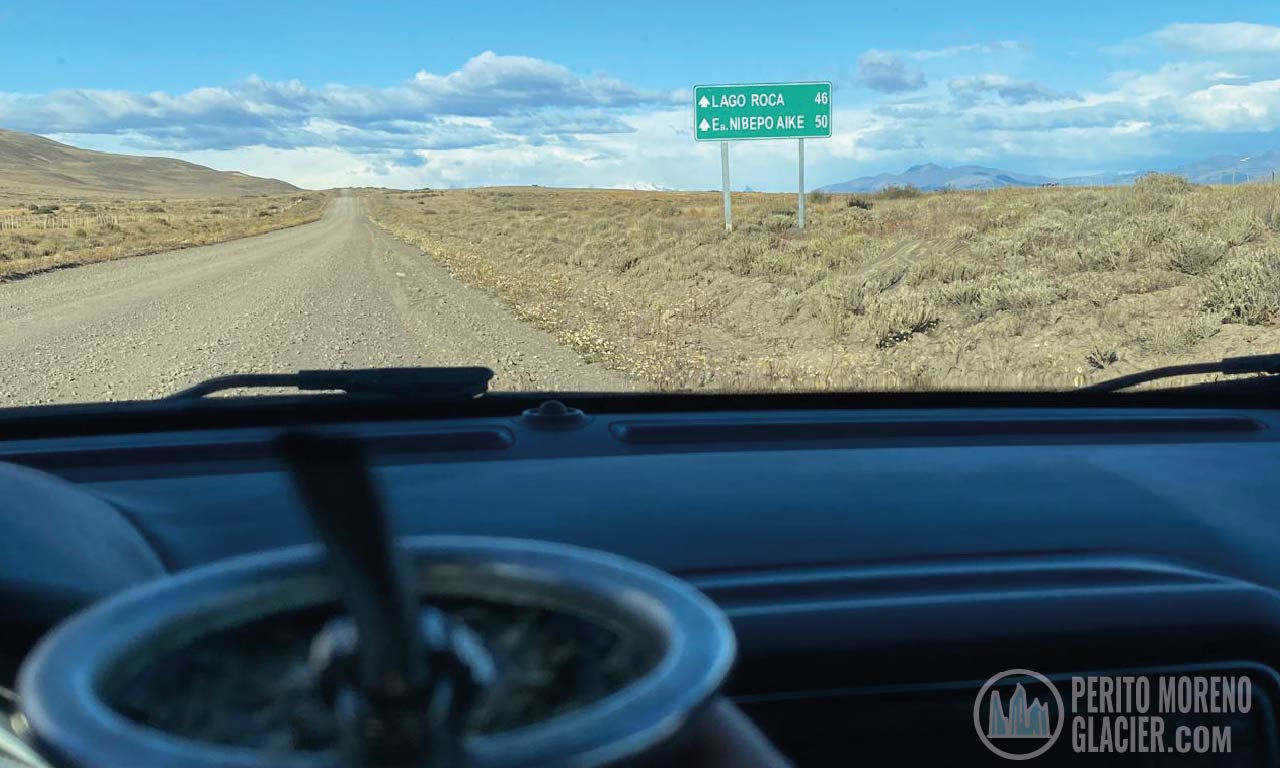
The wind, always present in Patagonia, accompanied the drive. At times it blew strongly, moving the grasslands like waves across the earth.
As I continued along the road I began to see the first animals.
A group of guanacos was grazing near the road. They lifted their heads when they heard the car and looked at me with the calm curiosity that these animals always seem to have. Guanacos are one of the great protagonists of the Patagonian steppe. They are agile, elegant, and perfectly adapted to the harsh climate of this region.
A little further ahead I spotted ñandúes, walking with their distinctive stride between the bushes. It is also common to see Patagonian foxes, condors soaring high above, and even flocks of birds gliding across the plateaus using the air currents.
After about 30 kilometers, the landscape began to change slowly. The steppe gradually gave way to areas where lenga and ñire trees began to appear — the characteristic trees of the southern Patagonian forests.
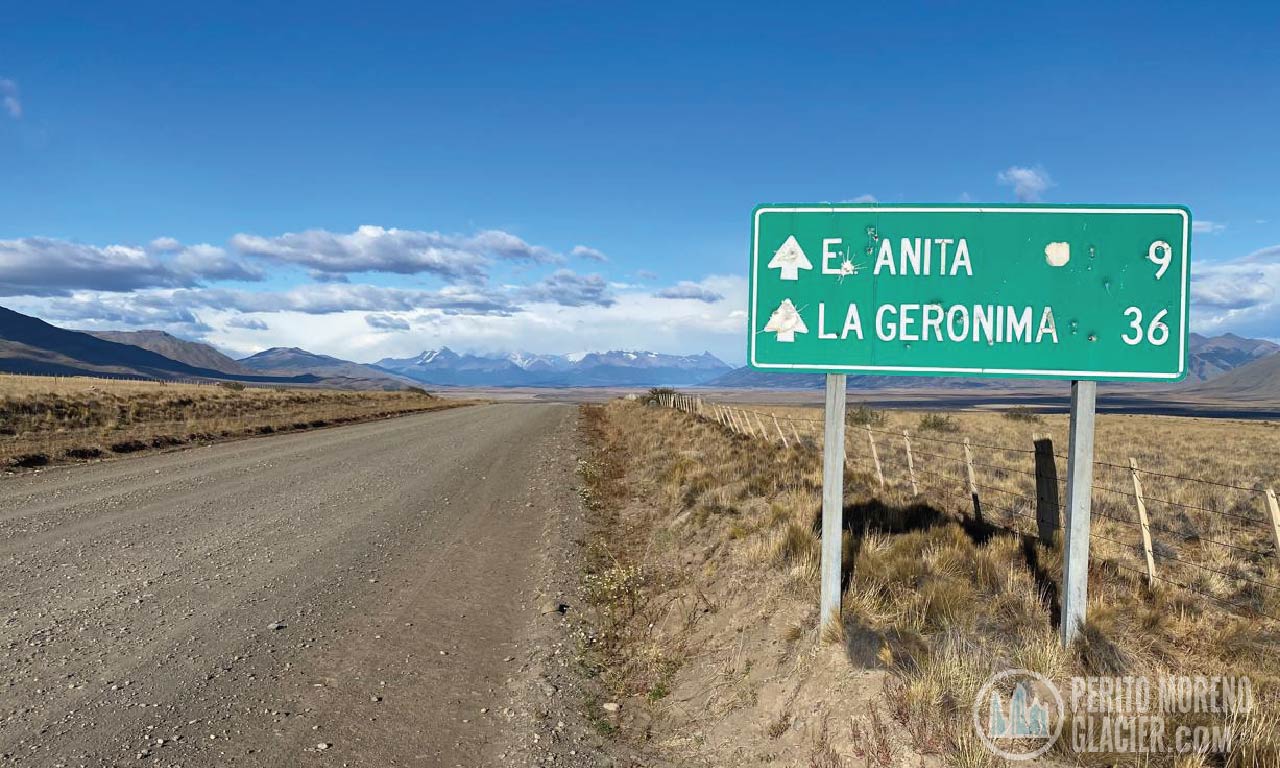
The presence of forest also indicates a shift in the region’s microclimate. Here humidity increases, thanks to the proximity of Lake Argentino and the mountains that capture precipitation.
The road becomes narrower and much more scenic. In some sections, incredible views appear toward the arms of Lake Argentino, with that intense turquoise color that seems almost unreal under the summer sunlight.
The contrast between the water, the mountains, and the forest creates one of the most beautiful landscapes in the entire El Calafate region.
The final stretch of the road is gravel, which makes the journey even more interesting. Here you truly begin to feel that you are leaving everything behind. The mountains come closer. The silence becomes deeper. And the landscape begins to feel genuinely remote.
Finally, after about an hour and a half of driving, the sign for Estancia Nibepo Aike appeared.
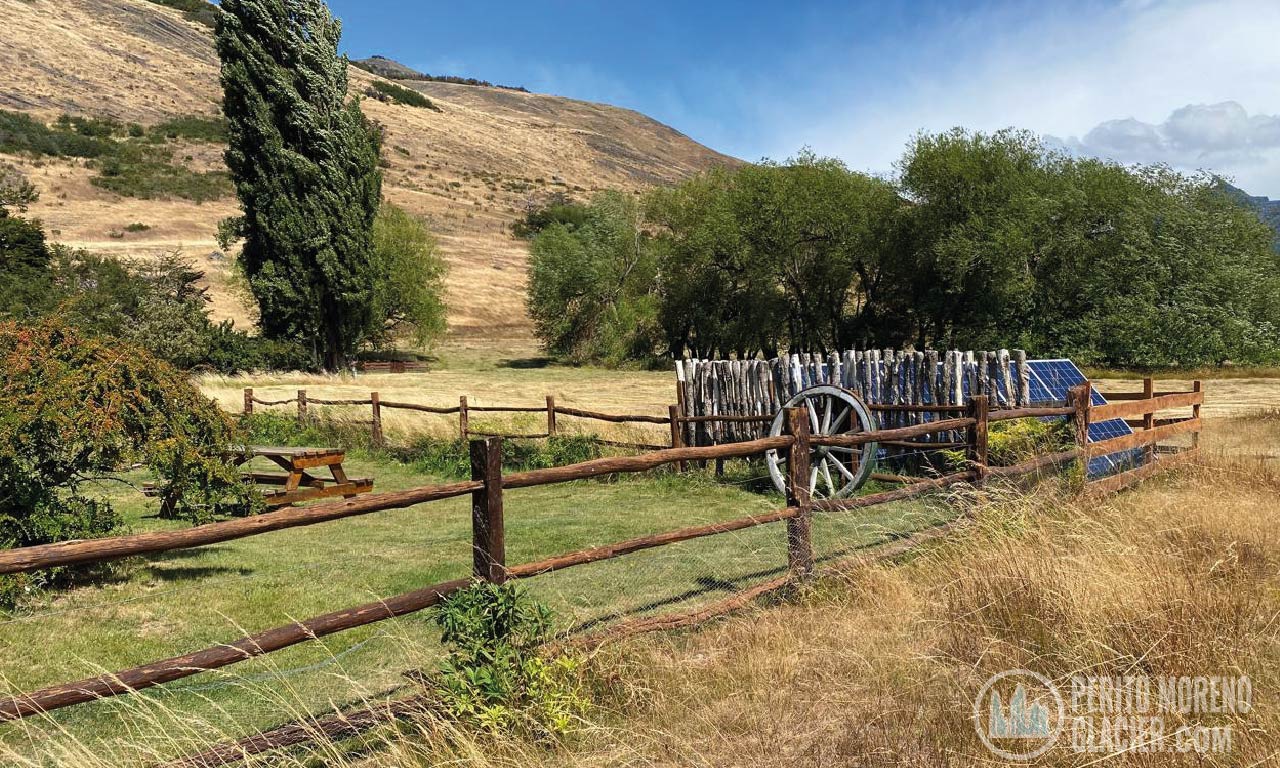
The estancia was founded in the early 20th century and is one of the few historic ranches that still operate within Los Glaciares National Park. For decades its main activity was sheep farming, an industry that played a fundamental role in the development of Patagonia.
Upon arrival, the first thing that surprised me was the tranquility of the place.
The wooden buildings, the main house of the estancia, the corrals, the sheds… everything seems to remain faithful to the original spirit of the place. You immediately feel that you have arrived somewhere where time moves differently.
Unlike many visitors who stay only a few hours, I had decided to spend the night at the estancia, and it turned out to be one of the best decisions of the trip.
Spending the night allows you to truly understand how life functions on a Patagonian ranch and to experience the magical silence and the incredible southern skies.
After settling into my room — simple, comfortable, with open views of the landscape — I went for a walk around the property. The silence was impressive. The only sounds were the wind, the occasional movement of horses in the corrals, and far away the bleating of sheep.
Sheep farming continues to be a fundamental part of life at Nibepo Aike. For more than a century, sheep were the economic engine of Patagonia. Much of the work of the Patagonian gauchos revolves around managing these animals.
That afternoon I had the opportunity to watch a sheepdog demonstration, where trained dogs guided the flock with astonishing precision. It is fascinating to observe the coordination between the dog, the gaucho, and the animals.
Then came one of the most anticipated moments: lunch.
Gastronomy in Patagonian estancias has something special. It is not simply about eating well; it is about experiencing flavors that are deeply connected to the land.
The star of the table, of course, is Patagonian lamb, slowly cooked — often over an open fire — with the delicate flavor that comes from animals raised freely on the steppe.
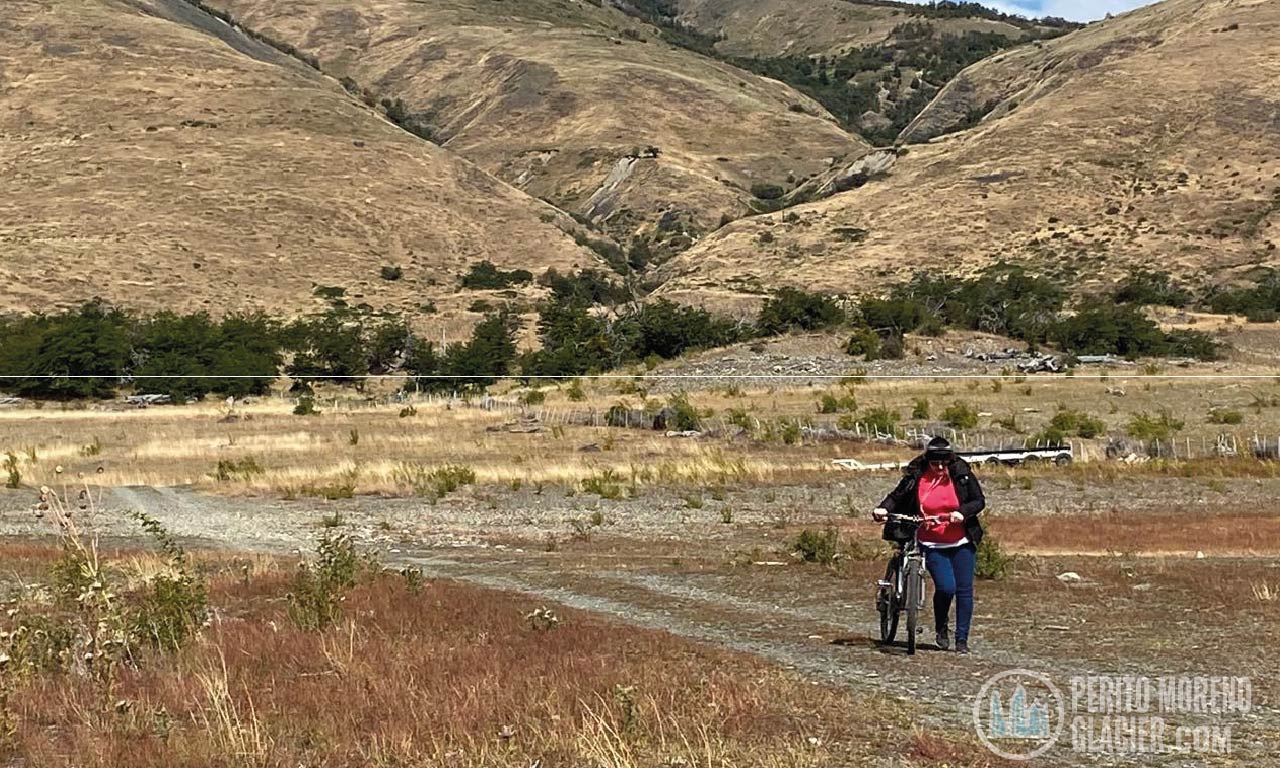
In the afternoon, I enjoyed a mountain bike ride toward the lake. It is truly an activity worth doing. The landscapes are incredible.
The weather changed constantly. One moment the sky was clear with some wind, and suddenly a storm front appeared, with dark clouds approaching the estancia.
I decided to return before the rain hit and made it back just in time. The rain was intense but brief. Soon afterward the sun appeared again.
This is one of the essential characteristics of Patagonian weather — the constant change.
Since the weather improved, I took advantage of the afternoon to enjoy a short horseback ride around the property, another fascinating experience. The landscape and surroundings are unique, and the dogs enthusiastically accompanied us along the trail.
Soon after, a light rain once again added a bit of adventure to the ride.
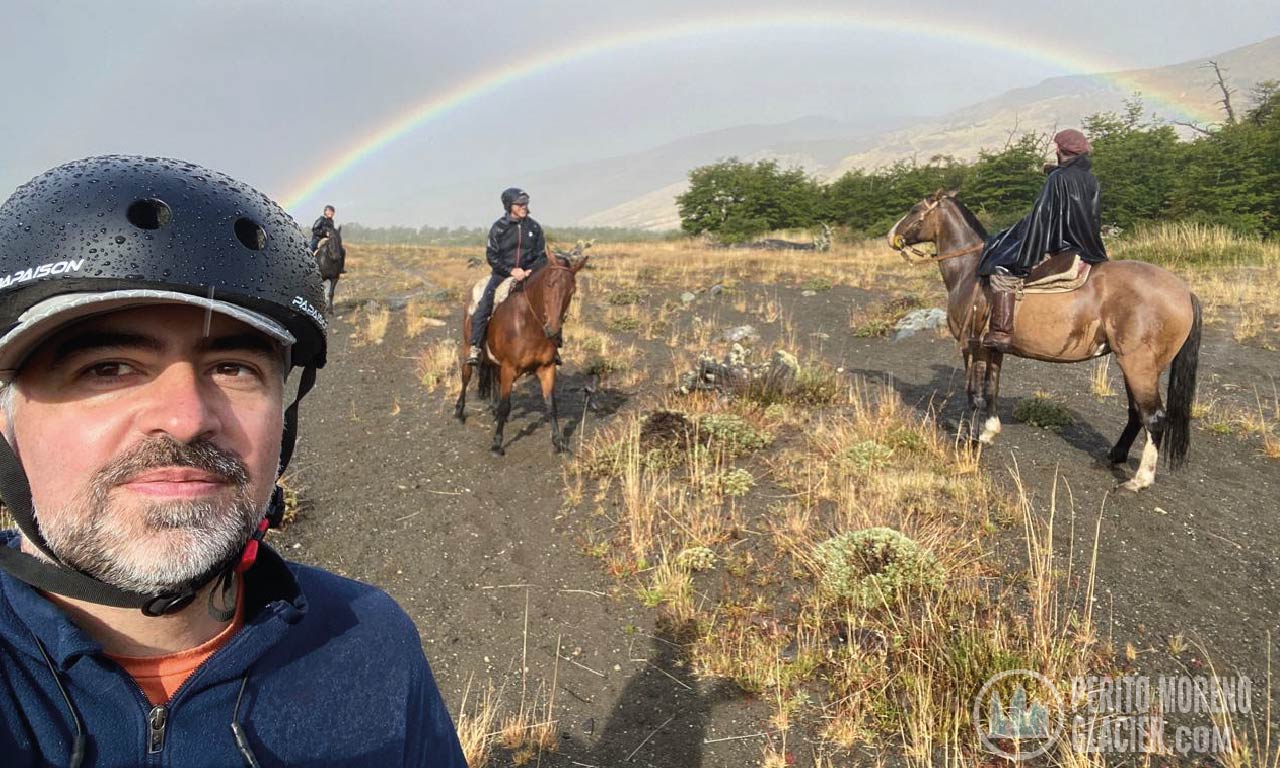
It is important to bring proper clothing because the weather here can change quickly and without warning. A good windbreaker and a waterproof jacket are essential. Even in summer the sun can be strong, so sunscreen, a hat, and sunglasses are also recommended.
Later we returned and I decided to rest for a while in one of the gardens behind the main house. I truly enjoyed the calm and the endless landscape.
Dinner was long and relaxed, accompanied by Argentine wine and conversations about life in Patagonia. The chef prepared traditional Argentine cuisine, including an exquisite pastel de papas that I enjoyed very much.
Outside, the summer light was still illuminating the landscape well into the evening.
This is something that always surprises me about Patagonia in summer: the length of the day. At ten at night, there is still light on the horizon. The sunset stretches slowly and the sky turns shades of pink, violet, and gold that seem to last forever.
That night, after dinner, I went out for a short walk as darkness finally began to arrive. The air had become colder.
In Patagonia, the weather can change quickly. I had already mentioned that, right?
A sunny day can easily turn into a windy night or even a sudden storm — exactly what had happened earlier that day, more than once.
But the night was calm, and the stars slowly appeared in the southern sky.
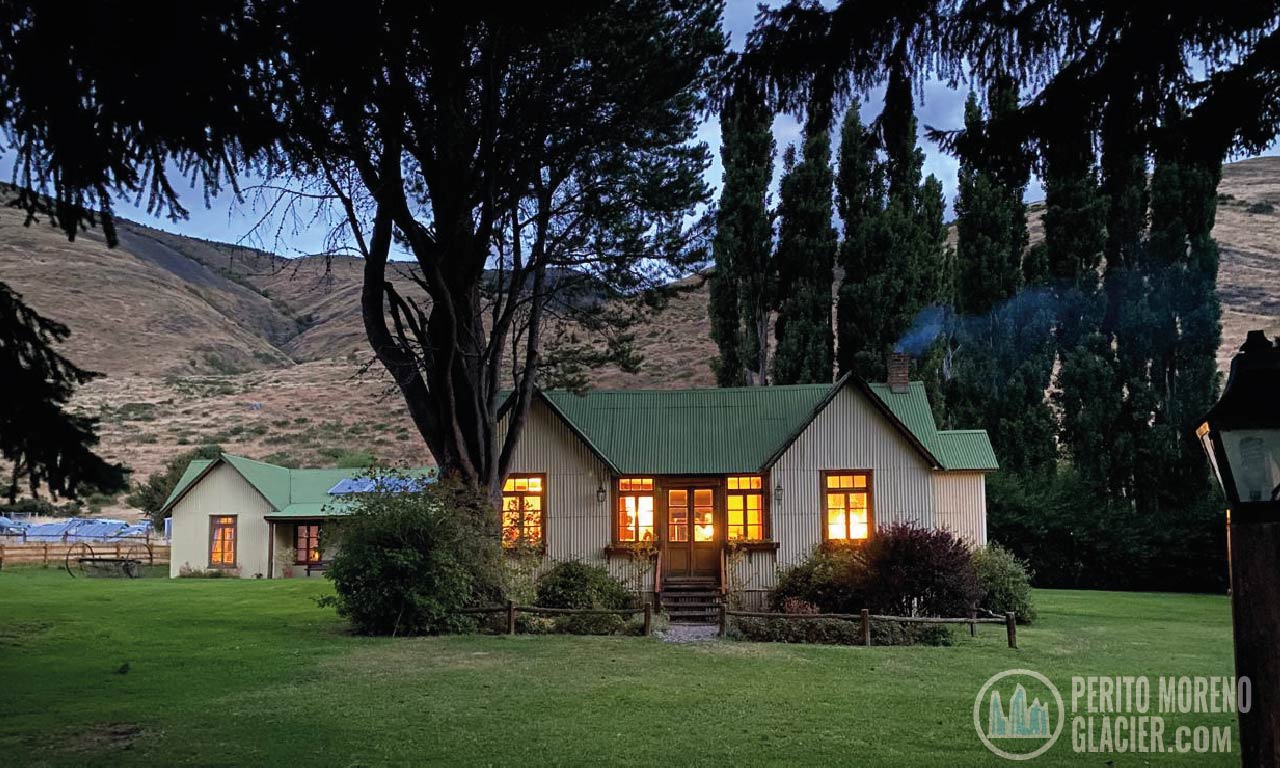
The main house of the estancia is more than one hundred years old, as the property was founded around 1909, during the period when sheep ranching expanded across Patagonia.
The house preserves its original architecture, with solid walls, wooden ceilings, and large windows overlooking the southern arm of Lake Argentino and the Patagonian steppe.
My bed was waiting for me after a long and unforgettable day. The rooms are simple but very cozy, decorated with wooden furniture, Patagonian textiles, and rural details that reflect the history of the estancia. Each room has a private bathroom, heating, comfortable beds, and large windows that allow guests to enjoy the open landscapes surrounding the ranch. It is not a luxury hotel, but rather a place with strong historical character and a warm family atmosphere, where the charm lies in its authenticity.
In the common areas of the main house there is a living room with a fireplace, a small library, and the dining room, spaces that are perfect for relaxing after the day’s activities. This is where the estancia serves its homemade meals, often featuring Patagonian lamb cooked over an open fire, one of the house specialties. I went to bed thinking about everything I had experienced. I understood something that is often lost in fast-paced travel. Patagonia is not truly enjoyed when you rush from place to place. Patagonia is enjoyed when you stay. Stay in Patagonia as long as you can. Spend the night in estancias and simply enjoy the silence and the landscape. Believe me — it is a highlight. When you hear the silence. When you watch the changing light. When you feel the wind arriving from the glaciers. Spending a night at Nibepo Aike allows exactly that.
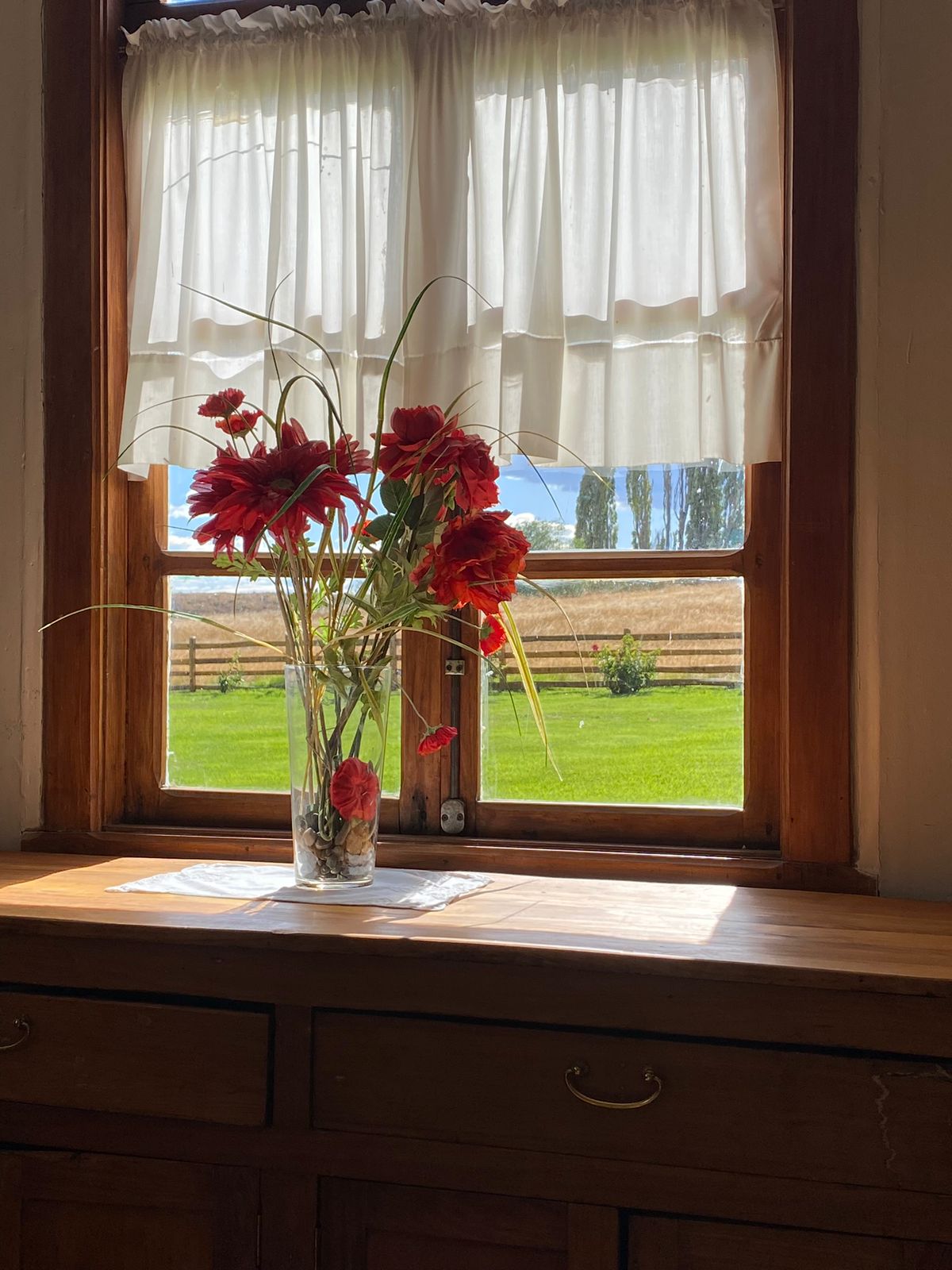
The next morning, when I woke up early and looked out the window, the landscape felt even more immense. The mountains of the national park stretched toward the horizon, Lake Argentino shimmered in the distance, and the sheep had already begun their daily routine. It was a reminder of how remote this place truly is. And how special it is to experience, even if only for one night, the true life of a Patagonian estancia. My time there had come to an end, but as I drove back to El Calafate I had one clear thought: I will come back.
Estancia Nibepo Aike Tour from El Calafate
Experience rural Patagonia through hands-on traditions and local cuisine.
From Price: USD155
Did you enjoy my story? Contact me and I will help you plan your trip to Patagonia!
info@ripioturismo.com