Learn how glaciers work, why they crack, and what really happens when ice falls into the water.
Visiting a glacier like the Perito Moreno Glacier is one of the most impressive natural experiences in Patagonia. Towering ice walls, deep blue colors, loud cracking sounds, and massive ice collapses raise many questions for travelers.
This guide explains glaciology in simple terms, helping visitors understand what they are seeing — no scientific background required.
What Is a Glacier? (In Simple Terms)
A glacier is a slow-moving river of ice, not just frozen water.
Glaciers form when:
-
Snow falls year after year
-
The weight of new snow compresses older layers
-
Over time, the snow turns into solid ice
Because of gravity, glaciers flow downhill, even though they appear frozen and still.
Complete Tour to Perito Moreno Glacier: Boat Navigation & Lunch
Enjoy a Perito Moreno Glacier tour from el Calafate in a full day, with lunch and boat navigation included
Why Is Glacial Ice Blue?
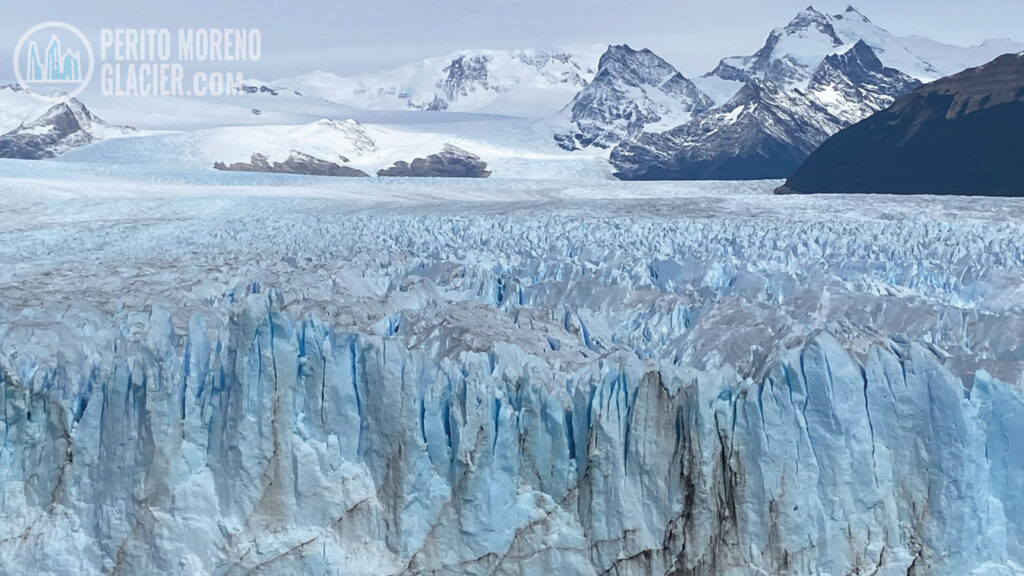
One of the most striking features of glaciers is their intense blue color.
This happens because:
-
Glacier ice is extremely dense
-
It absorbs most colors of sunlight
-
Blue light is reflected back
The deeper and older the ice, the stronger the blue color. Freshly broken ice often looks bright turquoise or deep blue.
Why Do Glaciers Make Loud Cracking Sounds?
Many visitors are surprised by the noises they hear near a glacier — cracks, creaks, and loud bangs.
These sounds occur because:
-
The glacier is constantly moving
-
Ice stretches, compresses, and fractures
-
Temperature changes cause the ice to expand and contract
Think of a glacier as a very slow, frozen system under pressure.

El Calafate Standard Pass
This pass will save you money and organize your trip. A basic package of services for visiting El Calafate and Perito Moreno in 2, 3, or 4 days!
Why Do Glaciers Have Cracks and Crevasses?
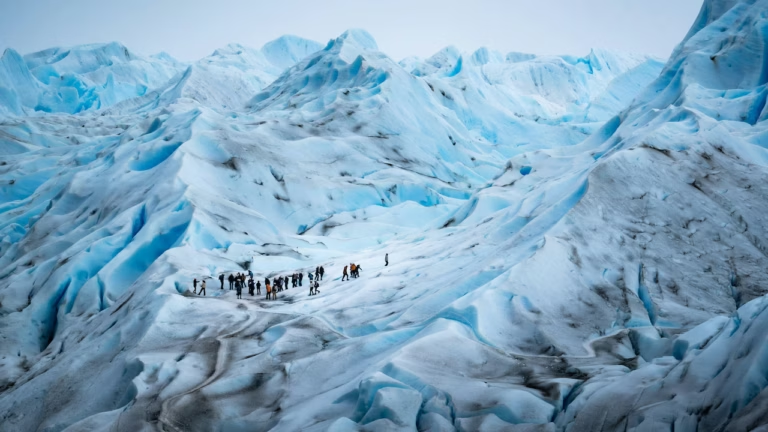
Crevasses are deep cracks on the glacier’s surface.
They form when:
-
Ice moves over uneven or steep terrain
-
The glacier flows at different speeds
-
Warmer temperatures weaken surface ice
Some crevasses are shallow, while others can be tens of meters deep.
What Happens When You See an Ice Calving Event?
One of the highlights of visiting Perito Moreno Glacier is witnessing ice calving — when large blocks of ice break off the glacier and fall into the lake.
Calving happens because:
-
The glacier flows forward into the water
-
The front edge becomes unstable
-
Gravity pulls the ice downward
Calving is:
-
Natural
-
Continuous
-
A normal part of glacier behavior
Does Ice Calving Mean the Glacier Is Melting?
Not necessarily.
There is an important difference between:
-
Melting → ice turns into water due to temperature
-
Calving → solid ice breaks off due to movement and gravity
A glacier can calve ice regularly and still remain relatively stable over time.
Scientists evaluate glacier health by measuring long-term ice gain versus ice loss.

La Leona Petrified Forest Tour from El Calafate
Enjoy this full-day excursion at La Leona Petrified Forest from El Calafate, Argentina.
Why Are Some Ice Collapses So Loud and Powerful?
When ice falls into the water:
-
A massive volume is displaced instantly
-
Air trapped inside the ice escapes
-
Waves and loud sounds are created
That’s why calving events often feel dramatic and explosive — sometimes creating visible waves in the lake.
How Fast Do Glaciers Move?
Glaciers move at different speeds depending on:
-
Ice thickness
-
Terrain slope
-
Temperature
-
Water beneath the ice
The Perito Moreno Glacier can move:
-
Up to 2 meters (6 feet) per day in certain sections
That is extremely fast for ice.

El Calafate Half Day Tour & Visit to the Walichu Caves
Walk through history in El Calafate with a tour of ancient caves and historic town sites.
Why Are Glaciers Important?
Glaciers are more than tourist attractions. They are:
-
Natural freshwater reservoirs
-
Key climate indicators
-
Essential for local ecosystems
Changes in glaciers help scientists understand:
-
Climate trends
-
Temperature increases
-
Long-term environmental changes
What Travelers Should Remember
When you visit a glacier, you are witnessing:
-
A living, moving natural system
-
Thousands of years of ice formation
-
One of the most powerful landscapes on Earth
Understanding basic glaciology transforms a beautiful view into a meaningful and educational experience.
Tips for Visiting a Glacier
-
Take your time at viewing platforms
-
Listen to the sounds of the ice
-
Watch the cracks, colors, and movements
Every sound and movement is part of a natural process that has been happening for thousands of years.