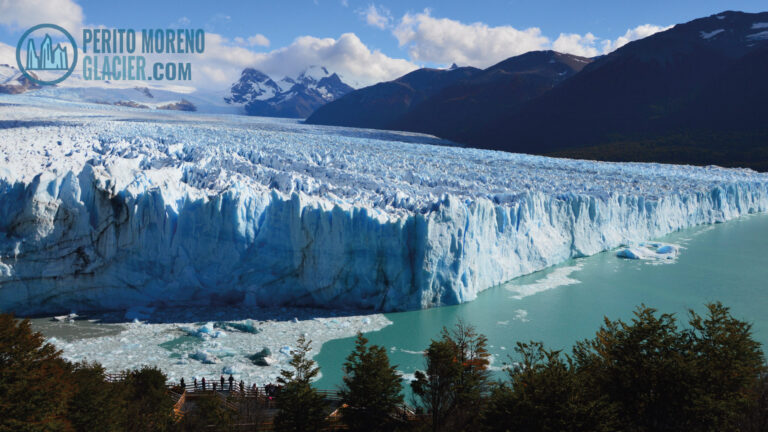
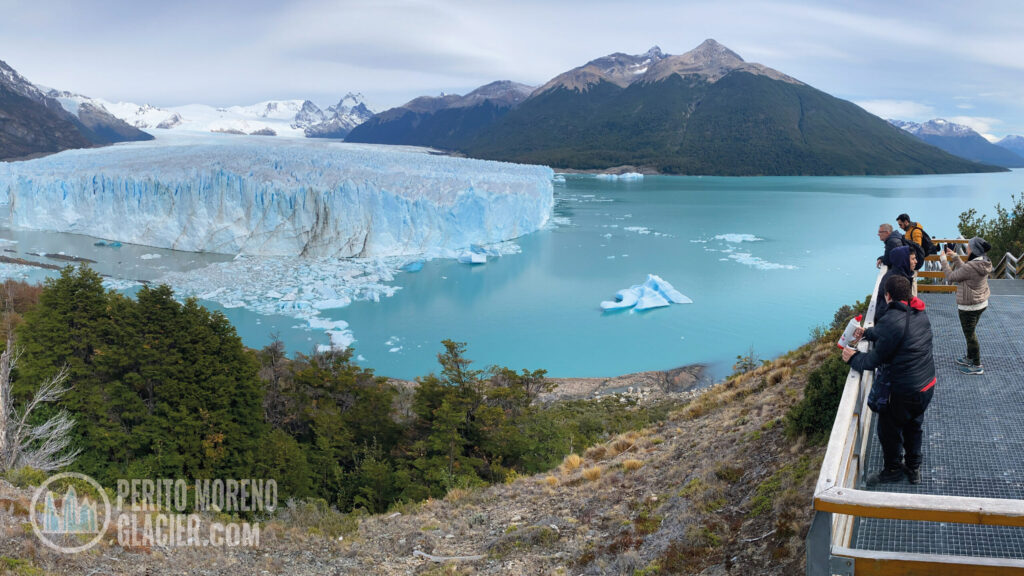
Undoubtedly, the Perito Moreno Glacier in Argentine Patagonia is one of the region’s greatest attractions, and it will surely be on your list. Perhaps you also want to learn about its history, how it was explored, and when it was first documented. Imagine arriving for the first time at this remote corner of the planet and discovering such an immense expanse of ice. It must have been a fascinating experience. Let’s take a brief look at the history of the Perito Moreno Glacier.
A bit of history, the discovery of the Perito Moreno Glacier
Throughout the second half of the 19th century, several exploratory expeditions navigated the Santa Cruz River and the lakes of the Andean foothills. These journeys gradually revealed the geography that today we know as Los Glaciares National Park.
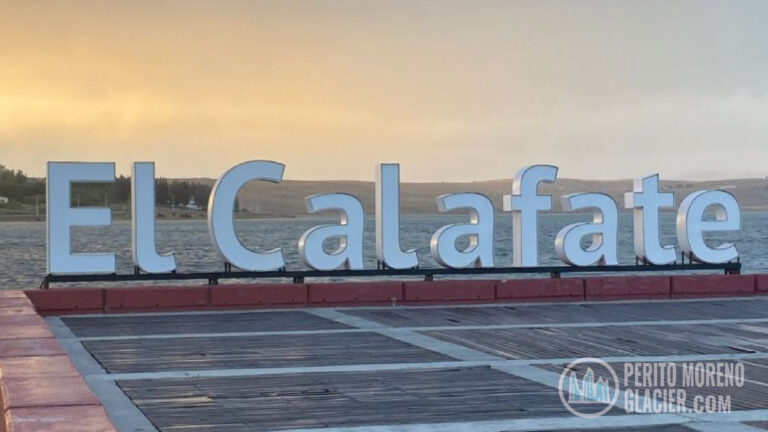
- October 1867. A land expedition organized and financed by Capt. Luis Piedra Buena set out to explore the headwaters of the Santa Cruz River. Guillermo Gardiner and companions followed the south bank, taking 33 days outbound and 16 on the return. They crossed the Bote River, passed near today’s El Calafate, noted a stream descending from the hills, and sighted Isla Solitaria. They continued past Chorrillo Malo to Lago Roca, surveyed part of the area, and considered a possible passage to the Pacific. Their work paved the way for later expeditions, identifying water sources, pastures, timber, and game.
- November 1873. Second Lieutenant Valentín Feilberg was tasked with exploring the upper Santa Cruz. He and his crew traveled in hammocks and completed the journey in 22 days. Due to incorrect information, they believed they had reached Lake Viedma. They raised the Argentine flag and left a bottle with a document as proof of their feat.
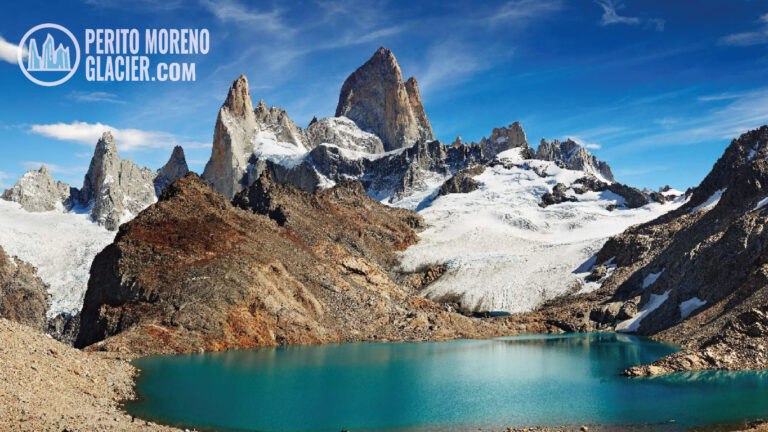
- 1876–1877. Carlos Moyano and Francisco P. Moreno made the first exploratory trip from Isla Pavón, navigating the Santa Cruz River. On February 15, 1877, Moreno named the lake that feeds the river Lago Argentino. Continuing north via the La Leona River to Lake Viedma, they reached the Chalía River, San Martín Lake, and Tar Lake. They named Punta Bandera at the division of the North and South Arms and deposited the national flag there. They also named Mounts Frías, Buenos Aires, Moyano, Stokes, Fitz Roy, and Punta Avellaneda.
- 1879. The glacier was first recorded by Juan Tomás Rogers, an English captain in the Chilean Navy, who named it after Francisco Gormaz, Director of the Chilean Hydrographic Office. Later, Hauthal of the Argentine Boundary Commission referred to it as Bismark, in honor of the Prussian chancellor.
- 1887–1892. Agustín del Castillo reached Lago Argentino and the Paine area. In 1892, French scientist Alcides Mercerat crossed from the Santa Cruz River to Lago Argentino and the Cordillera del Paine, conducting geological observations and collecting archaeological material.
- 1895–1901. Engineer Carlos V. Burmeister, involved in public land surveys and collections for the Buenos Aires Museum of Natural Sciences, traveled through Lakes Argentino, Viedma, and San Martín. In 1901, he surveyed the southern Santa Cruz region extensively, covering roughly 800 leagues.
- 1899. Lieutenant Iglesias, conducting studies for the Argentine Hydrographic Institute, officially named the glacier Perito Moreno in honor of Francisco P. Moreno.

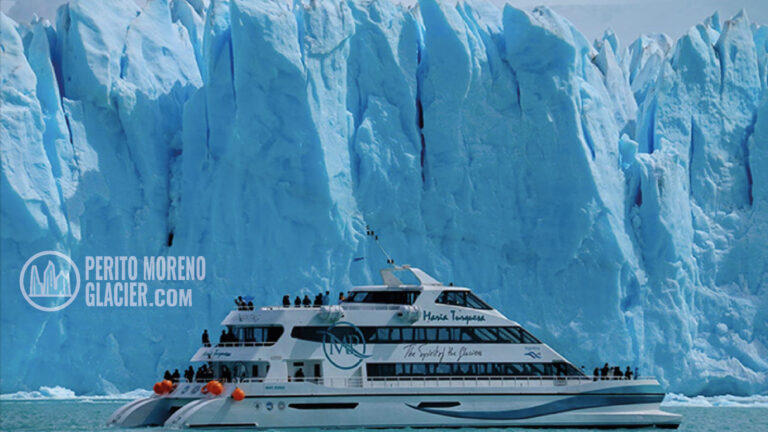
Today, Los Glaciares National Park protects approximately 600,000 hectares. Forty-seven glaciers descend from the Southern Patagonian Ice Field, among them Marconi, Viedma, Moyano, Upsala, Agassiz, Bolado, Onelli, Peineta, Spegazzini, Mayo, Ameghino, Moreno, and Frías. Perito Moreno stands out for its accessibility, its frequent ice calving events, and the network of balconies and trails that allow visitors to appreciate it safely from multiple viewpoints.
Book an excursion and visit the amazing Perito Moreno Glacier in Patagonia

Big Ice Trekking on Perito Moreno Glacier From El Calafate
Join our Big Ice Trekking Tour on Perito Moreno Glacier. Explore ice formations & rugged beauty. Book now for an unforgettable experience.