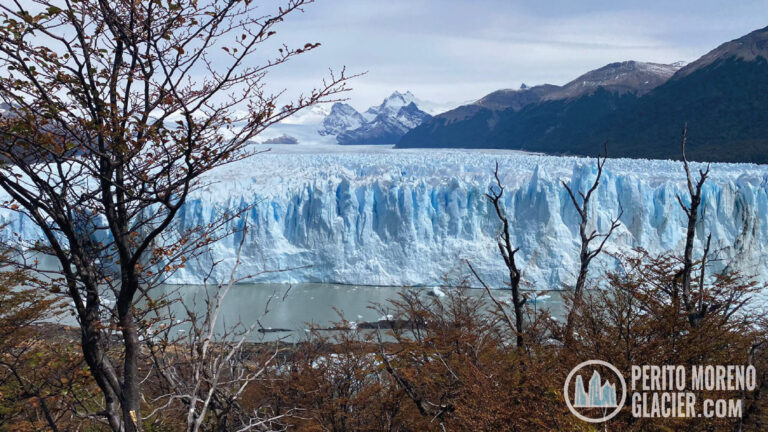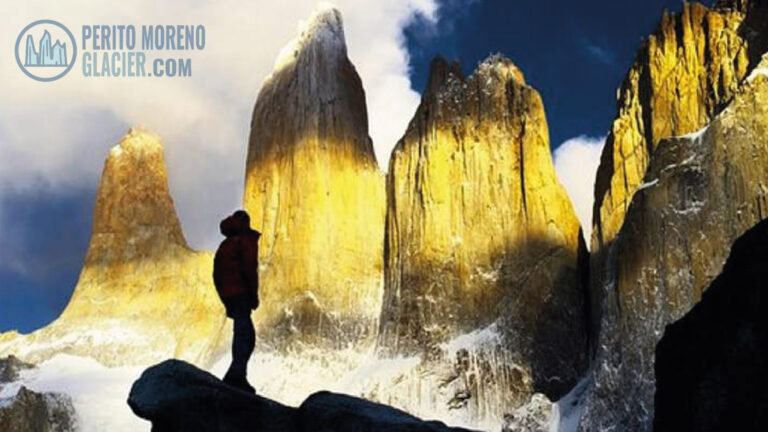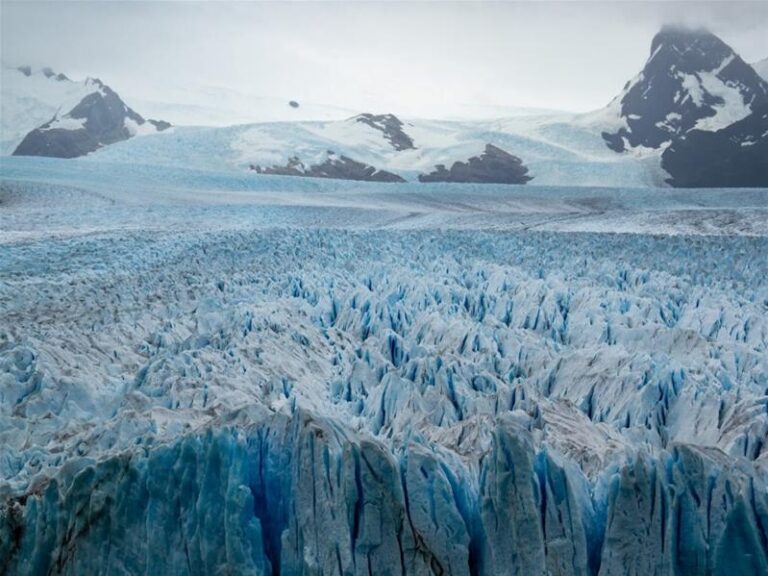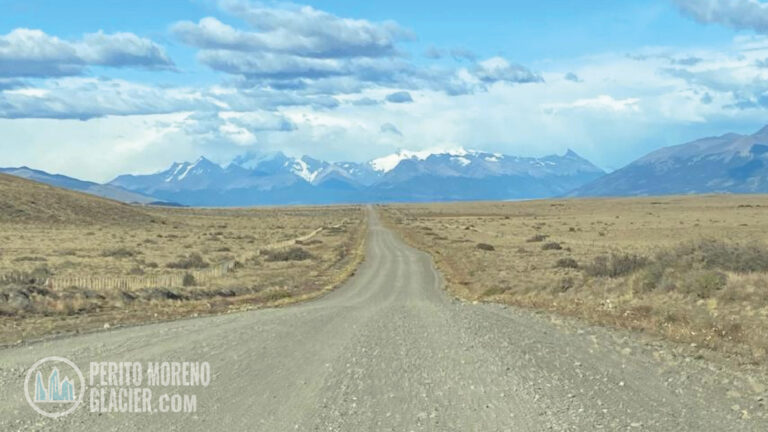
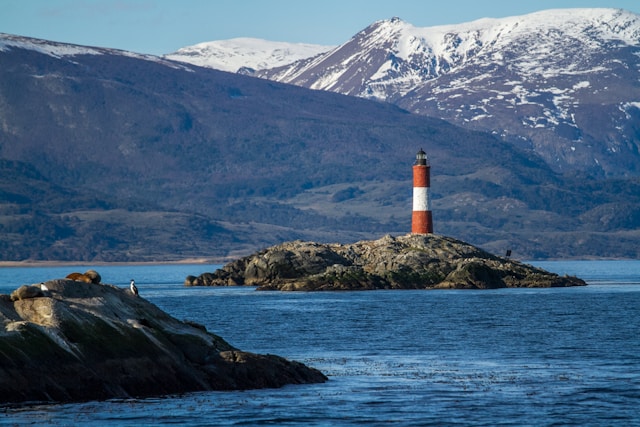
Ushuaia and El Calafate are two essential stops on almost every trip through southern Patagonia. Ushuaia offers the Beagle Channel, subantarctic forests and Tierra del Fuego National Park, while El Calafate is the main gateway to Perito Moreno Glacier and Los Glaciares National Park.
Although both destinations are located in southern Argentina, traveling between them by land requires entering Chile, crossing the Strait of Magellan and completing several border formalities. For this reason, a direct flight is usually the fastest and most convenient option.
In this guide, we explain how to get from Ushuaia to El Calafate by plane, bus, rental car or private transfer, including approximate travel times, border requirements and practical advice.
Ushuaia to El Calafate: Distance and Travel Time
The approximate distance between Ushuaia and El Calafate is:
- By air: approximately 565 kilometers
- By road: approximately 850–900 kilometers
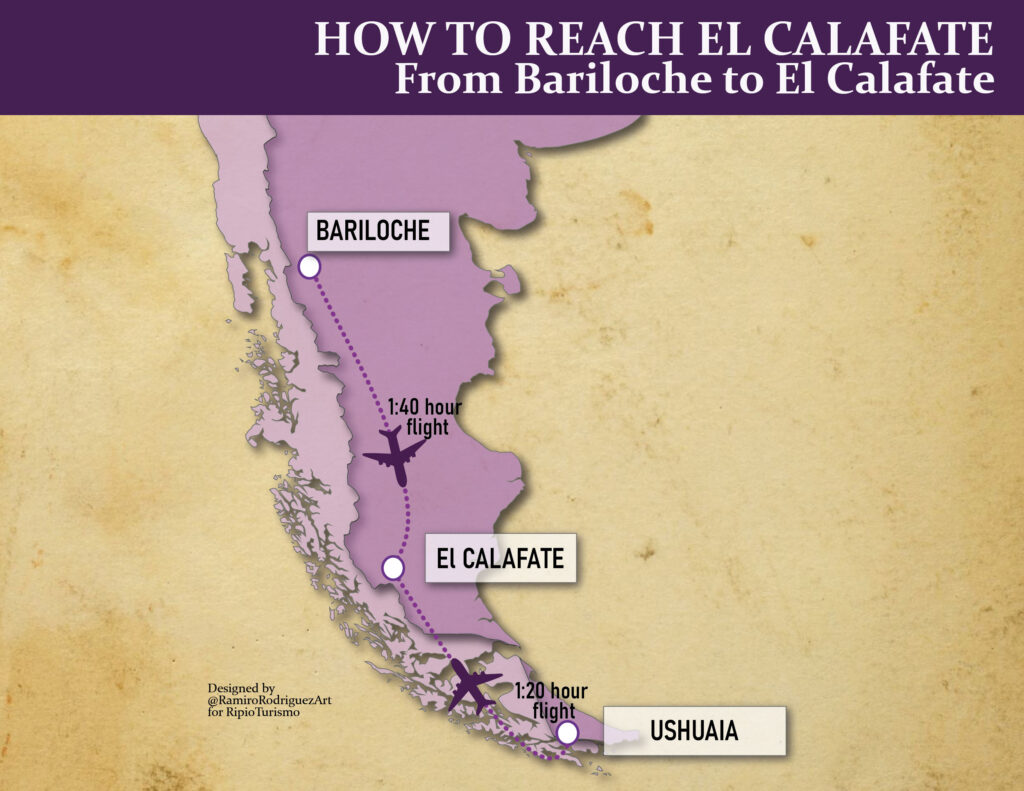
- Direct flight time: around 1 hour 20 minutes
- Overland travel time: normally 15–18 hours
- Bus journey: usually 17–22 hours, depending on connections
- Recommended driving time: two days
Overland times can vary considerably because every road journey involves two international border crossings and a ferry across the Strait of Magellan.
What Is the Best Way to Get from Ushuaia to El Calafate?
For most travelers, the best option is a direct flight. It transforms a complicated full-day or two-day overland journey into a short domestic flight.
The principal alternatives are:
- Direct flight from Ushuaia to El Calafate
- Connecting flight through Buenos Aires
- Bus journey via Río Gallegos
- Self-drive journey through Chile
- Private transfer with border crossings
Your choice should depend on flight availability, budget, available time and whether you want the overland journey to become part of your Patagonia experience.
Flying from Ushuaia to El Calafate
Direct Flights
Direct flights operate between:
- Ushuaia International Airport — USH
- El Calafate International Airport — FTE
The flight usually takes approximately 1 hour 20 minutes. Argentina’s official tourism website describes the direct connection as taking around 1 hour 25 minutes and identifies Aerolíneas Argentinas as an operator on this route.
This is by far the easiest way to combine the two destinations. You remain entirely within Argentina and avoid:
- Entering Chile
- Two sets of border procedures
- The Strait of Magellan ferry
- A long journey through remote areas
- Possible road and weather delays
Argentinian & Chilean Patagonia: Ushuaia, El Calafate, El Chalten and Puerto Natales
Enjoy visiting Ushuaia and the end of the world... El Calafate and Perito Moreno Glacier... El Chalten and the Fitz Roy Mount and Puerto Natales and Torres del Paine National Park!
Do Direct Flights Operate Every Day?
Flight frequency varies according to the season and demand. Services are usually easier to find during the main Patagonian travel period, from October through March, but travelers should not assume that a convenient direct flight operates every day.
Schedules can also change from year to year. Before confirming your hotels, compare several nearby travel dates and verify the current airline timetable.
Travelers should consider:
- The operating days of direct services
- Departure and arrival times
- Checked-baggage allowances
- Restrictions on trekking equipment
- The possibility of schedule changes
- Connections with international flights
Booking early is advisable for December, January, February, Easter and other high-demand periods.
Connecting Through Buenos Aires
If a nonstop flight is unavailable, it is possible to fly through Buenos Aires. However, this is geographically inefficient: you must fly north to the capital and then return south to El Calafate.
A connecting journey may take seven hours, ten hours or even an entire day, depending on the schedule.
Buenos Aires has two airports that may appear in domestic itineraries:
- Aeroparque Jorge Newbery — AEP
- Ministro Pistarini International Airport, Ezeiza — EZE
Check carefully whether both flights use the same airport. A transfer between Aeroparque and Ezeiza requires crossing Buenos Aires and should only be attempted with a generous connection time.
Whenever possible:
- Purchase both flights on one reservation
- Use the same airport in Buenos Aires
- Avoid separate tickets with a short connection
- Confirm whether baggage is checked through to El Calafate
Despite the detour, flying through Buenos Aires can still be faster and more comfortable than traveling overland.

El Calafate Basic Pass
Buy El Calafate Basic Pass a get special discounts!
Traveling from Ushuaia to El Calafate by Bus
The usual overland bus route involves traveling from Ushuaia to Río Gallegos and then continuing from Río Gallegos to El Calafate.
A typical journey is divided into two sections:
- Ushuaia to Río Gallegos
- Río Gallegos to El Calafate
The first section is the most complex because the bus must leave Tierra del Fuego through Chile.
Ushuaia to Río Gallegos
This part of the journey normally takes approximately 11–14 hours, although border and ferry conditions can make it longer.
The bus travels north through Tierra del Fuego, enters Chile, crosses the Strait of Magellan and later re-enters Argentina before reaching Río Gallegos.
All passengers must leave the vehicle or present themselves for border procedures when instructed. Luggage may also be inspected.
Río Gallegos to El Calafate
The journey from Río Gallegos to El Calafate generally takes around four hours. Depending on schedules, it may be possible to continue on the same day, but an overnight stay in Río Gallegos is sometimes necessary.
Do not purchase a tight connection between separately operated services. Border delays can easily affect the arrival time from Ushuaia.
Is There a Direct Bus from Ushuaia to El Calafate?
Through-services or coordinated seasonal options may sometimes be offered, but travelers should not rely on a frequent year-round direct bus.
Even when a ticket is marketed as Ushuaia to El Calafate, the itinerary may involve:
- A vehicle change
- A stop in Río Gallegos
- Several border procedures
- A long wait between services
- An overnight stay
Always confirm the precise itinerary before purchasing.
Who Should Consider Traveling by Bus?
The bus may be suitable if:
- Direct flights are unavailable
- You are traveling on a limited budget
- You prefer not to drive
- You have a flexible itinerary
- You want to experience the Strait of Magellan crossing
- You do not mind spending most of a day in transit
For travelers with only one or two weeks in Patagonia, flying is generally a better use of time.
Argentinian & Chilean Patagonia: Ushuaia, El Calafate, El Chalten and Puerto Natales
Enjoy visiting Ushuaia and the end of the world... El Calafate and Perito Moreno Glacier... El Chalten and the Fitz Roy Mount and Puerto Natales and Torres del Paine National Park!
Driving from Ushuaia to El Calafate
Driving between Ushuaia and El Calafate can be a memorable experience, but it is more complicated than an ordinary domestic road trip.
Although both cities are in Argentina, Tierra del Fuego is separated from continental Argentina by Chilean territory. There is no road connecting Ushuaia with the Argentine mainland without entering Chile.
Consequently, every overland vehicle must:
- Leave Ushuaia on Argentina’s National Route 3
- Exit Argentina at the border
- Enter Chile
- Travel through Chilean Tierra del Fuego
- Cross the Strait of Magellan by ferry
- Exit Chile
- Re-enter Argentina
- Continue toward Río Gallegos and El Calafate
Highlights of Southern Patagonia: Perito Moreno Glacier and Torres del Paine National Park
Enjoy a 6-night program to combine El Calafate and Perito Moreno Glacier with Torres del Paine National Park
How Long Does the Drive Take?
Without major delays, the journey can require approximately 13–15 hours of actual travel. Once fuel stops, meals, immigration procedures and ferry waiting times are included, the total can reach 16–18 hours or more.
Strong winds, winter conditions or congestion at the borders can add further delays.
Driving the complete route in one day is possible under favorable conditions, but it is tiring and leaves little margin for complications. Dividing the trip into two days is safer and more enjoyable.
Recommended Two-Day Driving Itinerary
Day 1: Ushuaia to Río Gallegos
Leave Ushuaia early in the morning and travel north on National Route 3.
The journey passes through or near:
- Tolhuin
- Lake Fagnano
- Río Grande
- San Sebastián
- Chilean Tierra del Fuego
- The Strait of Magellan
- The Patagonian steppe
After crossing the border at San Sebastián, continue through Chile and take the ferry across the Strait of Magellan. You will then re-enter Argentina before continuing to Río Gallegos.
Stay overnight in Río Gallegos.
Day 2: Río Gallegos to El Calafate
The second day is considerably easier. Travel west and northwest across the Santa Cruz steppe toward El Calafate.
Depending on the selected road, current conditions and navigation instructions, the journey takes approximately four hours.
Arriving in El Calafate during the afternoon allows time to check in, explore the town and prepare for the following day’s excursion.
The Strait of Magellan Ferry
The road between Ushuaia and continental Patagonia includes a ferry across the Strait of Magellan, normally at Primera Angostura.
The crossing itself is relatively short, often around 20–30 minutes. However, waiting time can be much longer.
Ferry operations may be affected by:
- Strong winds
- Poor visibility
- Mechanical issues
- Traffic volume
- Seasonal operating schedules
- Maritime safety restrictions
The ferry cannot be reserved like a regular flight. Arriving early does not guarantee an immediate crossing, so your itinerary must include a generous time margin.
Highlights of Southern Patagonia: Perito Moreno Glacier and Torres del Paine National Park
Enjoy a 6-night program to combine El Calafate and Perito Moreno Glacier with Torres del Paine National Park
Border Crossings and Immigration Requirements
Traveling overland from Ushuaia to El Calafate means entering and leaving Chile, even if you do not plan to stay there.
Passengers must comply with the immigration and customs rules of both Argentina and Chile.
Carry:
- A valid passport or accepted national identity document
- Any visa required for entering Chile
- Argentine entry documentation, when applicable
- Rental-car authorization
- International vehicle insurance valid in Chile
- Vehicle registration documents
- Permission to take the vehicle across the border
Visa rules depend on nationality. A traveler permitted to visit Argentina is not automatically guaranteed entry into Chile.
Check the current requirements with the relevant consulates or immigration authorities before departure.
Big Ice & Estancia Cristina Adventure – 3 Nights
Enjoy visiting Perito Moreno Glacier, walking over the ice of the glacier and a wonderful trekking or horseback riding in a remote estancia in the national park

Chilean Customs and Food Restrictions
Chile applies strict controls to agricultural and animal products. Travelers must declare food and plant items when requested.
Restricted or controlled products can include:
- Fresh fruit and vegetables
- Meat
- Dairy products
- Seeds and plants
- Honey
- Homemade food
- Untreated wood
- Animal products
Do not hide food inside your luggage or vehicle. If uncertain, declare the item and allow customs officers to decide whether it can enter.
Because the journey returns to Argentina later the same day, bringing only packaged food that complies with Chilean regulations is the simplest approach.
Can You Take a Rental Car from Ushuaia to El Calafate?
Possibly, but only with advance authorization from the rental company.
Not every rental vehicle may be taken into Chile, and the necessary paperwork cannot normally be arranged at the border without notice.
Before collecting the car, confirm in writing:
- Permission to cross into Chile
- International vehicle insurance
- Required customs documentation
- One-way return in El Calafate
- Additional driver authorization
- Mileage limits
- Cross-border fees
- Ferry conditions
- Roadside assistance coverage
- Snow-chain requirements
A one-way rental from Ushuaia to El Calafate can be expensive because the company must reposition the vehicle across a very long distance.
Never attempt the border crossing without the original documentation supplied by the rental company.
Winter Driving Considerations
Traveling by road between approximately May and September requires additional preparation. Snow, ice, limited daylight and strong winds can make the journey considerably more difficult.
Winter drivers may need:
- Snow chains
- Winter tires
- Antifreeze
- Warm emergency clothing
- Extra food and water
- Updated highway information
- A flexible schedule
Argentina’s official destination information recommends checking road conditions because snow or ice may make chains necessary.
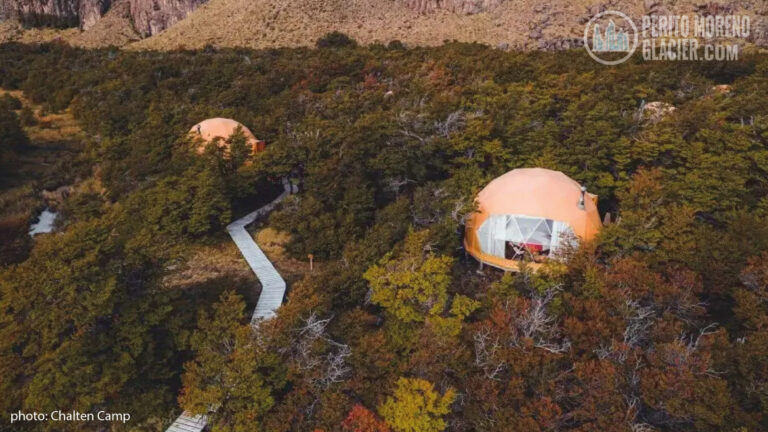
Glamping Lovers: El Calafate + El Chalten Luxury Camp Program
Discover El Calafate and El Chalten staying only in luxury camps. Visit Perito Moreno Glacier and enjoy the Fitz Roy massif!
Avoid driving remote sections after dark. Wildlife, ice and reduced visibility create additional risks.
Fuel, Food and Mobile Coverage
This route crosses remote areas where services are widely separated.
Refuel whenever a reliable service station is available, particularly in:
- Ushuaia
- Río Grande
- Towns along the Chilean section
- Río Gallegos
- El Calafate
Carry drinking water, snacks and warm clothing, but remember Chile’s food-entry restrictions.
Mobile coverage can be intermittent. Before departure:
- Download offline maps
- Save accommodation addresses
- Store emergency telephone numbers
- Carry a power bank
- Inform someone of your route
- Avoid relying exclusively on online navigation
International roaming charges may apply while the phone connects to Chilean networks.
Traveling by Private Transfer
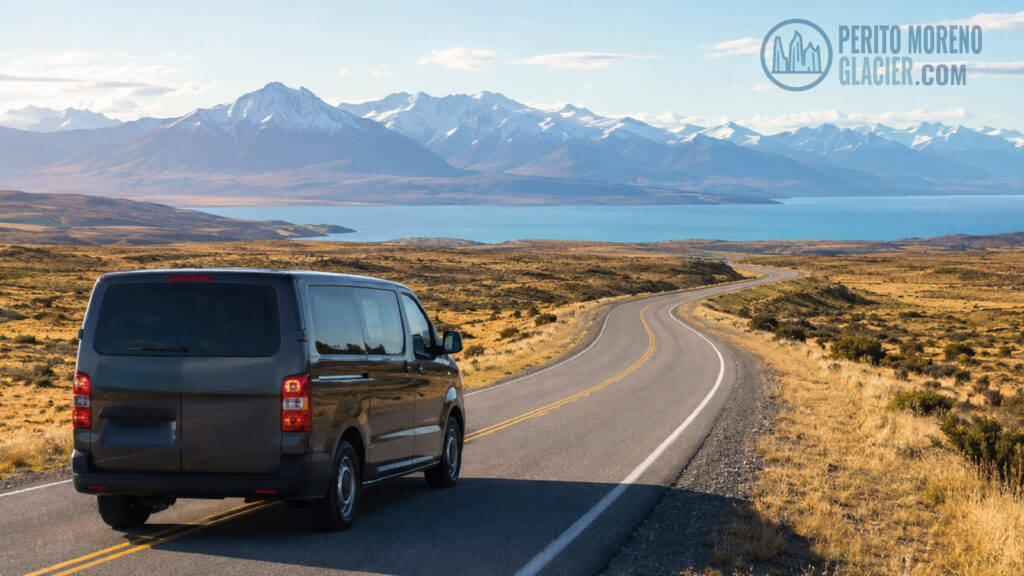
A private transfer between Ushuaia and El Calafate can be organized, but it is significantly more expensive than flying.
This option may work for:
- Families
- Small private groups
- Travelers with considerable luggage
- Visitors who want to stop along the way
- Passengers who prefer not to manage the borders themselves
A responsible private itinerary should allow sufficient time for customs, immigration and the ferry. Depending on the arrangement, it may include an overnight stay in Río Gallegos.
Verify whether the quoted price includes:
- Driver expenses
- Ferry tickets
- Cross-border permits
- Accommodation
- Meals
- Waiting time
- Luggage
- Additional stops
Flying Versus Traveling Overland
Choose a Direct Flight If:
- You have limited vacation time
- You want the simplest option
- You are traveling with children
- You want to avoid border formalities
- You have important excursions scheduled
- The direct service operates on your date
Choose the Bus If:
- You do not want to drive
- You are comfortable with a very long journey
- You have flexible travel dates
- Flights are too expensive or unavailable
- You can allow an overnight stop if necessary
Choose a Rental Car If:
- You enjoy long-distance road trips
- You want to see Tierra del Fuego beyond Ushuaia
- You are comfortable with international borders
- You have at least two days
- Your rental company authorizes travel through Chile
Choose a Private Transfer If:
- You want a customized overland journey
- Cost is not the primary concern
- You are traveling with a small group
- You prefer professional assistance at the borders
Arriving at El Calafate Airport
Comandante Armando Tola International Airport is approximately 23 kilometers from El Calafate’s town center. The transfer usually takes around 20–30 minutes.
Available transportation includes:
- Shared airport shuttles
- Private transfers
- Taxis or remises
- Rental cars
Prebooking is recommended during the summer season and for evening arrivals.
If you intend to visit Perito Moreno Glacier on the same day, check your arrival time carefully. The glacier is approximately 80 kilometers from El Calafate, and a proper visit requires several hours.
A late-morning or afternoon arrival is normally better combined with a town transfer and an overnight stay before visiting the glacier the following day.
El Calafate Tour Package: 1–3 Nights
Enjoy visiting Perito Moreno Glacier and other amazing attractions in the area. Choose between our 1-2-3 night packages and discover Patagonia
How Many Nights Should You Stay in El Calafate?
Argentina’s official tourism information recommends approximately three to four days in El Calafate
A well-balanced stay might include:
Day 1: Arrival and El Calafate
Transfer to your hotel, explore the town and visit Laguna Nimez or the Glaciarium, depending on your arrival time.
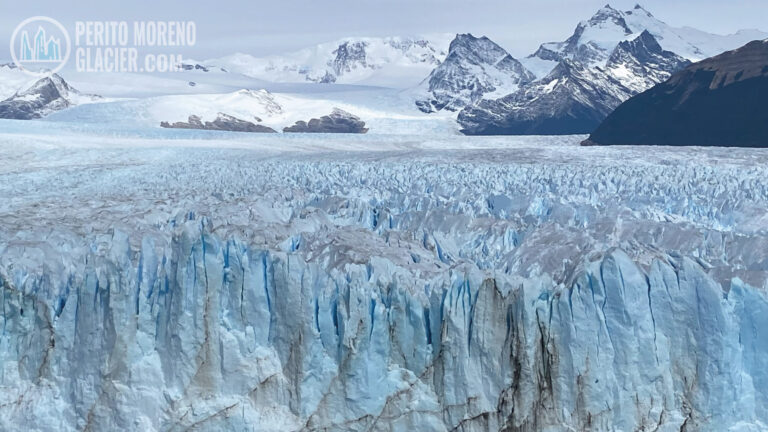
Day 2: Perito Moreno Glacier
Take a full-day excursion to Los Glaciares National Park, including the panoramic walkways and an optional boat ride.
Day 3: Lake Navigation or Estancia
Choose between a glacier navigation, a Patagonian estancia experience or an active excursion.
Day 4: Optional Activity or Departure
Use the final day for a 4×4 excursion, kayaking, another navigation or your onward journey.
Travelers adding El Chaltén should reserve at least two or three additional nights.
Suggested Ushuaia and El Calafate Itinerary
A comfortable itinerary combining both destinations could include:
Ushuaia: Three or Four Nights
Allow time for:
- Tierra del Fuego National Park
- Beagle Channel navigation
- Escondido and Fagnano lakes
- A penguin excursion during the appropriate season
- Winter activities when available
Travel Day
Take a direct flight to El Calafate whenever possible. Do not schedule an expensive non-refundable excursion immediately after landing.
El Calafate: Three or Four Nights
Include:
- Perito Moreno Glacier
- Argentino Lake navigation
- A Patagonian estancia
- A free day or additional adventure activity
This creates a seven- to nine-night itinerary featuring two very different Patagonian environments.

Calafate Balcony Tour in a 4×4 Vehicle
Enjoy the amazing views of El Calafate and Lake Argentino in the Calafate Balcony.
Practical Tips for the Journey
Reserve the Direct Flight Early
The short flight is popular because it avoids a complicated overland trip. Once convenient departures sell out, the remaining options may involve long connections.
Keep One Flexible Day
Patagonian weather can affect flights, ferries and roads. Avoid placing an international departure immediately after a critical domestic connection whenever possible.
Pack for Both Destinations
Ushuaia and El Calafate can be cold and windy even in summer. Bring:
- A waterproof jacket
- A wind-resistant outer layer
- Warm mid-layers
- Comfortable walking shoes
- Gloves and a hat
- Sun protection
- A small daypack
Confirm Border Rules Shortly Before Traveling
Immigration, health and vehicle requirements can change. Verify them again before beginning any overland journey.
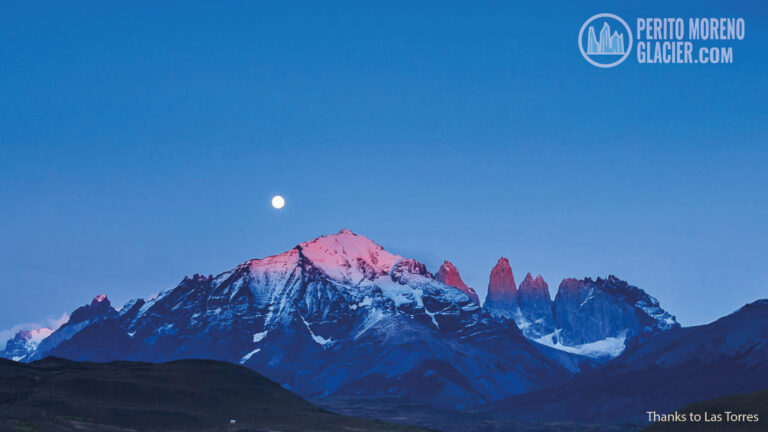
Round Patagonia I: Ushuaia, El Calafate, Puerto Natales, Torres del Paine, Punta Arenas and Australis Cruise
Complete 12-night tour program to visit Patagonia including a unique wonderful expedition to Cape Horn aboard Australis Cruise
Frequently Asked Questions
Is There a Direct Flight from Ushuaia to El Calafate?
Yes. Direct flights operate between Ushuaia and El Calafate, although frequency can vary according to the season and day of the week.
How Long Is the Flight?
The direct flight takes approximately 1 hour 20 minutes to 1 hour 30 minutes.
Can You Travel Overland Without Entering Chile?
No. There is no road connecting Argentine Tierra del Fuego with continental Argentina without passing through Chile.
Do You Need a Passport?
International visitors should carry their passports. Argentine and eligible regional citizens may be able to use accepted national identity documents, subject to current immigration regulations.
Do You Need a Chilean Visa?
That depends on your nationality. Even if you are only crossing Chile in transit, you must meet Chilean entry requirements.
Is There a Ferry from Ushuaia Directly to El Calafate?
No. The ferry forms only one short part of the road journey across the Strait of Magellan. It does not connect the two cities.
Is There a Train Between Ushuaia and El Calafate?
No passenger railway connects Ushuaia with El Calafate.
Can You Complete the Drive in One Day?
It is possible under favorable conditions, but it can take 16 hours or more once border procedures and the ferry are included. Dividing the journey into two days is strongly recommended.
Where Should You Stop Overnight?
Río Gallegos is the most practical overnight stop because it divides the international section from the final drive to El Calafate.
Is the Overland Journey Scenic?
Yes, although much of it crosses open steppe. Highlights include the Fuegian mountains, Lake Fagnano, the Strait of Magellan and the vast landscapes of southern Patagonia.
Final Recommendation
The best way to get from Ushuaia to El Calafate is to fly nonstop. The journey takes approximately 1 hour 20 minutes and avoids two international border crossings, a ferry and up to an entire day on the road.
If a direct flight is unavailable, compare a connecting flight through Buenos Aires with an overland journey via Río Gallegos. Bus travel is possible but lengthy, while driving offers an adventurous experience for travelers who have sufficient time and the correct cross-border documents.
Whichever option you choose, confirm current schedules, border requirements and weather conditions shortly before traveling. In Patagonia, flexibility is an important part of a successful itinerary.
Ushuaia & El Calafate in the Argentinean Patagonia – 6 Nights Tour Package
Enjoy visiting Ushuaia , the famous "end of the world city" and el Calafate with Perito Moreno Glacier