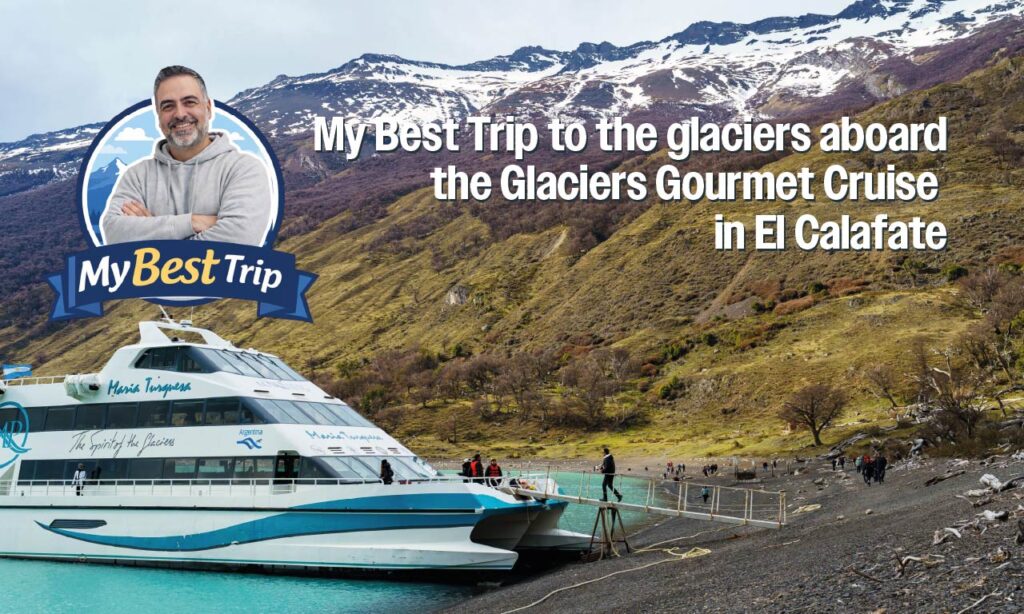
Starting from my hotel in El Calafate
I woke up early at my hotel in El Calafate. Outside it was still cool, with that clean, dry air so typical of Patagonia. When I opened the curtain, the sky had a soft light-blue tone and the wind was barely moving the branches of the trees. I knew it would be a special day: I was about to experience one of the most fascinating activities in the region, the Glaciares Gourmet navigation through Los Glaciares National Park.
I went down to the hotel breakfast with that mixture of excitement and curiosity you feel before a great adventure. As I sipped a hot cup of coffee and looked out the window at the vast Patagonian landscape, I thought about how in just a few hours I would be sailing across Lago Argentino toward some of the most impressive glaciers on the planet. This park is home to more than 200 glaciers, including the famous Perito Moreno, the enormous Upsala, and the majestic Spegazzini.
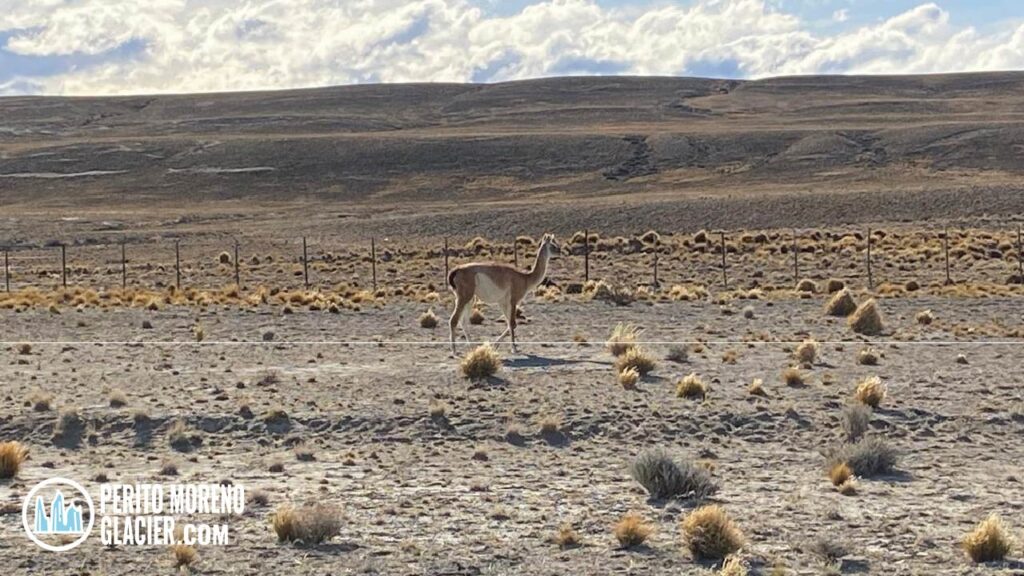
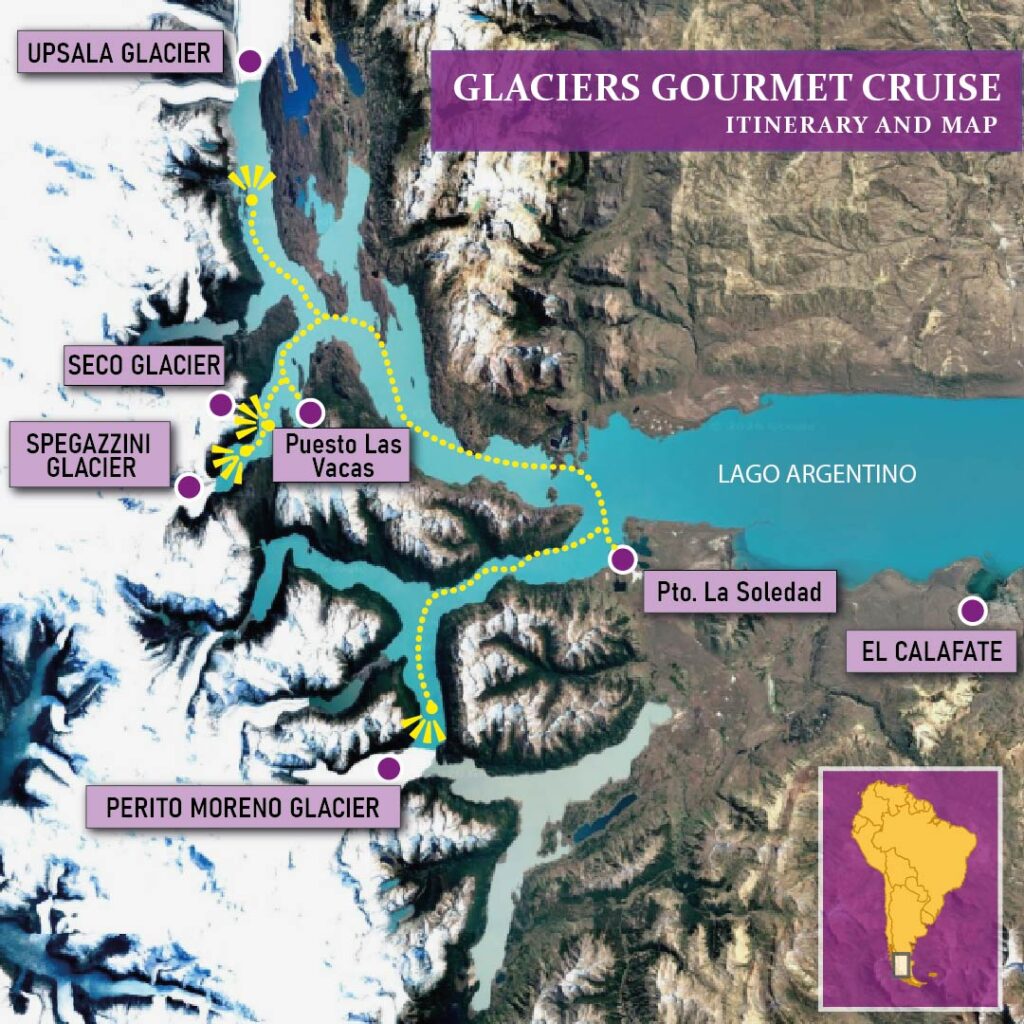
Shortly afterward I left the hotel. The transportation was already waiting at the door, along with other travelers who, like me, were ready for the day ahead. The road from El Calafate to the port crosses the wide-open landscapes of the Patagonian steppe. As the vehicle moved forward, the horizon seemed endless: golden plains, distant mountains, and occasionally an isolated estancia. After about 45 kilometers, we would reach Puerto La Soledad, from where the cruise departs to navigate Lago Argentino. But first we travel through this remarkable Patagonian steppe. It is an immense semi-arid plain that covers much of eastern Patagonia and stretches all the way to the Atlantic Ocean. The climate here is dry and windy, with rainfall rarely exceeding 200 to 300 millimeters per year, which explains the low and resilient vegetation that dominates the landscape. Along the way you can see patches of coirón, a tough grass that has adapted to the strong Patagonian winds, as well as shrubs like neneo and mata negra. Despite its austere appearance, the steppe is home to surprisingly rich wildlife: it’s not uncommon to spot guanacos moving in family groups, or even a choique (Patagonian rhea) running across the hills in the distance. Gray foxes, armadillos known as piches, and many birds of prey also inhabit this region, gliding effortlessly in the wind currents. This vast, seemingly endless landscape creates a fascinating contrast with the glaciers and mountains that await further ahead in Los Glaciares National Park, reminding us of the extraordinary natural diversity of Patagonia.
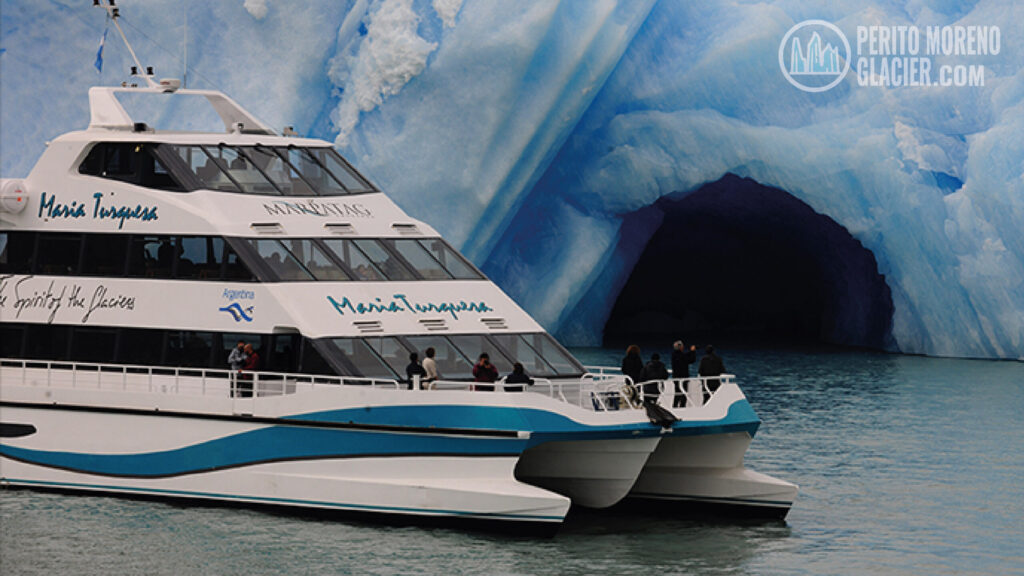
During the drive I imagined the moment of boarding the ship. I knew we would be sailing aboard the María Turquesa, a vessel designed to comfortably explore the lake and approach the glaciers. The excursion lasts a full day and allows visitors to see, in a single journey, some of Patagonia’s most spectacular ice giants: Upsala, one of the largest glaciers; Spegazzini, famous for having one of the tallest ice walls in the park; and the imposing Perito Moreno.
When the vehicle finally stopped at the port, the landscape left me speechless for a moment. Lago Argentino stretched out in front of me, its waters glowing in an intense turquoise color that contrasted beautifully with the snow-covered mountains of the Andes. The boat was there, ready to depart.
I took a deep breath, adjusted my backpack on my shoulders, and walked toward the boarding area. The adventure toward the most spectacular glaciers of Patagonia was about to begin.
Arriving to Puerto La Soledad in Los Glaciares National Park
When we finally arrived at Puerto La Soledad, inside Los Glaciares National Park, the landscape changed completely. After traveling for nearly an hour across the Patagonian steppe, Lago Argentino suddenly appeared before us like a vast turquoise mirror surrounded by mountains. The wind was fresh and steady, typical of this region, and the air had that pure scent that can only be experienced in such remote places.

Perito Moreno Glacier Cruise: Gourmet Experience
Enjoy a cruise in Perito Moreno Glacier, El Calafate. A wonderful day cruise in the Patagonia of Argentina.
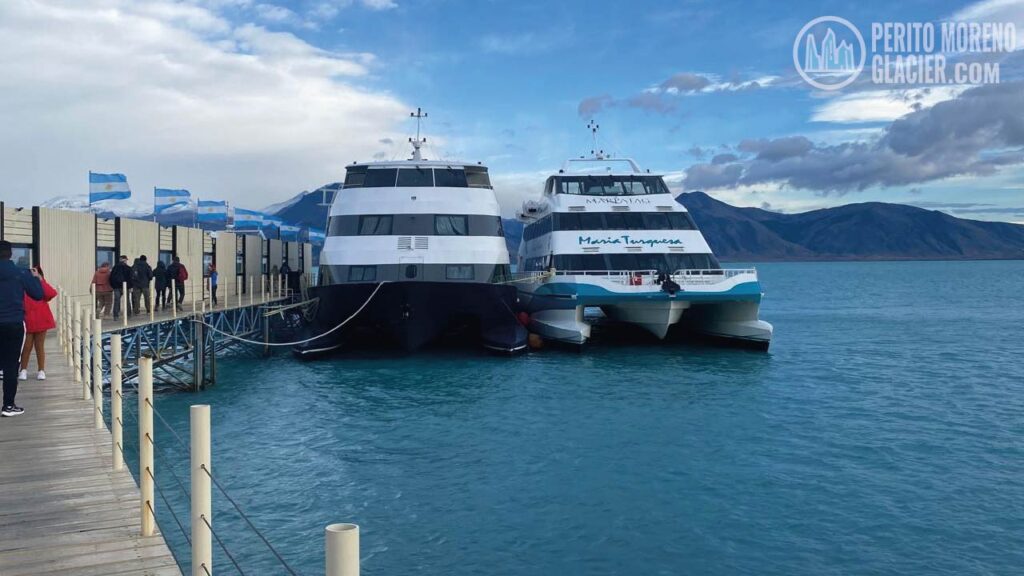
The vehicle stopped in the parking area near the port, and we stepped out one by one. In the distance we could already see the María Turquesa cruise ship, a modern and elegant vessel specially designed to navigate the lake in great comfort. Before boarding, the park staff checked the entrance tickets for Los Glaciares National Park, since the entire area is part of a protected reserve declared a UNESCO World Heritage Site in 1981. For those who had not purchased the park entrance fee in advance, there is a ticket booth there where passes can be bought on site.
After this brief control, we walked a few meters toward the pier. The lake was incredibly calm, displaying that characteristic milky turquoise color produced by “rock flour”, tiny mineral particles created by glacial erosion that remain suspended in the water.
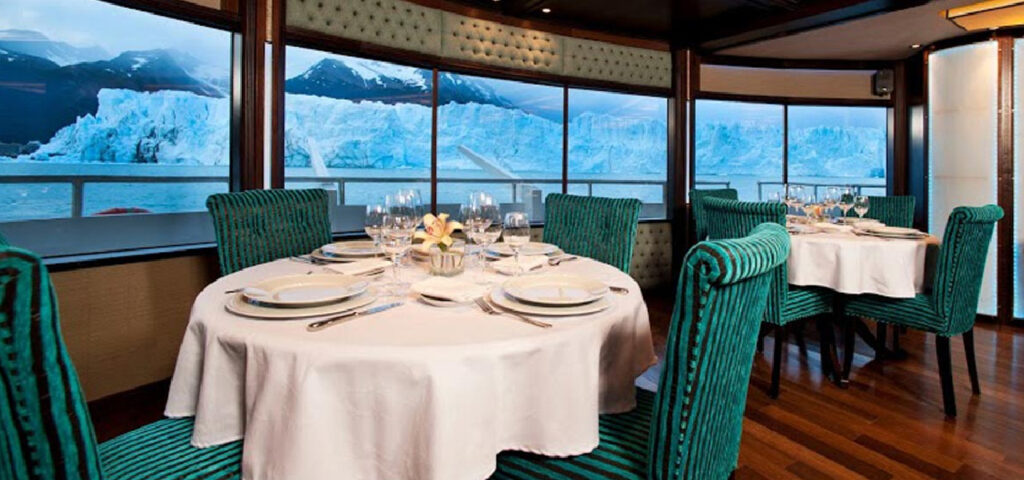
The boarding process was very well organized. A gangway led us from the pier to the main deck of the María Turquesa. As we entered, the crew warmly welcomed us and showed us the different areas of the vessel: spacious panoramic lounges with large windows, an outdoor deck ideal for enjoying the scenery, and the restaurant where later the gourmet lunch that gives this excursion its name would be served.
There I took the opportunity to chat with Luca, who would share more details with me about this fascinating excursion in remote Patagonia.
The Interview
– Hello Luca, thanks for your time to chat about this amazing cruise. What makes the Glaciares Gourmet experience different from other navigations offered in Los Glaciares National Park?
– It´s a pleasure Ramiro, thanks for visiting us.
– For those who have never visited this region, what tends to surprise passengers the most during the navigation across Lago Argentino?
Unlike traditional boat tours that focus solely on scenic transportation and sightseeing, Glaciares Gourmet combines disembarking in exclusive areas, sailing on state-of-the-art catamarans (María Turquesa or Cruz del Sur), and a high-end culinary proposal served on board. Additionally, the pace of the itinerary is more relaxed, prioritizing comfort and environmental interpretation.
Beyond the colossal ice walls of the Upsala or Spegazzini glaciers, travelers are often amazed by the color of the water, astriking, intense turquoise-blue (known as “glacier milk” due to suspended mineral flour). Then, the absolute silence when the vessel turns off or reduces its engines in front of a glacier face. Finally, the true scale of the scenery. Floating icebergs seem small in the distance, but as you get closer, you discover they are true submerged mountains of ice.
– The Southern Patagonian Ice Field is one of the largest in the world. What scientific and environmental importance does this glacial system have?
– Ramiro, that’s a very good question. The Southern Patagonian Ice Field is not only spectacular from a scenic perspective, but it also has enormous scientific and environmental value. We are talking about the third-largest reserve of frozen freshwater on the planet, after Antarctica and Greenland. This glacial system acts as a major water regulator for much of Patagonia, feeding lakes and rivers that are essential for the region’s ecosystems. From a scientific point of view, it is an extraordinary natural laboratory for studying climate change. Many glaciers, such as Upsala, have shown significant retreat, something researchers have been monitoring for decades. This helps scientists understand how glacial systems respond to variations in temperature and precipitation. At the same time, other glaciers like Perito Moreno have remained relatively stable, which is also very interesting for the scientific community. For us, who navigate these waters every day, it is a privilege to be able to show this place to visitors, but it is also a great responsibility. That is why all activities are carried out under the strict regulations of Los Glaciares National Park, ensuring that these natural wonders can continue to be studied and enjoyed by future generations.
– During the excursion, glaciers such as Upsala and Spegazzini are visited. What characteristics make each of them unique?
– Ramiro, each glacier we visit during the excursion has its own personality and characteristics, which is what makes this navigation so fascinating. Upsala Glacier, for example, is one of the largest glaciers in all of Patagonia. It covers hundreds of square kilometers and its front can reach nearly 10 kilometers in width. What really makes Upsala unique is the enormous field of icebergs that usually floats in front of it. These ice blocks break off from the glacier and drift through the lake, sometimes reaching incredible sizes. Navigating among those icebergs is a spectacular experience and gives visitors a real sense of the immense scale of the glacier.
– Amazing… Spegazzini Glacier is impressive for the height of its ice walls. What dimensions does it reach exactly, and why is it so special within the park?
Spegazzini Glacier, on the other hand, is famous for having the tallest ice walls in Los Glaciares National Park. In some sections the ice face rises up to about 130–135 meters above the lake. The glacier has a very vertical and dramatic appearance, with deep blue tones and sharp formations that look almost like giant sculptures of ice. When the boat approaches Spegazzini, the view is truly breathtaking. So while Upsala impresses with its size and the iceberg field around it, Spegazzini stands out for the height and beauty of its ice walls. Seeing both in the same excursion allows visitors to appreciate two very different expressions of the same incredible glacial system.
– Upsala Glacier has been the subject of numerous studies due to its retreat. What changes have been observed in recent years?
Well, Upsala Glacier has indeed been one of the most studied glaciers in Patagonia, precisely because of the changes it has experienced over the past decades. One of the most noticeable changes has been the significant retreat of its front. Historical records and satellite images show that the glacier has receded several kilometers since the late 20th century, which has altered the shape of the fjord and increased the amount of icebergs floating in the surrounding waters. Visitors today often see large fields of floating ice that have broken off from the glacier. This calving activity is part of the natural dynamics of a glacier that terminates in a lake, but the rate of retreat observed in Upsala has drawn the attention of scientists who monitor it closely. Researchers study these changes through satellite imagery, field measurements, and long-term monitoring programs to better understand how glaciers respond to variations in temperature, precipitation, and other climatic factors. Upsala has therefore become an important reference point for understanding glacial evolution in the Southern Patagonian Ice Field.
– The concept of this excursion combines nature with gastronomy. How did the idea of incorporating a gourmet experience in such a remote landscape come about?
The idea behind Glaciares Gourmet was to create a premium experience that combines two of Patagonia’s greatest attractions: its extraordinary natural scenery and its renowned gastronomy. Rather than offering a traditional sightseeing cruise, the goal was to transform a day on Lago Argentino into a memorable journey where visitors can enjoy exclusive glacier views while tasting dishes inspired by regional ingredients. The gourmet lunch, paired with carefully selected wines and attentive onboard service, complements the landscape without overshadowing it, creating a balanced experience that appeals to travelers seeking comfort, authenticity, and a deeper connection with Patagonia.
– From an operational point of view, what are the main challenges of navigating a glacial lake surrounded by floating icebergs?
Navigation on Lago Argentino requires extensive local knowledge and constant attention to changing conditions. Floating icebergs vary in size and movement depending on wind, currents, and glacier calving activity, so captains continuously adapt the route to ensure both safety and the best possible viewpoints. Weather conditions can also change rapidly in Patagonia, making flexibility an essential part of daily operations. MarPatag’s experienced crews carefully monitor these factors while maintaining a comfortable and safe experience for passengers.
– Throughout the journey, visitors can also observe Patagonian wildlife and ecosystems. Which species are most commonly seen during the navigation?
Although the glaciers are the main attraction, the cruise also offers excellent opportunities to observe Patagonia’s rich wildlife. Depending on the season, visitors frequently spot Andean condors soaring above the cliffs, black-necked swans, upland geese, steamer ducks, and other native waterbirds along the shoreline. Mammals such as guanacos and, occasionally, foxes can also be seen on the surrounding hills. Together with the ancient forests, dramatic rock formations, and the constantly changing glacial landscape, these species provide a broader understanding of the unique ecosystems that make Los Glaciares National Park a UNESCO World Heritage Site.
Departure to the glaciers
Shortly after all passengers were on board, the ship slowly began to move away from the pier. The engine could barely be heard as the cruise glided smoothly across the lake. It was the beginning of an unforgettable journey among some of the most spectacular glaciers of the Southern Patagonian Ice Field, the third-largest reserve of frozen freshwater on Earth after Antarctica and Greenland. Lucas invites me for a glass of wine, and we continue our conversation.
Glaciares Gourmet offers a unique perspective of Los Glaciares National Park that cannot be experienced from the road or the walkways alone. The navigation reaches some of the park’s most spectacular glaciers, including remote areas that are only accessible by boat, while providing a high level of comfort, personalized service, and outstanding gastronomy. It is an experience that combines breathtaking scenery, exclusive access, and relaxation, allowing visitors to fully appreciate the scale and beauty of Patagonia in a single unforgettable day.
– How many passengers can the vessel accommodate, and how do you ensure a comfortable and personalized experience during the excursion?
The vessel has been designed to offer ample space and comfort for every guest, with capacity managed to maintain a relaxed onboard atmosphere. Spacious indoor lounges, panoramic windows, open-air decks, and attentive service allow passengers to enjoy the journey without feeling crowded. The crew is trained to provide personalized assistance throughout the day, ensuring that every guest can make the most of the experience, whether enjoying the gourmet lunch, taking photographs, or simply admiring the glaciers.
– Operating in such a sensitive natural environment as Los Glaciares National Park involves great responsibility. What sustainability policies does the company implement during its operations?
Respect for the environment is a fundamental part of Glaciares Gourmet’s operations. Navigation is carried out in accordance with the strict regulations established by Los Glaciares National Park, minimizing environmental impact while ensuring visitor safety. Waste management, responsible resource use, and continuous crew training are key aspects of daily operations. The company also promotes environmental awareness among its passengers, encouraging responsible tourism that helps preserve Patagonia’s unique natural heritage for future generations.
– The Glaciares Gourmet program offers different onboard experience options. What alternatives do passengers have when booking this excursion?
Passengers can choose between different service categories according to the level of comfort and exclusivity they are looking for. These options typically include standard service as well as premium experiences with reserved seating in exclusive areas of the vessel, enhanced onboard amenities, and additional personalized services. Regardless of the category selected, all guests enjoy the spectacular glacier navigation, professional onboard service, and the opportunity to experience one of the most remarkable journeys in Argentine Patagonia.
– What are the differences between the various categories or modalities offered during the navigation?
Glaciares Gourmet offers several onboard categories designed to suit different travel styles while following the same spectacular navigation route. All passengers enjoy access to the glacier itinerary, gourmet dining, and panoramic views throughout the journey. Higher service categories provide additional comfort through preferential seating, more spacious or exclusive areas of the vessel, and enhanced onboard amenities, allowing guests to enjoy the experience in a quieter and more personalized setting.
– For those seeking a more exclusive experience, what additional services or upgrades are available during the cruise?
Travelers looking for a more premium experience can choose upgraded categories that include access to exclusive lounges or VIP areas, priority boarding, dedicated onboard service, and privileged seating for glacier viewing. These upgrades are designed to offer greater privacy, additional comfort, and a more personalized level of attention throughout the navigation, making the journey even more memorable while enjoying one of Patagonia’s most spectacular landscapes.
Navigation through the Northern Arm of Lago Argentino
As we advanced, the scenery became increasingly dramatic. Lago Argentino is the largest lake in Argentina, covering approximately 1,466 km², with depths that exceed 500 meters in certain areas.
The ship headed toward the Northern Arm of the lake, where several of the most impressive glaciers in the park are located.
The guides on board began explaining the formation of these glaciers. They all originate from the Southern Patagonian Ice Field, a massive glacial system covering more than 12,000 km² between Argentina and Chile. From this enormous ice mass, dozens of glaciers slowly descend toward the lakes and fjords of the region.
Upsala Glacier
One of the first highlights of the navigation is the Upsala Glacier, one of the largest glaciers in South America.
To approach its front, the ship must carefully navigate among enormous icebergs that break off from the glacier and float across the lake. These ice blocks can reach astonishing sizes, some as large as buildings.
Perito Moreno Glacier Cruise: Gourmet Experience
Enjoy a cruise in Perito Moreno Glacier, El Calafate. A wonderful day cruise in the Patagonia of Argentina.
The Upsala Glacier covers an area of nearly 870 km², making it one of the most extensive glaciers in Patagonia. Its glacier front stretches approximately 10 kilometers wide.
In recent decades it has experienced significant retreat, something scientists constantly monitor as part of climate change research. Even so, its immense size and the amount of ice it releases into the lake remain deeply impressive.
Sailing among these floating icebergs—some with surreal shapes and others glowing in intense shades of turquoise—feels almost otherworldly.

Lunch On Board
As the ship continues its journey, one of the most pleasant moments of the day arrives: the gourmet lunch served on board.
Passengers are invited to the dining room, where a carefully prepared menu featuring Patagonian ingredients is served. The concept behind this excursion combines nature and gastronomy, allowing guests to enjoy spectacular scenery while experiencing high-quality service.
While we eat, the large panoramic windows allow us to continue admiring the landscape outside: snow-covered peaks, lenga forests covering the slopes, and occasionally a condor soaring high above the mountains.
– Two final questions Luca, why is this a must-do experience in El Calafate?
Because it allows you to reach glacier walls that are inaccessible by land (such as the Spegazzini Glacier, Spegazzini Peineta, or Seco Glacier) and navigate the iconic Iceberg Channel (Canal de los Témpanos). It combines comfort, fine dining, and disembarking at Puesto de las Vacas bay to hike inside the National Park.
– Finally, and it´s very important today. What sustainability policies does the company implement?
We hold the IRAM standards quality seal, fulfilling high service standards essential for operating within Lake Argentino and preserving this heritage site.
Waste Management: “Zero Waste” policy on the lake; all waste is sorted and brought back to port. Then, Water Treatment with a Low-emission engines and strict systems for treating greywater and blackwater on board. Then, Controlled Disembarkations. Nature walks are conducted strictly on boardwalks and marked trails to prevent soil erosion and protect native flora. Finally, the Environmental Education. Onboard guides raise passenger awareness about glacier retreat and climate change.
– Thanks Luca, it´s an incredible experience in Patagonia
I finished my coffee and turned my gaze toward the distant horizon. There, a massive wall of ice emerged in the landscape.
Spegazzini Glacier
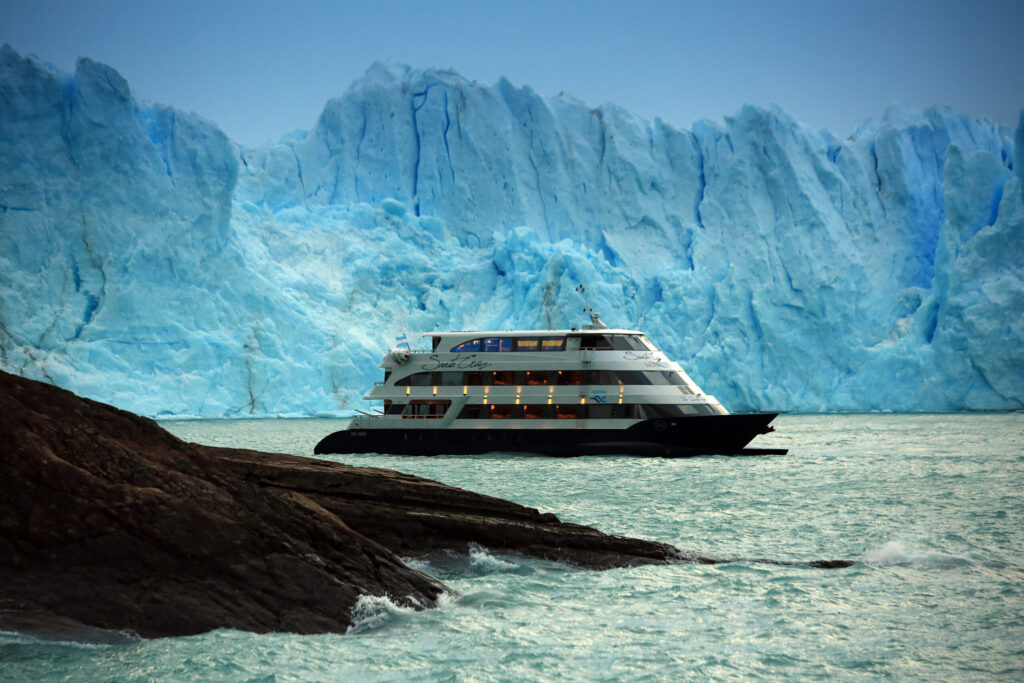
After lunch, the ship continues toward one of the most spectacular points of the entire excursion: Spegazzini Glacier.
As we approach, a towering wall of ice slowly appears between the mountains—and what unfolds before us is simply breathtaking.
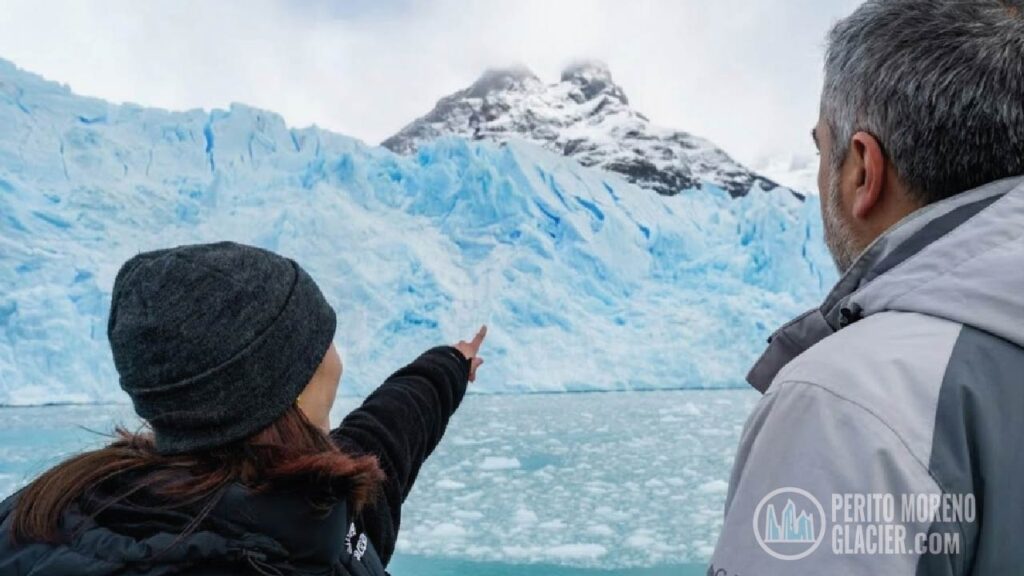
Spegazzini Glacier boasts the highest ice walls in Los Glaciares National Park, reaching up to 135 meters above the lake’s surface, roughly equivalent to a 40-story building.
The glacier’s face glows with deep shades of blue and displays dramatic vertical formations that resemble enormous frozen sculptures. The ship moves slowly to allow passengers to fully appreciate the view and take photographs.
At that moment, silence takes over the boat. The only sounds are the occasional cracking of the ice and the gentle movement of the water against the hull.
Landing at Spegazzini Base
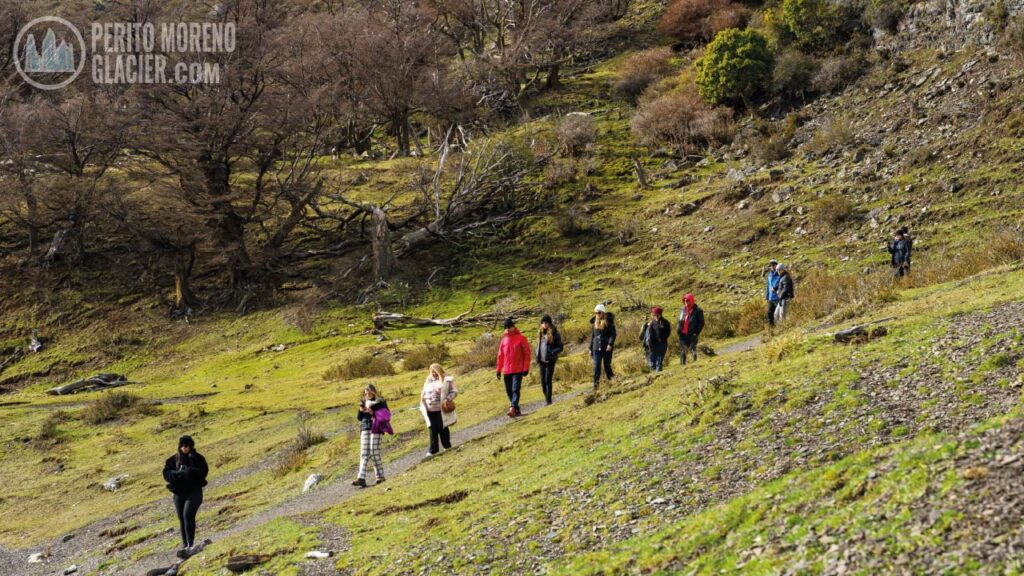
During this excursion, passengers also make a landing at Spegazzini Base, a modern facility located directly across from the glacier.
From the pier, a network of elevated walkways and panoramic viewpoints allows visitors to observe the glacier from different perspectives. Walking there, with the immense glacier rising in front of you, is an experience that is difficult to put into words.
There is also a refuge where visitors can enjoy a coffee or simply sit quietly and contemplate the breathtaking landscape.
Navigation toward Perito Moreno Glacier
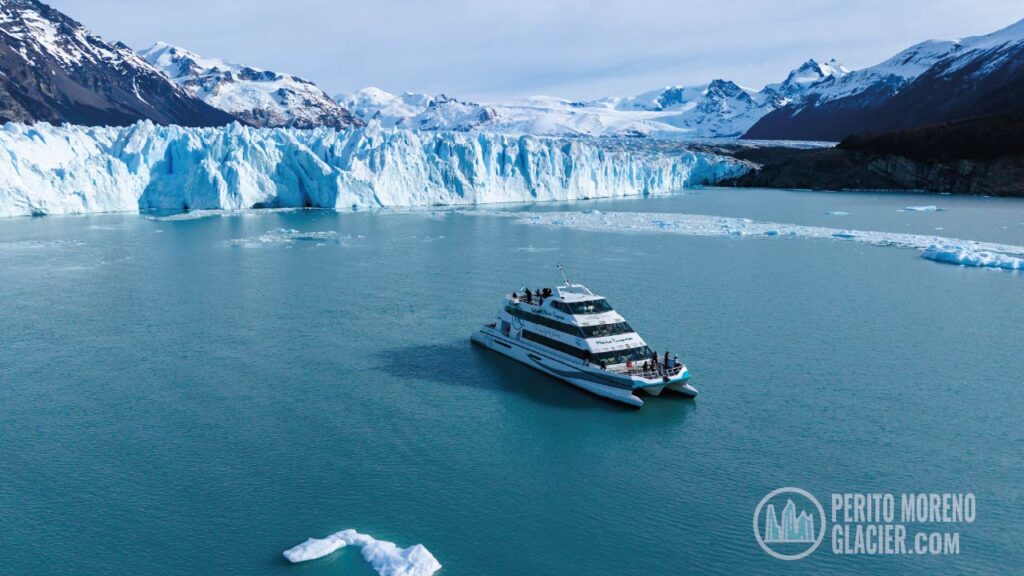
After visiting Spegazzini, the cruise continues toward one of the most famous glaciers in the world: Perito Moreno Glacier.
This glacier is one of the few in the world that remains relatively stable, unlike many others that are retreating.
It stretches approximately 30 kilometers in length, with a glacier front about 5 kilometers wide, and ice walls rising between 60 and 70 meters above the water.
As the ship approaches, the glacier completely dominates the landscape. Its immense face resembles a gigantic wall of white and blue ice.
One of the most thrilling moments occurs when a calving event takes place. Massive blocks of ice break off from the glacier’s front and crash into the lake with a thunderous roar, sending waves rippling across the water.
It is a powerful and completely unpredictable natural spectacle.
Return to the Port
After several hours navigating through some of Patagonia’s most extraordinary landscapes, the ship slowly begins the return journey.
Many passengers head back to the outer decks to enjoy the final moments of the cruise. The afternoon sun illuminates the mountains, and the lake takes on even deeper shades of turquoise.
It has been a long day—but an unforgettable one.
When we finally return to the port, the cool Patagonian air is once again noticeable. We slowly disembark the ship, still carrying the feeling of having experienced something truly unique.
Transportation awaits to take us back to El Calafate, while in my mind the images continue to replay: towering glaciers, floating blue icebergs, and the majestic silence of Patagonia.
Without a doubt, this is one of the most extraordinary experiences one can have in this remarkable corner of the world.
Perito Moreno Glacier Cruise: Gourmet Experience
Enjoy a cruise in Perito Moreno Glacier, El Calafate. A wonderful day cruise in the Patagonia of Argentina.