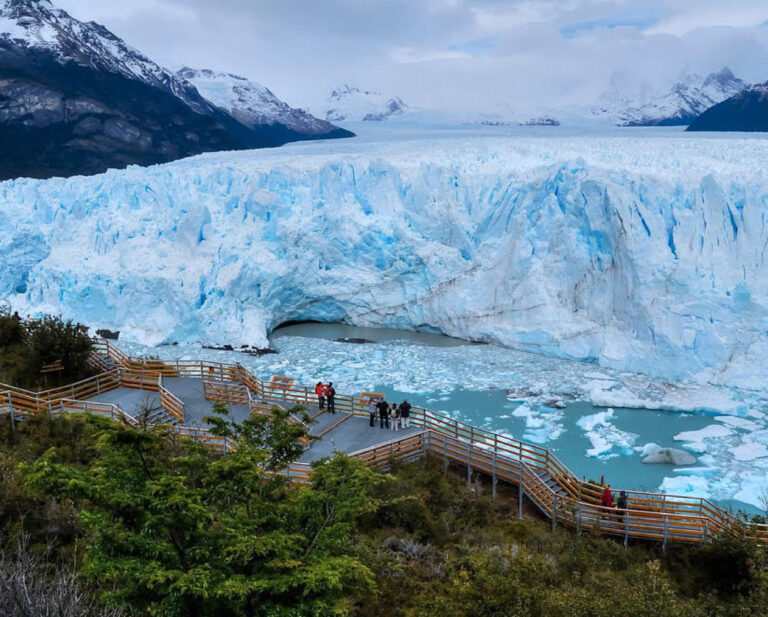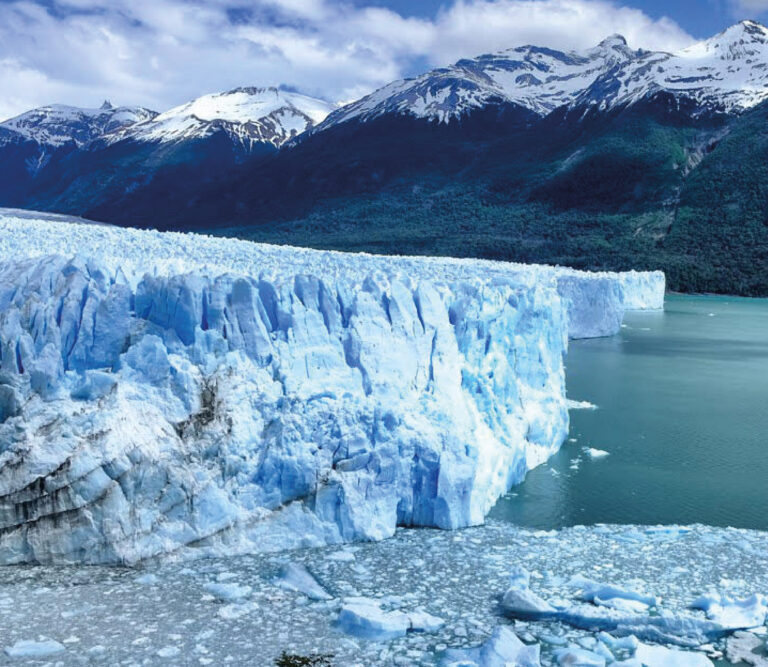
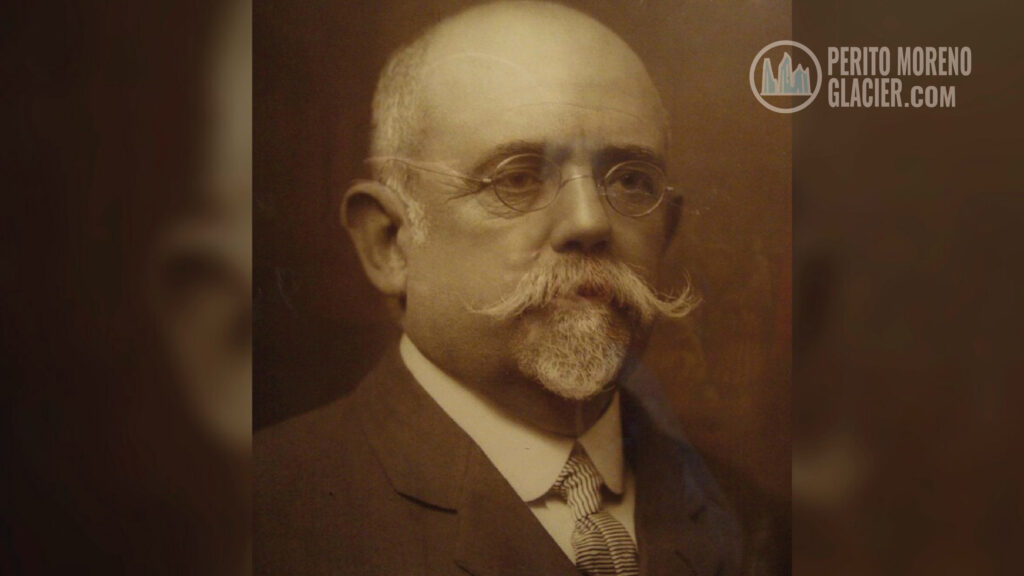
At the glacier, most travelers hear “Perito Moreno” as if it were simply a place name. It is actually the name by which Argentina remembers Francisco Pascasio Moreno, a nineteenth-century naturalist, explorer, museum builder, boundary expert and early advocate for protected public land. The word perito was not his first name: in Spanish it means an expert or specialist, and it became inseparable from Moreno after his work on the Argentina–Chile boundary.
Understanding that story changes the way you read a map of Patagonia. Perito Moreno Glacier, Perito Moreno National Park and the town of Perito Moreno are different destinations, but their shared name points back to the same person. They are not evidence that Moreno personally “discovered” every landscape that honors him, nor do they make those places geographically interchangeable.
I find this background useful because it turns a familiar label into a human story—and also raises better questions about how Patagonia was explored, documented and represented.
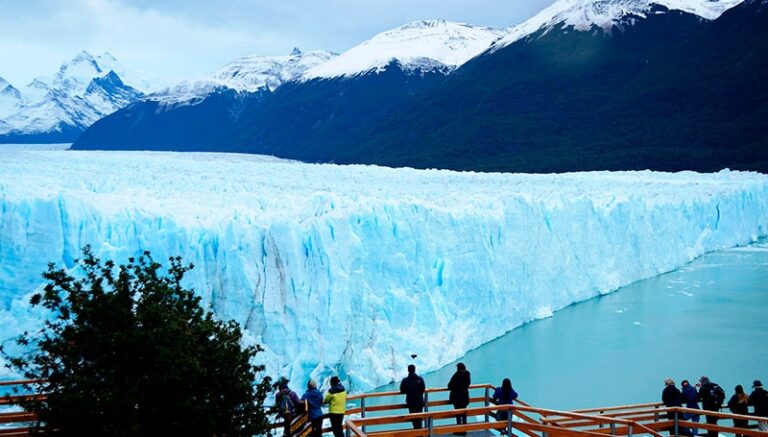
Perito Moreno Glacier Tour from El Calafate
Enjoy a Perito Moreno Glacier tour from el Calafate! One of Patagonia's most incredible shows: Perito Moreno Glacier.
Who was Francisco Pascasio Moreno?
Francisco Josué Pascasio Moreno was born in Buenos Aires on May 31, 1852. According to the Museo de La Plata, he developed an early interest in natural history, archaeology and anthropology, assembling collections while still young. During the 1870s he traveled repeatedly in Patagonia, collecting specimens, recording landscapes and expanding the scientific knowledge available to institutions in Buenos Aires.
Calling him only an “explorer” leaves out much of his influence. Moreno worked at the intersection of field travel, science, public institutions and national policy. That combination explains why his name appears in places that have very different functions today.
Naturalist, collector and institution builder
Moreno donated an important collection to the Province of Buenos Aires in 1877. He later promoted the creation of a major museum in the new provincial capital of La Plata. The Museo de La Plata identifies him as its founder and first director; the institution opened definitively in 1888, and Moreno directed it until 1906.
This was more than a building filled with objects. The museum helped organize research, collections and public knowledge about Argentina’s natural and human history. Its creation is one reason Moreno’s legacy extends beyond roads, lakes and ice fields.
Explorer of Patagonia, but not the first person to know it
The language of nineteenth-century exploration can make inhabited places sound empty. Patagonia was not unknown to the Indigenous peoples who lived, traveled and traded across it. Moreno’s expeditions were part of a period in which scientific work, territorial expansion and state power were closely connected.
A responsible account should hold both ideas at once: his fieldwork was significant to Argentine science and mapping, and the region already had communities, routes, place knowledge and histories that did not begin with an expedition from Buenos Aires. That distinction makes the story more accurate, not less interesting.
El Calafate, Perito Moreno & Estancia Cristina – 4 Nights
A wonderful 4-night program to visit Perito Moreno Glacier from El Calafate and visit the Estancia Cristina in the national park!
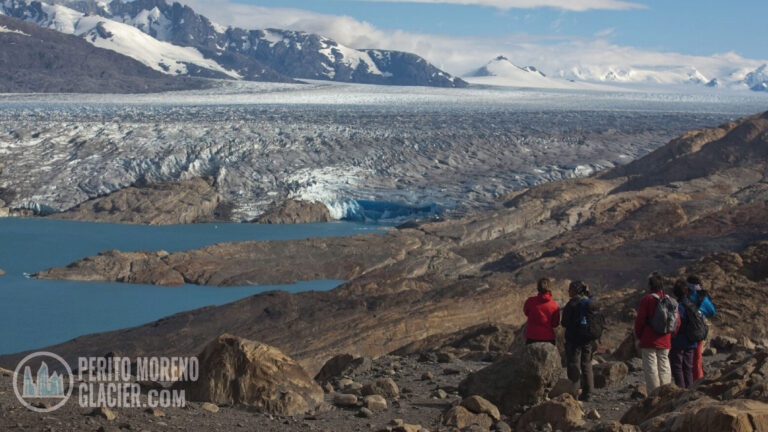
Why was he called “Perito” Moreno?
In everyday English, perito can be translated as “expert,” “specialist” or, in some contexts, an expert surveyor. Moreno became widely known by the title because of his technical role in the long boundary question between Argentina and Chile.
The Andes do not form one perfectly obvious line on a map. Watersheds, high summits, valleys and ice fields created competing interpretations of where the border should run. Moreno assembled geographic evidence and defended the Argentine position during the process that led to the 1902 arbitral settlement. The Museo de La Plata describes him explicitly as a perito en límites—a boundary expert.
A title that became part of his public identity
“Perito Moreno” is therefore closer to “Expert Moreno” than to a conventional first-and-last name. Over time, the professional title became the form by which the public recognized him. That is why a traveler may encounter “Perito Moreno” repeatedly without realizing that Perito was a distinction attached to Francisco Moreno’s work.
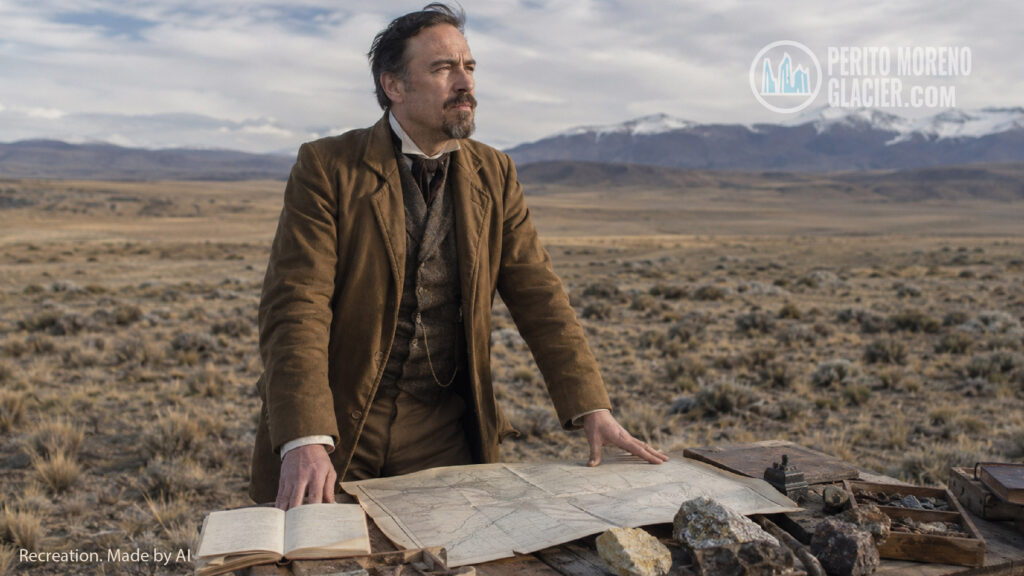
His role in the origins of Argentina’s national parks
Moreno’s conservation legacy is one of the strongest reasons his name remains visible. In 1903, he donated approximately 7,500 hectares near Lake Nahuel Huapi to the Argentine state on the condition that the land be preserved as a public natural park. Argentina’s National Parks Administration treats that donation as a foundational event in the country’s protected-area history.
The reserve created from this land eventually contributed to what is now Nahuel Huapi National Park. Argentina commemorates November 6 as National Parks Day in connection with the donation, while May 31—Moreno’s birthday—is recognized nationally as Ecotourism Day.
There is a lasting idea behind those dates: landscapes of exceptional value should be protected and available for public appreciation rather than reserved for a small private circle.
Why does the glacier bear his name?
Perito Moreno Glacier was named in honor of Francisco Moreno around the turn of the twentieth century. The honor reflects his association with Patagonian exploration, geographic knowledge and public service; it should not be read as proof that he was the first human to see the glacier or that he personally gave it his own name.
This matters because travel stories often compress a complicated history into a convenient sentence: “the explorer who discovered the glacier.” That formula is too simple. The glacier’s name commemorates Moreno, but Indigenous knowledge of Patagonia long predates state surveys, and commemorative naming is not the same as discovery.
What I tell travelers at the viewpoint
When the name comes up during a visit, I use a short version: Francisco Moreno was an Argentine naturalist and boundary expert whose work became closely associated with Patagonia, and the glacier was later named in his honor. If someone wants the deeper story, the museum, the boundary work and the public-land donation are the three threads worth following.
That explanation is more useful than a heroic slogan. It tells you why Argentina remembers him and leaves room for the histories that the slogan would erase.
Perito Moreno Glacier & Pristine Luxury Camp – 4 Nights
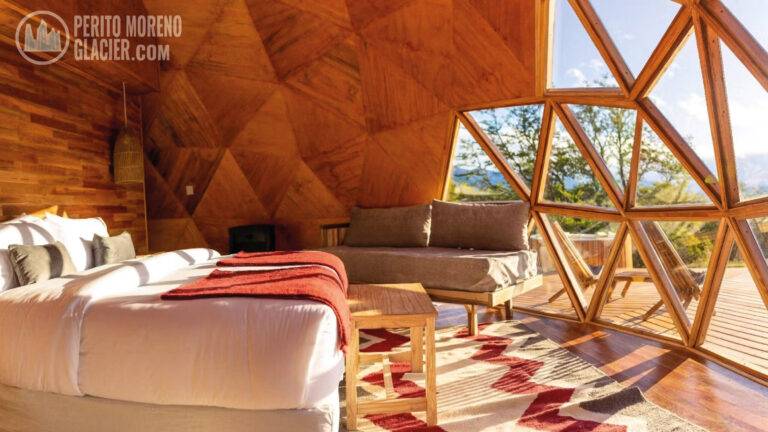
A wonderful 4-night program to visit Perito Moreno Glacier from El Calafate and finalizing with a glamping experience!
Three “Perito Moreno” destinations travelers confuse
The shared name causes real planning mistakes. These are the three places most likely to appear in an itinerary or search result:
Perito Moreno Glacier
This is the famous glacier reached from El Calafate in southern Santa Cruz. It lies within Los Glaciares National Park and is the destination most international visitors mean when they search for “Perito Moreno.”
Perito Moreno National Park
This is a remote national park elsewhere in Santa Cruz Province. It is not the park containing Perito Moreno Glacier. Its access, landscape and logistics are entirely different.
The town of Perito Moreno
Perito Moreno is also the name of a town in northwestern Santa Cruz. It is not the normal base for visiting the glacier near El Calafate. Seeing the town on a road map can lead travelers to book the wrong accommodation or calculate the wrong driving route.
For a geographic explanation, read Perito Moreno National Park Is Not Perito Moreno Glacier: How to Tell Them Apart. That guide handles the logistics; this article is about the person behind the repeated name.
A legacy worth reading with context
Moreno’s public image includes genuine achievements: sustained field travel, institution building, technical boundary work and a landmark donation for conservation. It also belongs to an era when museums collected human remains and cultural materials under standards that are contested and rejected today, and when state expansion had profound consequences for Indigenous communities.
Historical figures do not become clearer when we turn them into flawless symbols. Moreno is more understandable when we examine the institutions and political moment around him as well as the individual acts for which he is honored.
What his name means on a modern Patagonia trip
Today, the repeated name connects three themes that still shape travel in the region:
- knowledge created through close observation of landscape;
- borders and maps that influence how visitors move through Patagonia;
- the principle that exceptional natural areas deserve public protection.
The next time you read “Perito Moreno,” pause before assuming it identifies one destination. It may describe a glacier, a park, a town—or the expert whose work and legacy linked his name to Patagonia.
If you are building an itinerary and want to make sure you have selected the glacier near El Calafate, use the site’s planning guides or contact our local team before confirming transport and accommodation.
Perito Moreno Glacier & Pristine Luxury Camp – 4 Nights
A wonderful 4-night program to visit Perito Moreno Glacier from El Calafate and finalizing with a glamping experience!
El Calafate Special Adventure Program: Big Ice and Horseback Riding or Trekking in Estancia Cristina
Enjoy visiting Perito Moreno Glacier, walking over the ice of the glacier and a wonderful trekking or horseback riding in a remote estancia in the national park