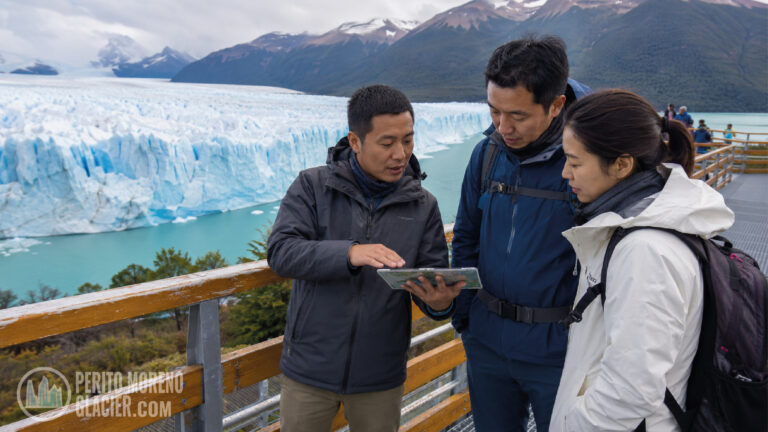
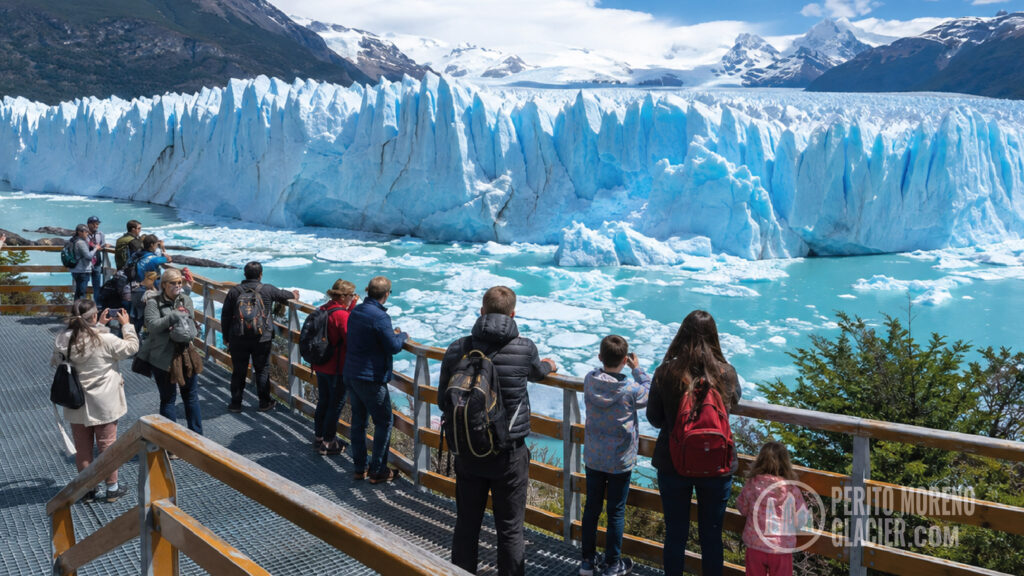
If you are deciding between morning and afternoon at Perito Moreno Glacier, the most useful answer is this: early morning is generally best for quieter walkways, softer light and a greater chance of calmer conditions, while early to mid-afternoon is often better for brighter ice, warmer temperatures and spending time listening for natural ice movement.
For most first-time visitors, the best overall window is approximately 10:00 am to 2:00 pm. It provides enough daylight for the panoramic walkways, avoids the coldest part of the morning and still leaves time to add a short boat navigation or explore several viewpoints.
However, there is no universally perfect hour. Patagonia’s weather changes rapidly, clouds can improve or flatten the light within minutes, and glacier calving remains completely unpredictable. The right time depends on whether your priority is photography, fewer people, comfortable temperatures, ice activity or a relaxed full-day experience.
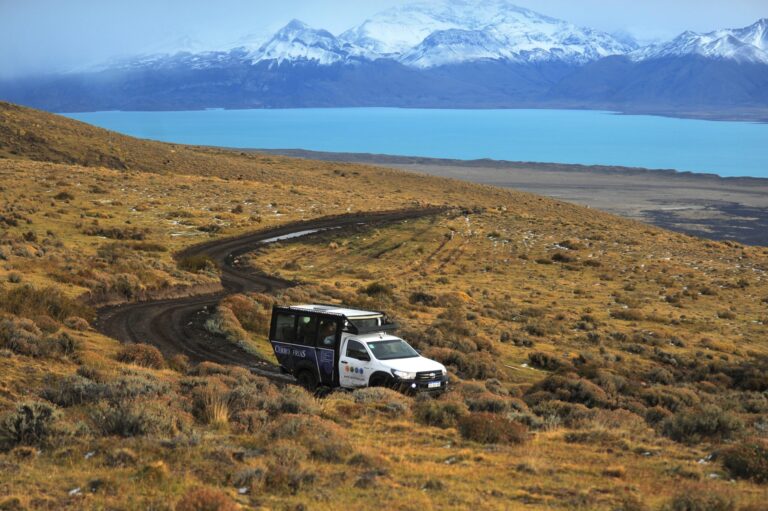
4×4 Adventure in Patagonia: Cerro Frías Exploration
Experience a thrilling 4x4 journey through Patagonia, featuring breathtaking views and unique landscapes.
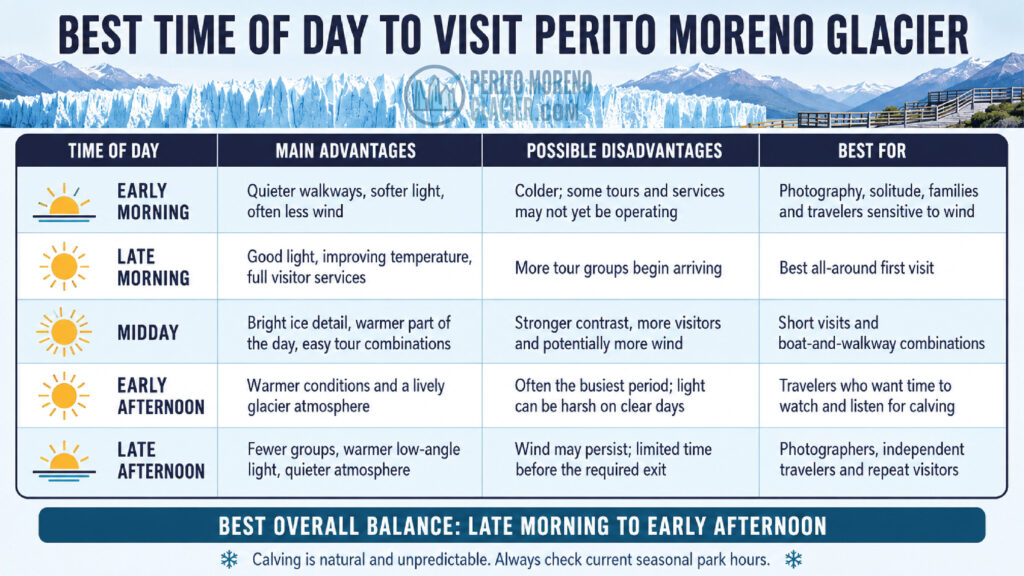
Quick Answer: Morning, Midday or Afternoon?
| Time of day | Main advantages | Possible disadvantages | Best for |
|---|---|---|---|
| Early morning | Quieter walkways, softer light, often less wind | Colder; some tours and services may not yet be operating | Photography, solitude, families, travelers sensitive to wind |
| Late morning | Good light, improving temperature, full visitor services | More tour groups begin arriving | Best all-around first visit |
| Midday | Bright ice detail, warmer part of the day, easy tour combinations | Stronger contrast, more visitors and potentially more wind | Short visits, boat-and-walkway combinations |
| Early afternoon | Warmer conditions and lively glacier atmosphere | Often the busiest period; light can be harsh on clear days | Travelers hoping to spend time watching and listening for calving |
| Late afternoon | Fewer groups, warmer low-angle light, quieter atmosphere | Wind may persist; limited time before the required exit | Photographers, independent travelers and repeat visitors |
Our recommendation: If you have flexibility and want the most balanced experience, arrive in the late morning and remain through the early afternoon. If your priority is peaceful photography, arrive as close to opening time as practical.
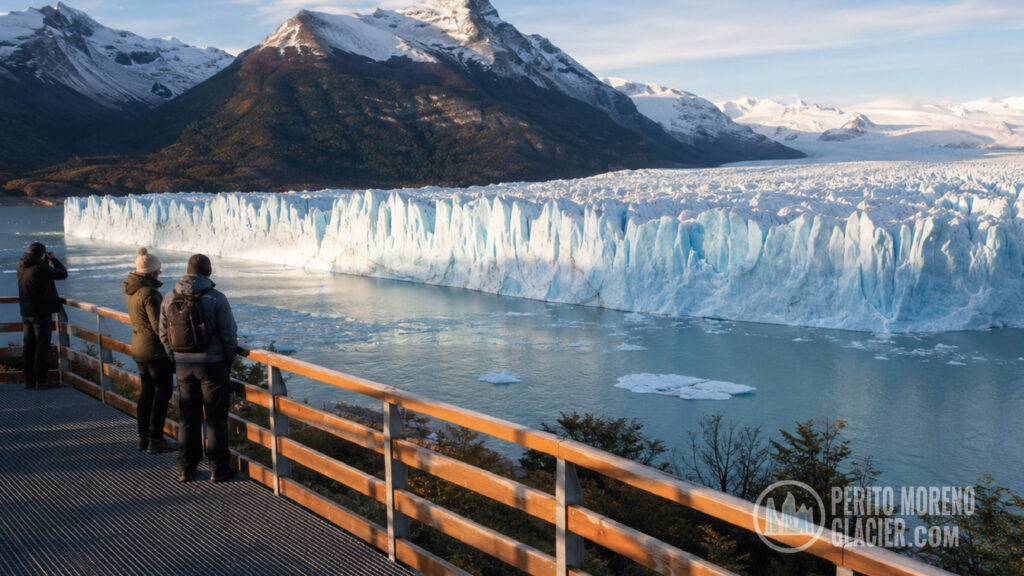
Visiting Perito Moreno Glacier in the Early Morning
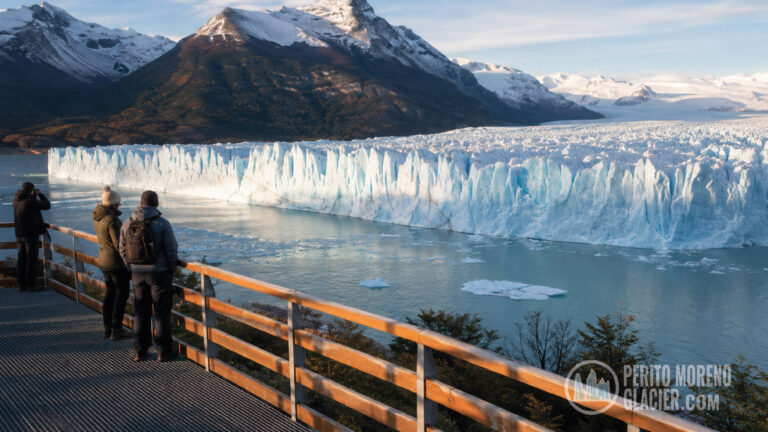
Early morning offers the calmest-feeling version of Perito Moreno. The first visitors reach the balconies while the air is crisp, the forest is quiet and the main viewing areas have not yet filled with excursion groups.
Why Morning Can Be the Best Time
The most important advantage is space. With fewer people on the walkways, it is easier to choose a position, take wide photographs without crowds and pause to hear the glacier’s cracks and distant rumbles.
Patagonian wind commonly strengthens as the land warms during the day, although no daily pattern is guaranteed. A morning visit can therefore be more comfortable for families with young children, senior travelers and anyone who dislikes strong gusts.
The light is another benefit. The terminal face is broadly oriented toward the viewing peninsula, and morning light can reveal texture across the ice without the extremely hard contrast found around midday. Clouds often act like a natural diffuser, helping the glacier’s ridges and blue crevasses remain visible in photographs.
Disadvantages of an Early Visit
Morning is colder, particularly outside summer. Frost, snow or ice can remain on exposed surfaces, and shaded sections of the boardwalk may feel significantly colder than El Calafate.
Travel logistics also matter. The glacier is about 80 km from El Calafate, so reaching the walkways near opening time usually requires an early departure and private transport, a rental car or a tour specifically scheduled for that hour. Standard group excursions may arrive later.
Best Morning Window
Aim for the first one to two hours after the visitor area opens, rather than using a fixed clock time throughout the year. Seasonal opening hours and daylight vary, and temporary restrictions can occur because of weather or park operations.
Visiting in the Late Morning
Late morning is the most reliable compromise for a first visit. The temperature has usually begun to rise, all the main services and excursions are operating, and there is still ample time to explore the walkway network without rushing.
Why Late Morning Is the Best All-Around Choice
Between roughly 10:00 am and noon, visibility is often strong enough to appreciate the glacier’s color and scale. You can start with the upper panoramic platforms, continue to the central balconies and decide whether to descend to the lower circuits.
This period also works well with a navigation along the glacier face. Depending on the selected tour, you can walk first and sail afterward—or reverse the order—without making the day feel compressed.
The main trade-off is that buses and organized excursions are now arriving. The central balcony may become busy, but the walkway network extends for more than 4.5 km, so walking beyond the principal hub often leads to quieter viewpoints.
Big Ice & Estancia Cristina Adventure – 3 Nights
Enjoy visiting Perito Moreno Glacier, walking over the ice of the glacier and a wonderful trekking or horseback riding in a remote estancia in the national park

Visiting Perito Moreno Glacier at Midday
Midday creates the brightest, clearest-looking version of the glacier on a sunny day. Direct light brings out sharp crevasses, towers and fractures, while the lake can appear intensely turquoise.
Is Midday Good for Photography?
It can be excellent for detail, but it is not always the most flattering time for wide landscape photographs. Strong sunlight produces bright highlights on the ice and deep shadows inside crevasses. Phones and cameras may struggle to preserve both extremes in a single exposure.
Use exposure compensation to protect the highlights, avoid digital zoom and photograph from several elevations. Thin cloud can improve midday images dramatically by softening the contrast.
Are the Walkways Busy at Midday?
Usually, yes—especially during the summer high season and holiday periods. The main balconies, restaurant area and accessible platforms receive the most concentrated visitor traffic.
That does not mean the entire site feels overcrowded. Continue along a lateral or lower route, allow a group to move ahead, or remain at one balcony after a bus party departs. Visitor flow tends to arrive in waves rather than remain constant.
Visiting in the Early Afternoon
Early afternoon is a popular choice for travelers interested in the glacier’s movement and sound. As temperatures rise, surface melting and thermal changes can contribute to cracking and falling ice. Nevertheless, calving can happen at any time, and no afternoon visit can guarantee it.
Is Ice Calving More Likely in the Afternoon?
Visitors and guides often report more visible ice activity during warmer periods of the day, particularly in summer. This is a reasonable tendency—not a timetable. Calving is controlled by multiple factors, including stresses within the ice, water, temperature and the geometry of the glacier front.
A large block can fall early in the morning, late in the day or while nobody is looking. The best strategy is to spend time at the glacier rather than chase a precise hour.
Stay at a viewpoint for at least 15–20 minutes. The first sign may be a sharp crack or a deep boom. Because sound travels more slowly than light, you may hear a collapse after the ice has already fallen.
Afternoon Conditions
The temperature is often more comfortable, but wind can become stronger and more persistent. Wear a wind-resistant outer layer even if El Calafate felt mild when you departed.
Early afternoon can also be the busiest period. If crowds are your main concern, use the lower or lateral walkways rather than remaining only at the main central platform.
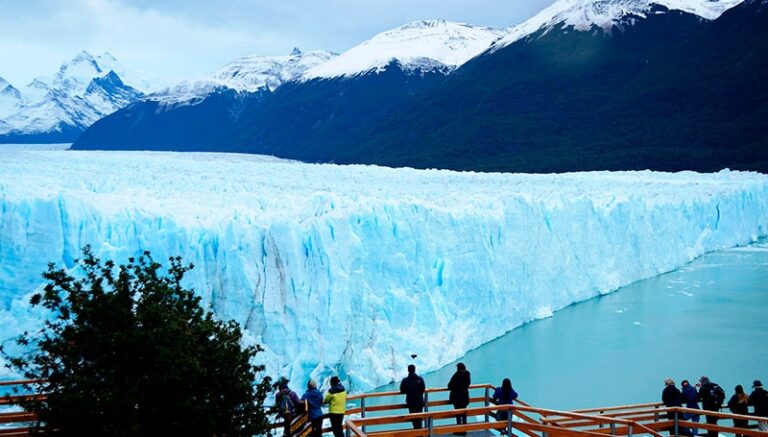
Perito Moreno Glacier Tour from El Calafate
Enjoy a Perito Moreno Glacier tour from el Calafate! One of Patagonia's most incredible shows: Perito Moreno Glacier.
Visiting in the Late Afternoon
Late afternoon can be exceptionally rewarding for independent travelers. Many organized groups begin returning to El Calafate, the walkways become quieter and lower-angle light adds warmth to the mountains, forest and ice.
Why Photographers Like Late Afternoon
The light becomes less clinical and more dimensional. Forest edges and mountain ridges pick up warmer tones, while the glacier remains blue in shaded fractures. After rain or a passing front, broken clouds can create moving bands of light across the ice.
The atmosphere is often more peaceful than at midday, making this a strong choice for couples, repeat visitors and photographers willing to wait for changing conditions.
The Main Risk of Visiting Late
You must plan around the park’s current last-entry and departure rules. Sunset does not determine when visitors may remain at the walkways. Official access hours vary seasonally, and adverse weather can cause earlier restrictions.
Do not arrive so late that you have only a few minutes at the main platform. Allow at least 90 minutes for a worthwhile visit and considerably longer if you want to explore several circuits.
What Time Is Best for Seeing Ice Calving?
There is no guaranteed best hour. Warmer conditions around midday and afternoon may coincide with more surface activity, but glacier calving is a natural, irregular process.
Your chances improve more by extending your viewing time than by selecting a specific 30-minute slot. Choose a balcony with an unobstructed view of a broad section of the terminal face, reduce distractions and listen as well as watch.
Never confuse routine calving with the historic rupture cycle. The collapse of the ice dam is a separate, rare and unpredictable event; it cannot be scheduled as a tourist attraction.
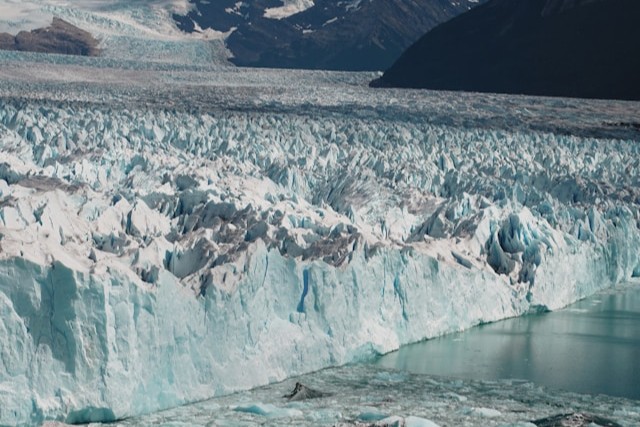
Best Time of Day for Photography
Best for Wide Landscapes: Morning
Morning commonly offers softer light, fewer people in the foreground and cleaner atmospheric conditions. It is ideal for the classic glacier-and-mountains panorama.
Best for Blue-Ice Details: Late Morning to Midday
Brighter light penetrates some fractured ice and makes blue tones visible. A polarizing filter may help manage lake reflections, but use it carefully with very wide lenses because it can darken the sky unevenly.
Best for Mood and Warm Color: Late Afternoon
Lower light adds depth to the forest and mountains and can produce a warmer contrast against the glacier. The effect depends entirely on cloud cover and the season.
A Useful Photography Tip
Do not judge the light only from El Calafate. The glacier lies close to the Andes and can have different cloud, wind and precipitation conditions. A grey departure from town may lead to dramatic broken light at the walkways.
Best Time for Fewer Crowds
Arrive near opening time or visit during the final part of the permitted day. The busiest period is generally from late morning through early afternoon, when organized day tours overlap.
Season matters as much as the hour. January, February, Easter, long weekends and school-holiday periods can be busy throughout the day. In shoulder season, even midday may feel relatively relaxed.
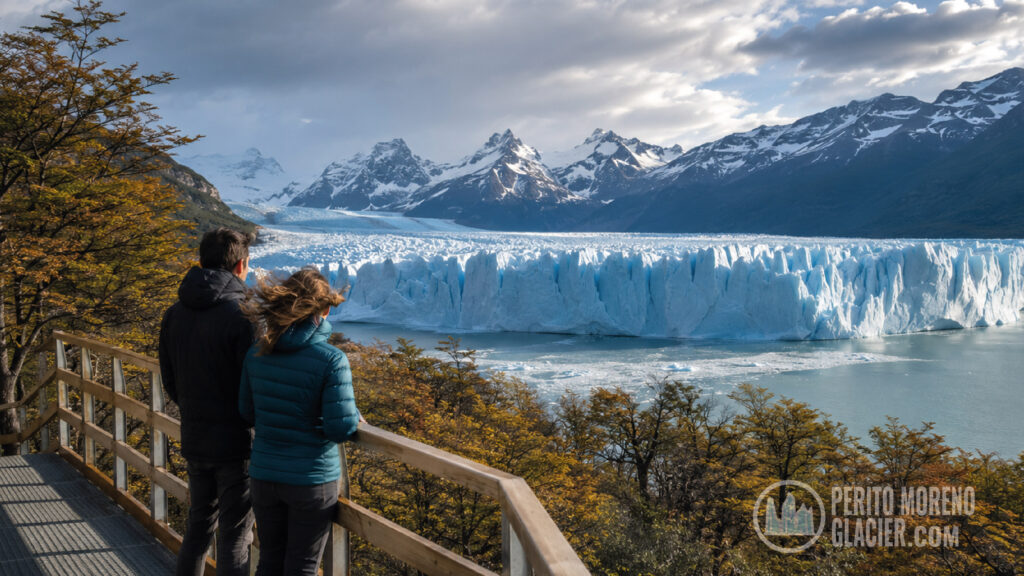
Best Time for Families, Seniors and Reduced Mobility
Families with Young Children
Morning or late morning is usually most comfortable. Children are fresher, wind may be lighter and there is no pressure from an approaching closing time.
Senior Travelers
Late morning offers a practical balance between temperature and available time. It also allows visitors to use the accessible ramps and panoramic balconies before deciding whether to attempt sectors with stairs.
Visitors with Reduced Mobility
Choose daylight and stable weather over a rigid hour. The accessible route provides an excellent panorama, but wind, frost and temporary maintenance can affect comfort. Confirm current conditions before leaving El Calafate.

How Weather Changes the Best Time
In Patagonia, the forecast should influence your decision more than generic advice.
On a Clear, Calm Day
Morning gives soft light and quiet conditions; late afternoon adds more dimensional color. Midday is bright but can create harsh contrast.
On a Cloudy Day
Any hour can be excellent. Cloud acts as a giant softbox, revealing texture across the glacier. Wait for variations rather than assuming overcast weather will ruin the visit.
On a Windy Day
Go as early as your transport and opening hours allow. Winds frequently strengthen later, although local conditions remain unpredictable.
On a Rainy or Snowy Day
Prioritize the safest and most stable weather window. Precipitation can create a beautiful atmosphere, but wet, icy or snowy walkways require extra care.

El Calafate Basic Pass
Buy El Calafate Basic Pass a get special discounts!
How the Seasons Affect the Time of Day
The ideal clock time changes through the year because daylight and park access hours vary considerably.
Spring and Summer
Long daylight allows greater flexibility. Morning is excellent for avoiding crowds, while afternoon is more comfortable thermally. Strong winds and intense midday light are common considerations.
Autumn
Late-morning and early-afternoon visits make good use of shorter daylight and slightly warmer temperatures. Autumn foliage adds color to the forest around the walkways.
Winter
The middle of the day is generally the most practical option because daylight is shorter and surfaces may be icy early or late. Operating hours and road conditions should be checked before departure.
Argentinian & Chilean Patagonia: Ushuaia, El Calafate, El Chalten and Puerto Natales
Enjoy visiting Ushuaia and the end of the world... El Calafate and Perito Moreno Glacier... El Chalten and the Fitz Roy Mount and Puerto Natales and Torres del Paine National Park!
Should You Stay All Day?
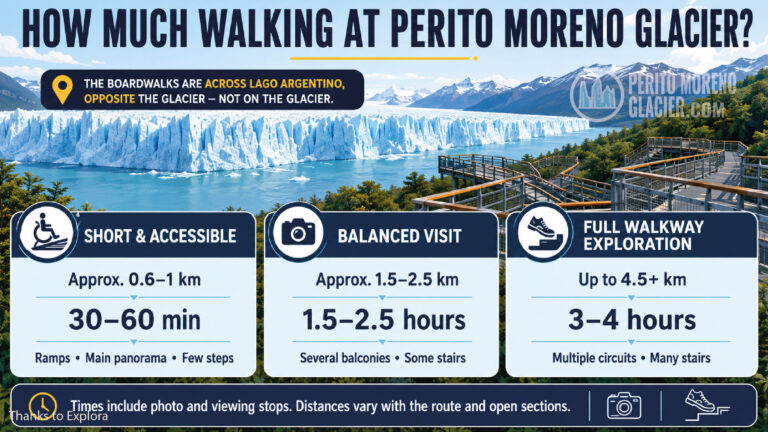
Most travelers do not need an entire day exclusively on the walkways. Two to three hours provide enough time for the principal viewpoints and several stops. A full-day excursion becomes worthwhile when it includes transport from El Calafate, scenic stops, a boat navigation, lunch or another glacier activity.
If you have private transportation and photography is a priority, staying from late morning into the afternoon lets you observe how the scene changes without rushing.
Suggested Schedules
For the Quietest Experience
- Depart El Calafate early.
- Reach the visitor area close to opening time.
- Start with the main panoramic balcony.
- Explore the central and accessible sectors before group arrivals.
For the Best Overall First Visit
- Arrive around late morning.
- Spend 1.5–2.5 hours on the walkways.
- Add a boat navigation before or after the panoramic visit.
- Leave sufficient time for scenic stops on the return journey.
For Photography
- Choose morning for clarity and fewer people.
- Choose late afternoon for warmer, more dramatic light.
- Allow at least two hours so you can wait for cloud and light changes.
For Possible Ice Activity
- Visit from late morning into the afternoon.
- Remain at selected viewpoints rather than walking continuously.
- Treat every calving event as an unpredictable bonus, not a scheduled spectacle.
Frequently Asked Questions
Is It Better to Visit Perito Moreno Glacier in the Morning or Afternoon?
Morning is better for fewer crowds, softer light and potentially calmer wind. Afternoon is often warmer and may feel more active, but it can be busier and windier. Late morning is the most balanced option for most first-time visitors.
What Is the Best Time to Avoid Crowds?
Visit close to opening time or during the final permitted part of the day. Late morning and early afternoon usually receive the greatest overlap of organized groups.
What Time Is Best to See the Glacier Calve?
Calving is unpredictable. Warmer midday or afternoon conditions may coincide with more activity, but large and small collapses can happen at any hour.
Is Sunrise Possible at Perito Moreno Glacier?
Only if current seasonal access hours and an authorized transport arrangement allow you to be there. The public walkway schedule—not the astronomical sunrise time—determines when visitors can enter.
Can You Stay Until Sunset?
Not necessarily. Visitors must follow the official seasonal exit time, which may occur before sunset. Always verify current park information on the day of travel.
How Long Should I Spend at the Glacier?
Allow at least two hours for the main panoramic walkways. Three to four hours provide a slower visit with additional circuits and extended viewing stops.
Final Verdict: What Is the Best Time of Day?
For most visitors, late morning through early afternoon is the best overall period to visit Perito Moreno Glacier. It balances light, temperature, visibility, services and enough time to explore.
Choose early morning if your priorities are peace, photography and a better chance of lighter wind. Choose early afternoon if you prefer warmer conditions and want to spend time watching and listening for ice movement. Choose late afternoon for a quieter, more atmospheric experience—provided you carefully respect the current park closing time.
Above all, remain flexible. At Perito Moreno, the best moment may be the instant when a cloud lifts, the wind falls silent or the glacier suddenly cracks—regardless of what the clock says.
Editorial fact-check note: Confirm current opening, last-entry and exit times with Argentina’s National Parks Administration before publication or periodically after publication. Operational hours and access conditions may change by season and weather.
El Calafate Special Adventure Program: Big Ice and Horseback Riding or Trekking in Estancia Cristina
Enjoy visiting Perito Moreno Glacier, walking over the ice of the glacier and a wonderful trekking or horseback riding in a remote estancia in the national park
El Calafate, El Chalten & Puerto Natales – 7 Nights Tour Package
Discover the best of Patagonia with El Calafate and Perito Moreno Glacier; El Chalten and the Fitz Roy Mount and Puerto Natales and Torres del Paine National Park!