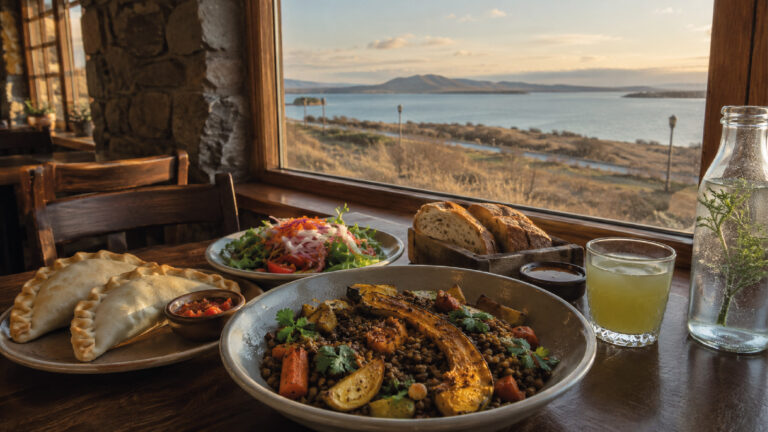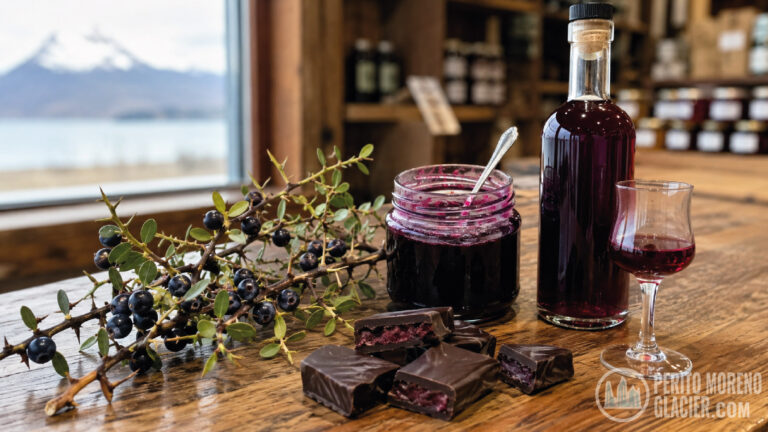
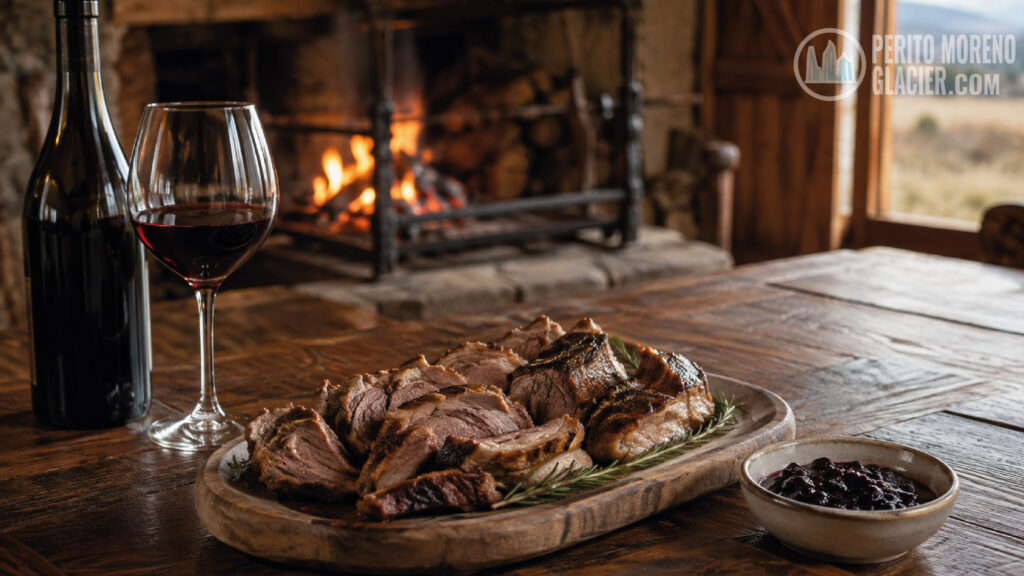
Choosing a wine for Patagonian lamb is not simply a matter of ordering the biggest red on the list. The best match depends on how the lamb is cooked: smoke from an open fire calls for more structure, a delicate rack works with a lighter red, and a berry-based sauce changes the balance again. In El Calafate, a useful shortlist is Patagonian Pinot Noir, Malbec, Merlot, Cabernet Franc and, for a starter, Brut Rosé.
What Is the Best Patagonian Wine with Lamb?
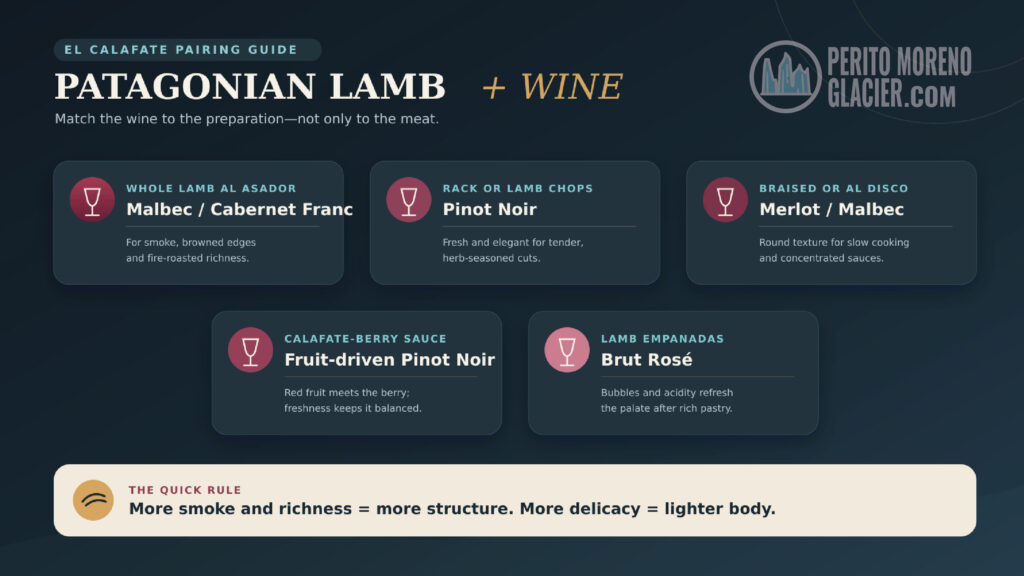
For traditional cordero patagónico al asador, choose a medium- to full-bodied Patagonian Malbec or Cabernet Franc with fresh acidity and controlled oak. For lamb chops or a pink-centered rack, Pinot Noir is usually the more elegant choice. Merlot suits slow-cooked or braised lamb, while a dry Brut Rosé works especially well with lamb empanadas.
That is the quick answer. The more useful answer begins with the plate rather than the grape.
Why the Lamb Preparation Matters More Than a Fixed Rule
Lamb can move from delicate to powerful depending on the cut, cooking method and sauce. A rack cooked medium-rare has a different texture and intensity from a whole animal roasted slowly beside a wood fire. A stew adds concentrated cooking juices, while a calafate-berry sauce introduces fruit and sometimes sweetness.
Four elements should guide the pairing:
- Smoke: open-fire cooking favors a wine with enough fruit and structure to remain present.
- Fat and texture: acidity refreshes the palate between bites.
- Herbs and seasoning: restrained wines allow rosemary, garlic and the flavor of the meat to remain clear.
- Sauce: a sweet or fruit-based sauce can make a very dry, highly tannic wine feel harder and less balanced.
In my experience planning meals for international visitors, the most common mistake is choosing a prestigious or powerful bottle before asking how the lamb will be served. One question to the waiter about the preparation often improves the pairing more than moving to a more expensive label.
Patagonian Lamb and Wine Pairing Chart
| Lamb preparation | Main flavor | Recommended Patagonian wine | Why it works |
|---|---|---|---|
| Whole lamb al asador | Smoke, browned edges, juicy meat | Malbec or Cabernet Franc | Fruit and structure stand up to the fire-roasted flavors |
| Rack or lamb chops | Tender meat, herbs, moderate browning | Pinot Noir | Freshness and moderate tannin complement the meat without dominating it |
| Braised lamb or lamb stew | Rich cooking juices, soft texture | Merlot or medium-bodied Malbec | Round texture matches the slow-cooked dish |
| Lamb cooked al disco | Savory sauce, vegetables, concentrated flavors | Merlot or red blend | Supple fruit handles a layered, rustic preparation |
| Lamb with calafate-berry sauce | Savory meat plus tart or sweet fruit | Fruit-driven Pinot Noir | Red-fruit character connects with the berry while acidity keeps the pairing lively |
| Lamb empanadas | Pastry, seasoned filling | Brut Rosé | Bubbles and acidity refresh the palate |
Treat this chart as a decision tool, not a set of laws. The restaurant’s specific recipe, the wine’s age and oak level, and your own taste still matter.

Big Ice Trekking on Perito Moreno Glacier From El Calafate
Join our Big Ice Trekking Tour on Perito Moreno Glacier. Explore ice formations & rugged beauty. Book now for an unforgettable experience.
The Patagonian Wine Styles Worth Knowing
Argentina is closely associated with Mendoza, but the country’s wine map extends far into Patagonia. Neuquén and Río Negro are established Patagonian wine areas, while Chubut represents an even more southerly, cool-climate frontier. Their wines are not all light or all heavy; producer, site, vintage and winemaking choices remain important.
Pinot Noir: The Most Versatile Choice for Delicate Lamb
Patagonian Pinot Noir is the bottle I would examine first for a rack, chops, herb-crusted lamb or a dish served pink in the center. It generally offers red-fruit character, freshness and less tannic weight than a dense Cabernet-based red.
Pinot Noir is also useful when a table is sharing several plates. It can accompany lamb while remaining friendly to mushrooms, roasted vegetables and lighter starters. Look for a dry style with good acidity and moderate oak rather than an overly sweet or heavily extracted wine.
Malbec: The Reliable Partner for Lamb Cooked over Fire
Malbec makes sense with cordero al asador because its dark-fruit profile and body can meet the browned, smoky surface of the meat. However, more power is not automatically better. A very ripe, high-alcohol or heavily oaked Malbec can hide the lamb’s subtler flavor.
Ask for a balanced Patagonian Malbec rather than simply the boldest bottle available. If the meat is strongly charred or served with a concentrated sauce, a fuller version may be appropriate. If the seasoning is simple and the meat is tender, medium body is usually enough.
Merlot: A Strong Option for Braised Lamb and Stews
Merlot deserves more attention at the Patagonian table. Its round texture and plum-like fruit can be comfortable with slow-cooked lamb, casseroles and dishes prepared al disco, where meat, vegetables and sauce develop together.
It is often a practical middle ground for guests who find Pinot Noir too light and a structured Cabernet-style wine too firm.
Cabernet Franc and Red Blends: For Smoke and Savory Depth
Cabernet Franc can work particularly well when the lamb has pronounced fire-roasted notes, herbs or a savory crust. Its freshness and herbal character can echo the seasoning, while its structure supports a richer cut.
A Patagonian red blend is also worth considering, especially when one bottle must serve a table sharing different lamb preparations. Ask which grapes lead the blend and whether the wine is fresh and medium-bodied or concentrated and oak-forward. The words “red blend” alone do not tell you how it will behave with food.
Brut Rosé: Not Only for the Toast
Dry sparkling rosé is an excellent beginning to a lamb meal. Its bubbles cut through pastry and fat, making it a smart partner for lamb empanadas, small croquettes or a charcuterie-style first course. It can also continue with lightly seasoned lamb, although most diners will prefer to move to a still red for the main plate.
Argentinian & Chilean Patagonia: Ushuaia, El Calafate, El Chalten and Puerto Natales
Enjoy visiting Ushuaia and the end of the world... El Calafate and Perito Moreno Glacier... El Chalten and the Fitz Roy Mount and Puerto Natales and Torres del Paine National Park!

Does “Patagonian Wine” Mean Wine Made in El Calafate?
Not necessarily. El Calafate is the dining base for the glaciers of southern Santa Cruz, but many of the Patagonian wines encountered on local restaurant lists come from established growing areas farther north, particularly Neuquén and Río Negro, with a smaller and increasingly interesting group from Chubut.
This distinction is useful when reading a menu. A wine can be genuinely Patagonian without being produced close to El Calafate. Check the province or geographical origin on the list or bottle instead of relying only on a brand’s imagery.
Neuquén is a good place to look for Malbec, Pinot Noir, Merlot, Cabernet Franc and blends. Río Negro has a long winegrowing tradition and is especially relevant for Pinot Noir, Merlot and Malbec. Chubut’s colder, more southerly sites make it an interesting source for Pinot Noir and sparkling or white-wine styles, depending on the producer.

Calafate Balcony Tour in a 4×4 Vehicle
Enjoy the amazing views of El Calafate and Lake Argentino in the Calafate Balcony.
How to Match Wine to the Lamb You Order in El Calafate
Whole Lamb Roasted on an Iron Cross
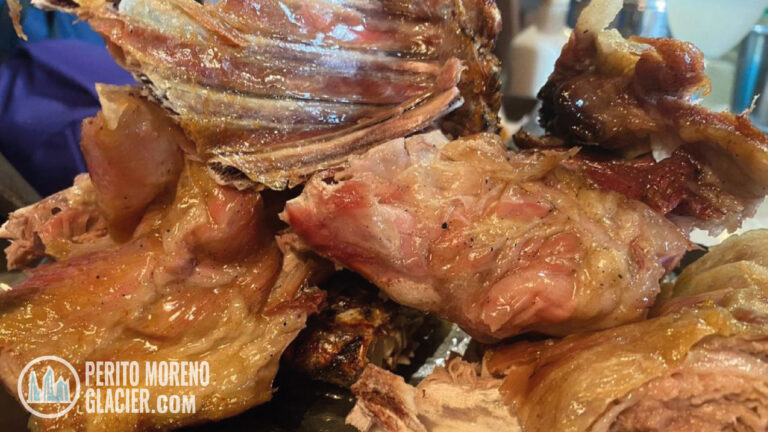
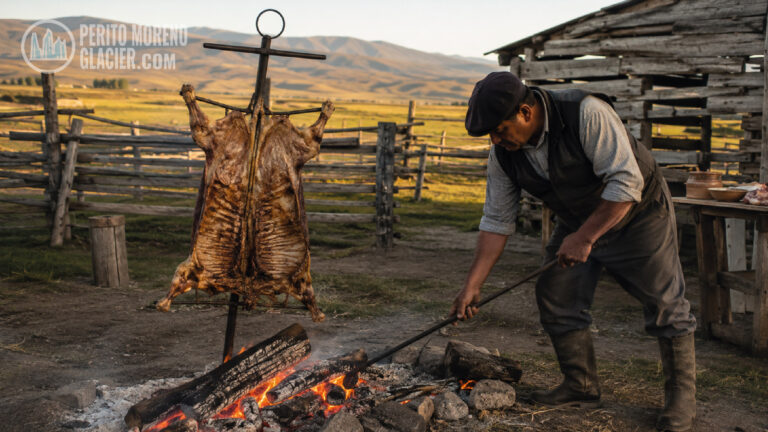
Traditional Patagonian lamb is cooked slowly beside the fire on an iron cross rather than placed directly above aggressive flames. The result combines tender meat with browned edges and a clear but not necessarily overpowering smoky character.
Start with Malbec. Move to Cabernet Franc if the plate is especially savory, herbaceous or charred. If you prefer lighter reds, a structured Pinot Noir can still work, particularly with a less fatty serving from the interior of the animal.
Rack of Lamb or Individual Chops
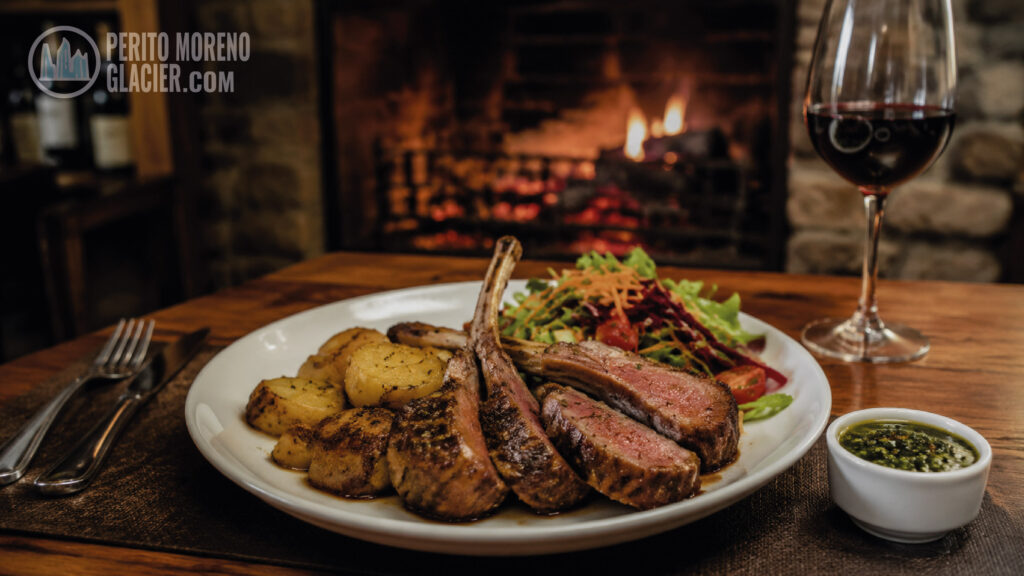
A rack or chop offers more precise cooking than a whole lamb. When it arrives pink, juicy and simply seasoned, Pinot Noir protects that delicacy. A large, tannic red may make the meat seem drier and push the herbs into the background.
If the chops have a dark crust, a reduction or abundant garlic, a medium-bodied Malbec becomes a better option.
Lamb Stew, Braised Lamb or Lamb al Disco
Long cooking changes the pairing. Collagen softens, the sauce concentrates and vegetables or stock become part of the flavor. Merlot is often the easiest match because its roundness follows the texture of the dish. A balanced Malbec works when the sauce is darker or more intense.
For cordero al disco, ask what else is in the pan. Tomato, peppers, wine, mushrooms or cream can each shift the best choice.
Lamb with Calafate-Berry Sauce
The calafate berry can appear as a tart accent or as a noticeably sweet sauce. A fruit-driven Pinot Noir is the safest starting point because its red-fruit profile creates a bridge between the meat and berry.
If the sauce is only lightly fruity and the lamb is strongly roasted, a fresh Malbec can work. If the sauce is quite sweet, avoid the driest and most tannic bottle on the list; sweetness can make such a wine seem more bitter or austere. Ask the waiter whether the sauce is dulce (sweet) or agridulce (sweet-and-sour) before choosing.
Lamb Empanadas and Small Plates
For lamb empanadas, consider Brut Rosé, Pinot Noir or a light red blend. Sparkling wine is particularly effective when the pastry is rich. If the filling includes hot spice, avoid a heavily alcoholic red, which can make the heat feel stronger.
How to Choose from an El Calafate Restaurant Wine List
You do not need advanced wine knowledge. Use this order:
- Confirm the preparation. Ask whether the lamb is roasted, grilled, braised, cooked al disco or served with a sauce.
- Choose the style. Pinot Noir for delicacy; Malbec or Cabernet Franc for smoke; Merlot for slow cooking; Brut Rosé for a starter.
- Look for the Patagonian origin. Check Neuquén, Río Negro or Chubut rather than assuming every Argentine bottle is Patagonian.
- Ask about body and oak. A medium-bodied, fresh wine is more flexible than the most concentrated bottle.
- Choose the format. Wine by the glass is useful when two diners order very different dishes. For a group sharing lamb, one carefully chosen bottle usually makes more sense.
Useful Spanish phrases include:
- ¿Qué vino patagónico recomienda con el cordero? — Which Patagonian wine do you recommend with the lamb?
- ¿Es un vino liviano, de cuerpo medio o intenso? — Is it a light-, medium- or full-bodied wine?
- ¿Tiene mucha madera? — Does it have a lot of oak?
- ¿Lo sirven por copa? — Do you serve it by the glass?
- ¿De qué provincia es? — Which province is it from?
Wine lists and vintages change, so these questions are more reliable than arriving with only one brand in mind.
Planning the full meal? Our guide to what to eat in El Calafate covers the region’s principal dishes, while the El Calafate nightlife guide helps place dinner within an evening in town.
Argentinian & Chilean Patagonia: Ushuaia, El Calafate, El Chalten and Puerto Natales
Enjoy visiting Ushuaia and the end of the world... El Calafate and Perito Moreno Glacier... El Chalten and the Fitz Roy Mount and Puerto Natales and Torres del Paine National Park!
One Bottle for a Table Sharing Several Lamb Dishes
If the table orders a combination of empanadas, chops and roast lamb, choose a fresh, medium-bodied red. Pinot Noir is the most flexible when the dishes are delicate or herb-driven. Malbec is the better compromise when the whole lamb and open-fire flavors are the center of the meal.
For a larger group, it can be more interesting to order two contrasting bottles: a Patagonian Pinot Noir followed by a Malbec or Cabernet Franc. This allows diners to understand how weight and tannin change the experience without turning dinner into a formal tasting.
When a Non-Patagonian Malbec Is the Better Choice
The aim is an enjoyable meal, not geographic purity. If a restaurant has a stronger selection from Mendoza than from Patagonia, a balanced Mendoza Malbec can be an excellent match for fire-roasted lamb. Patagonian origin adds a meaningful regional connection, but freshness, balance and suitability for the plate matter more than the word on the map.
Likewise, guests who prefer white wine can ask for an oak-aged Chardonnay with enough body and acidity for a lightly prepared chop. It is not the classic choice for smoky lamb al asador, but personal preference should remain part of the decision.
Frequently Asked Questions
What red wine goes best with Patagonian lamb?
Malbec is the most reliable choice for lamb roasted beside an open fire. Pinot Noir is better for a delicate rack or chops, Merlot suits braised lamb, and Cabernet Franc works with smoky or herb-seasoned preparations.
Does Pinot Noir pair with lamb?
Yes. Pinot Noir is especially suitable for lamb served pink, herb-crusted racks, chops and lamb with a lightly tart berry sauce. Its acidity and moderate tannin complement the meat without overwhelming it.
Is Malbec too heavy for lamb?
Not when its weight matches the dish. A balanced, medium-bodied Malbec works very well with cordero al asador. A highly alcoholic or heavily oaked wine may feel excessive with a delicate cut, so ask for a fresher style when needed.
Are Patagonian wines produced near El Calafate?
The Patagonian bottles most commonly found on restaurant lists are generally associated with wine regions in Neuquén, Río Negro and Chubut rather than the immediate surroundings of El Calafate. Check the province shown on the wine list or label.
Can sparkling wine pair with lamb?
Yes. A dry Brut Rosé is particularly good with lamb empanadas and other small plates because its acidity and bubbles refresh the palate. It can also accompany a lightly seasoned lamb dish.
A Better Way to Order the Patagonian Table
The ideal pairing does not begin with “red wine goes with red meat.” It begins with a more practical question: How is the lamb being prepared? Once you know that, the restaurant list becomes easier to navigate. Choose Pinot Noir for delicacy, Malbec or Cabernet Franc for fire and smoke, Merlot for slow-cooked depth, and Brut Rosé for the opening course.
If you would like to include a traditional estancia lunch, a lamb dinner or other regional food experiences in your El Calafate itinerary, we can help organize the timing around your glacier excursions. An estancia visit such as Nibepo Aike also places the meal within the rural culture that shaped it.
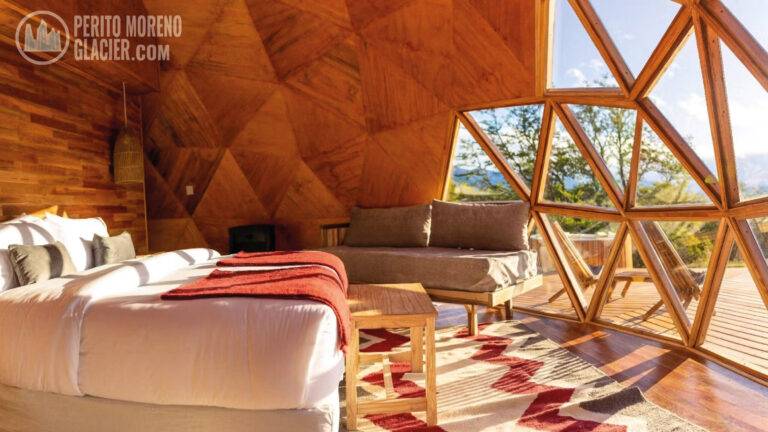
Perito Moreno Glacier & Pristine Luxury Camp – 4 Nights
A wonderful 4-night program to visit Perito Moreno Glacier from El Calafate and finalizing with a glamping experience!
Southern Patagonia & Cape Horn Expedition Cruise – 11 Nights
A wonderful and very complete 11-night tour to visit the best of the Southern Patagonia!

El Calafate Special Adventure Program: Big Ice and Horseback Riding or Trekking in Estancia Cristina
Enjoy visiting Perito Moreno Glacier, walking over the ice of the glacier and a wonderful trekking or horseback riding in a remote estancia in the national park