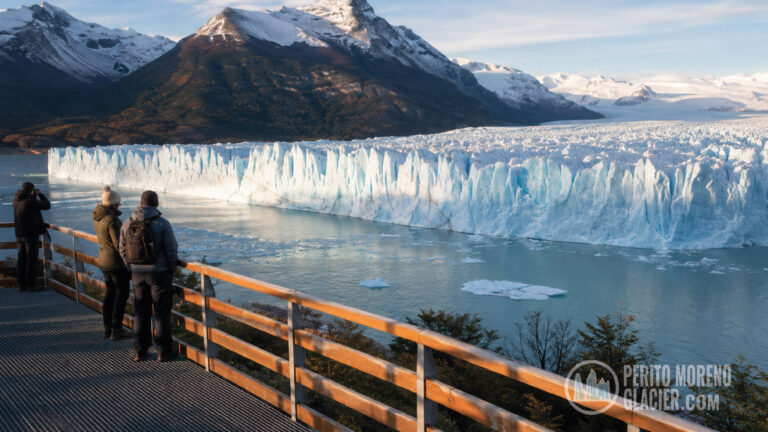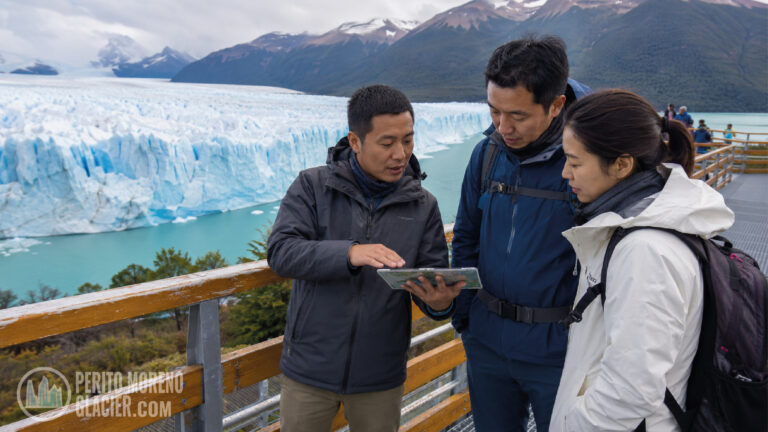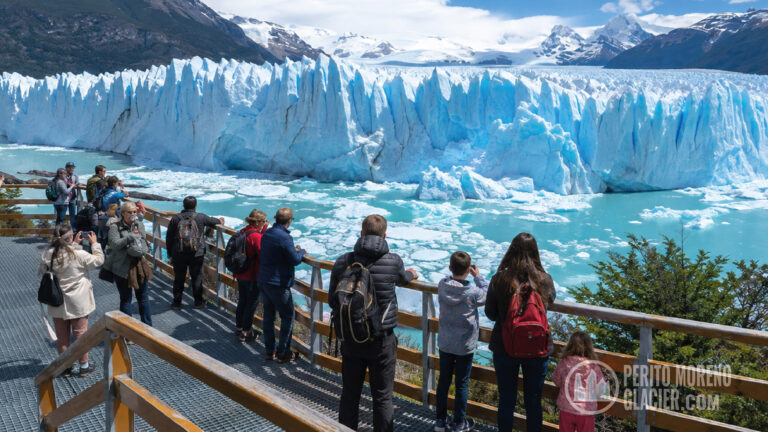
For travelers from Japan, El Calafate and Perito Moreno Glacier offer a landscape unlike almost anywhere else on Earth. The immense blue ice, open Patagonian steppe and dramatic Andes create a profound sense of scale—大自然の感動, the emotion inspired by magnificent nature.
Perito Moreno is especially rewarding for visitors interested in photography, geology, natural soundscapes and carefully organized outdoor experiences. Unlike glaciers that can only be reached through difficult trekking, its main viewpoints are connected by official walkways and panoramic balconies.
This complete guide explains how to travel from Japan, what to expect in Argentina, how to prepare for Patagonia’s weather and how Japanese visitors can experience El Calafate comfortably.
ようこそパタゴニアへ!— Welcome to Patagonia!
Why Japanese Travelers Will Love Perito Moreno Glacier
A Profound Connection with Nature
The Japanese idea of appreciating the changing character of nature finds a natural expression at Perito Moreno Glacier.
The glacier is never completely static. Visitors may notice:
- Different shades of blue inside the ice.
- Clouds changing the color of the landscape.
- Floating ice moving across the water.
- Cracks forming in the glacier wall.
- Powerful sounds from inside the ice.
- Occasional calving events.
There may be a long period of silence followed by a sudden crack or thunderous collapse. This unpredictability is part of the experience.
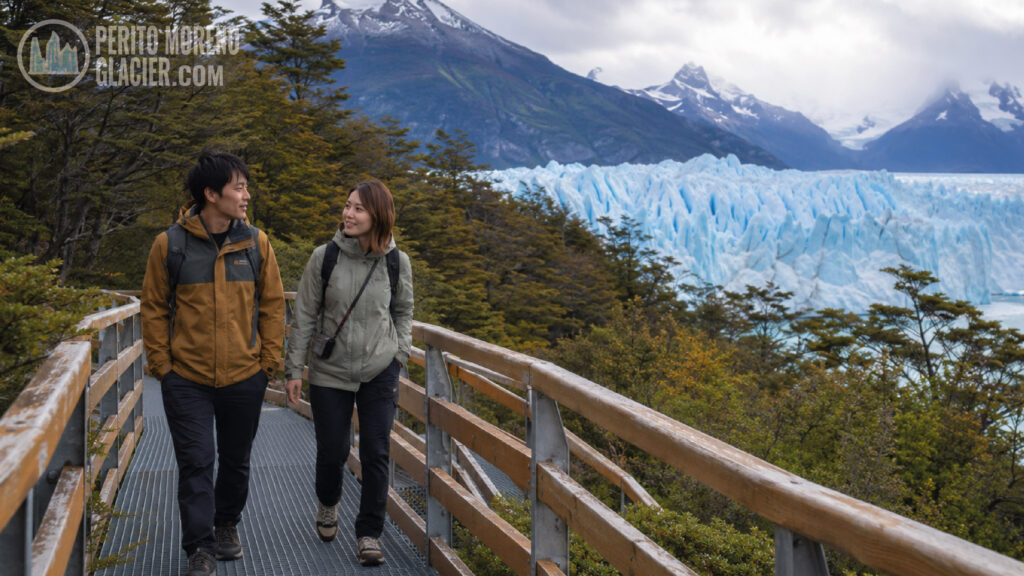
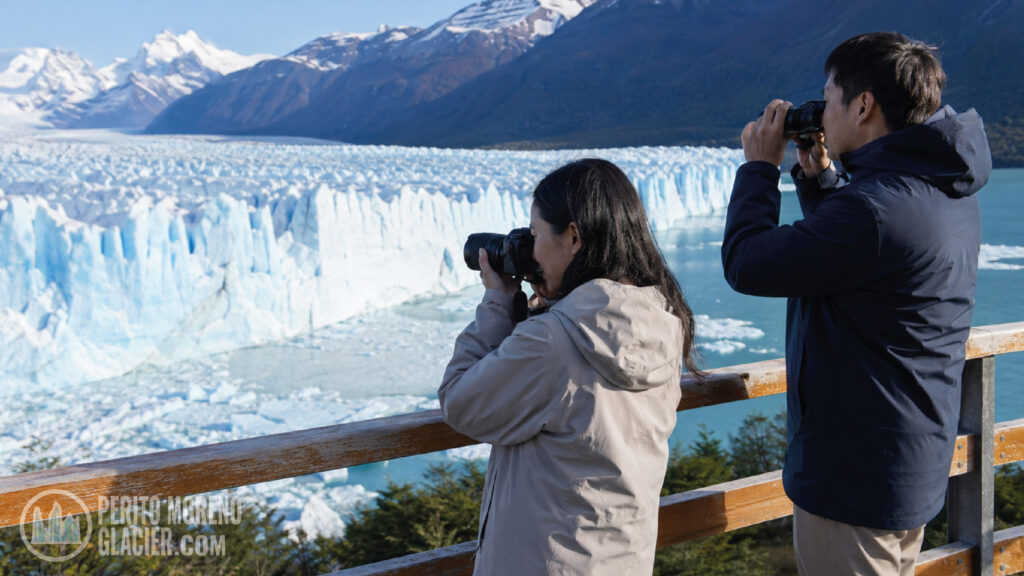
Excellent Photography
Japanese travelers with an interest in cameras and landscape photography will find countless subjects:
- The frontal glacier wall.
- Deep blue crevasses.
- Icebergs in Lago Argentino.
- The contrast between ice and forest.
- Mountain reflections.
- Condors and other birds.
- Autumn colors in the Patagonian vegetation.
- The scale of visitors against the glacier.
A sophisticated camera is not essential, but a telephoto lens can isolate fascinating details in the ice.
An Organized Way to Experience Wilderness
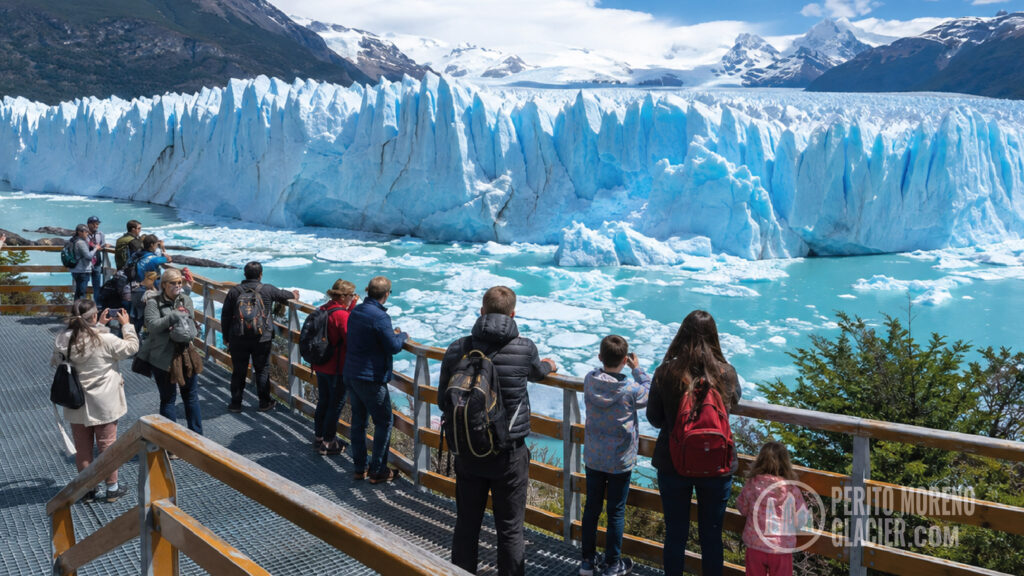
The principal visitor experience is structured around marked circuits, railings and designated balconies. Travelers can enjoy an immense wilderness environment while remaining within an organized visitor area.
This balance between nature and infrastructure makes Perito Moreno particularly suitable for:
- First-time visitors to Patagonia.
- Families.
- Senior travelers.
- Photographers.
- Travelers who prefer clear routes.
- Visitors who do not want to undertake a major hike.

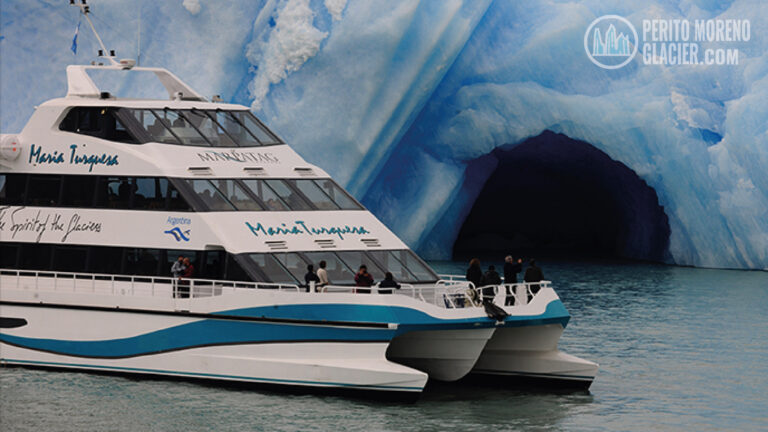
El Calafate Full Day Boat Tour to enjoy glaciers – All Glaciers Excursion
Enjoy a boat tour navigation in the Argentino Lake and watch different glaciers!
Where Are El Calafate and Perito Moreno Glacier?
El Calafate is located in Santa Cruz Province in southern Argentina. It is the principal tourism base for the southern sector of Los Glaciares National Park.
Perito Moreno Glacier is around 80 kilometers from El Calafate. The road journey generally takes approximately 1 hour 20 minutes to 1 hour 40 minutes each way, depending on traffic, weather and stops.
The glacier should not be confused with Perito Moreno National Park, which is a separate and much more remote protected area elsewhere in Santa Cruz.
Traveling from Japan to El Calafate
There Are No Direct Flights
Travelers should expect a long, multistage journey. A typical itinerary involves:
- Flying from Tokyo, Osaka or another Japanese city to an international connecting hub.
- Continuing to Buenos Aires or another South American gateway.
- Taking a domestic flight to El Calafate.
- Traveling from El Calafate Airport to the town.
Potential international connections may operate through:
- Europe.
- The Middle East.
- North America.
- Another Latin American country.
Routes and airline schedules change, so compare total travel time rather than looking only at the lowest fare.

El Calafate Half Day Tour & Visit to the Walichu Caves
Walk through history in El Calafate with a tour of ancient caves and historic town sites.
Transit Requirements Matter
A connection in a third country may require advance travel authorization even when the passenger does not formally enter that country.
For example, depending on the route, a Japanese passport holder may need:
- ESTA for transit through the United States.
- An eTA for transit through Canada.
- Documentation required by a European or Latin American transit country.
Verify every transit requirement using official government information before purchasing a restrictive ticket.
Arriving in Buenos Aires
International flights normally use Ministro Pistarini International Airport, known as Ezeiza or EZE. Many domestic flights operate from Jorge Newbery Airport, known as Aeroparque or AEP.
Some domestic services also depart from Ezeiza, so check the airport code carefully.
If changing between EZE and AEP:
- Allow several hours.
- Include immigration and baggage collection.
- Consider traffic conditions.
- Reserve a transfer.
- Do not treat the airports as adjacent terminals.
A single ticket with protected connections may reduce risk, but always inspect the airport codes.
Flying to El Calafate
El Calafate Airport is identified by the code FTE. Flight frequency varies according to the season and airline schedule.
Book the domestic sector well in advance when traveling during:
- December and January.
- Argentine holiday periods.
- Easter.
- Popular spring and autumn dates.
Do Not Schedule the Glacier Immediately After a Long International Journey
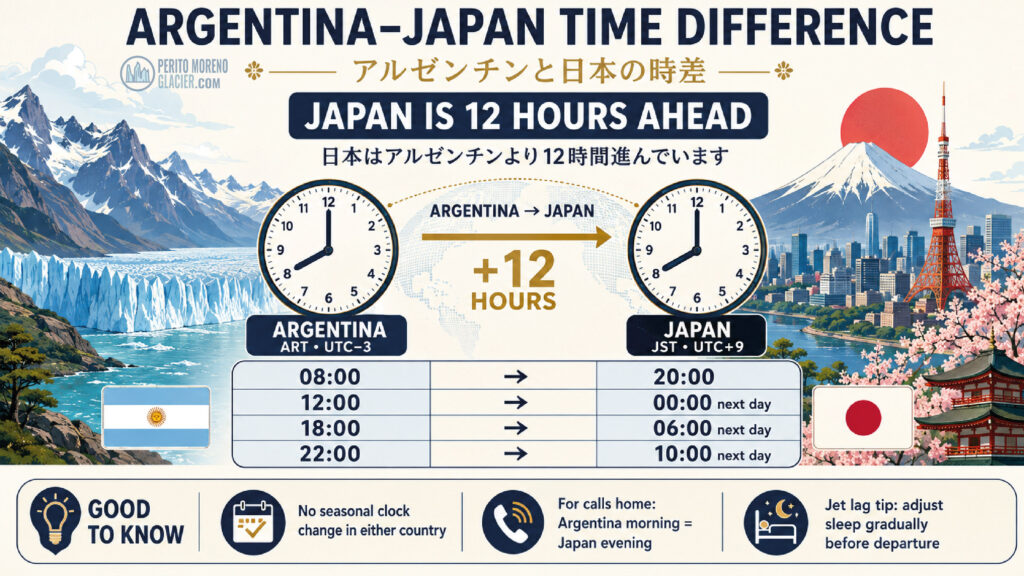
Japan is 12 hours ahead of Argentina. Significant jet lag is likely, particularly after a journey involving several flights.
Spend at least one night in El Calafate before visiting Perito Moreno Glacier. An additional recovery day may be worthwhile for older travelers or anyone sensitive to sleep disruption.
Visa and Entry Requirements for Japanese Citizens
According to the Argentine Embassy in Japan, holders of Japanese passports do not require a visa for tourism visits of up to 90 days. Argentine Embassy in Japan visa information
Travelers should still carry:
- A valid Japanese passport.
- Return or onward travel evidence.
- Accommodation information.
- Travel insurance details.
- Documents required by the airline.
- Transit authorizations for connecting countries.
Immigration policies can change. Confirm the rules again before departure through the Argentine Embassy or consular authorities.
パスポートを忘れずに — Do not forget your passport.
Understanding the Seasons
Japan and Argentina are in opposite hemispheres.
| Japan | El Calafate |
|---|---|
| Japanese summer | Patagonian winter |
| Japanese winter | Patagonian summer |
| Japanese spring | Patagonian autumn |
| Japanese autumn | Patagonian spring |
A traveler leaving a cold Japanese winter may arrive during Patagonia’s warmer and busiest season.
Argentinian & Chilean Patagonia II: Ushuaia, El Calafate, El Chalten and Torres del Paine
Enjoy visiting Ushuaia and the end of the world... El Calafate and Perito Moreno Glacier... El Chalten and the Fitz Roy Mount and Torres del Paine National Park!
Summer: December to February
Summer provides:
- Long daylight hours.
- More excursion departures.
- Generally milder temperatures.
- Better access to outdoor activities.
- Strong winds.
- Larger visitor numbers.
“Mild” does not mean reliably warm. Cold wind and rain are possible even in January.
Autumn: March and April
Autumn can offer:
- Colorful forests.
- Excellent photography.
- Fewer visitors than peak summer.
- Cooler mornings.
- More variable weather.
- Shorter daylight hours.
Winter: June to August
Winter brings:
- Cold temperatures.
- Shorter days.
- Snow and ice.
- Possible operational changes.
- Slippery surfaces.
- Reduced service frequency.
The glacier remains visually impressive, but winter travel requires additional flexibility.
Spring: September to November
Spring combines lengthening days with cool and changeable conditions. Wind can be strong, and layered clothing remains essential.

Patagonia’s Weather Compared with Japan
Japanese travelers are familiar with cold winters, but Patagonian cold feels different because of wind and rapid changes.
El Calafate generally has a dry climate, but Perito Moreno Glacier is closer to the Andes and can experience wetter conditions.
During one visit, travelers may encounter:
- Bright sun.
- Cloud.
- Strong wind.
- Light rain.
- Cold air.
- A sudden temperature drop.
- Warmer conditions inside a vehicle or restaurant.
Patagonian weather is often described with the expression “four seasons in one day.”
What Japanese Travelers Should Wear
Use the Layering System
The Japanese concept of 重ね着 — kasanegi, or dressing in layers, is ideal for Patagonia.
Wear:
- A comfortable base layer.
- A fleece, sweater or insulated mid-layer.
- A waterproof and windproof outer jacket.
This system is more practical than relying on one extremely heavy coat.
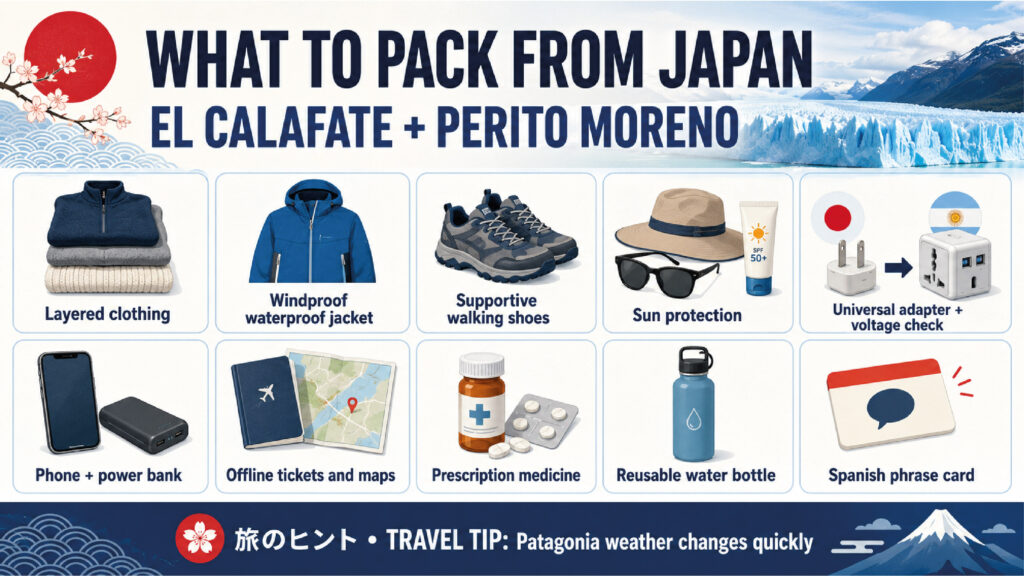
Recommended Clothing
Pack:
- Long-sleeved base layers.
- Warm fleece.
- Windproof and waterproof jacket.
- Comfortable walking trousers.
- Supportive walking shoes.
- Warm socks.
- Beanie or warm hat.
- Gloves.
- Sunglasses.
- Sun hat.
- Compact waterproof cover for a daypack.
Shoes Are Especially Important
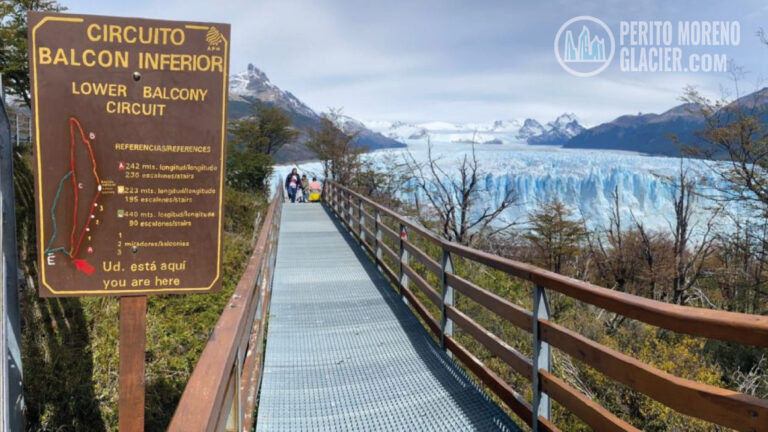
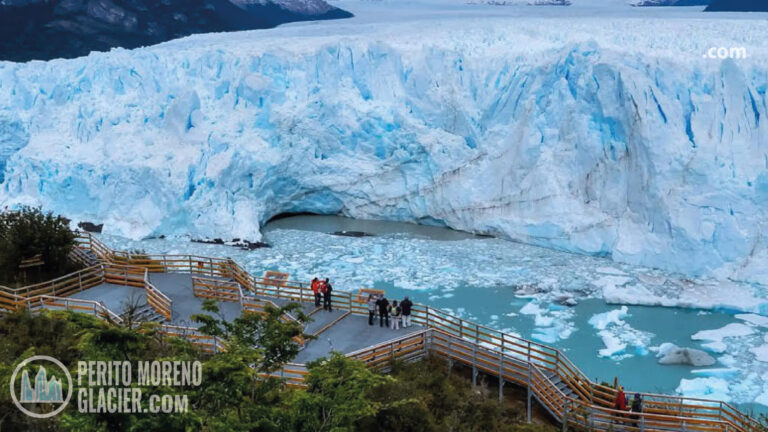
The walkways contain metal grating, ramps and stairs. Surfaces may be wet, frosty or icy.
The national park recommends appropriate trekking footwear to reduce the risk of falls on the metal-grate system.
Full mountaineering boots are not necessary for the standard walkways, but shoes should provide:
- Good grip.
- Stable support.
- Comfort on stairs.
- Water resistance.
- Enough room for warm socks.
Avoid wearing new shoes for the first time at the glacier.
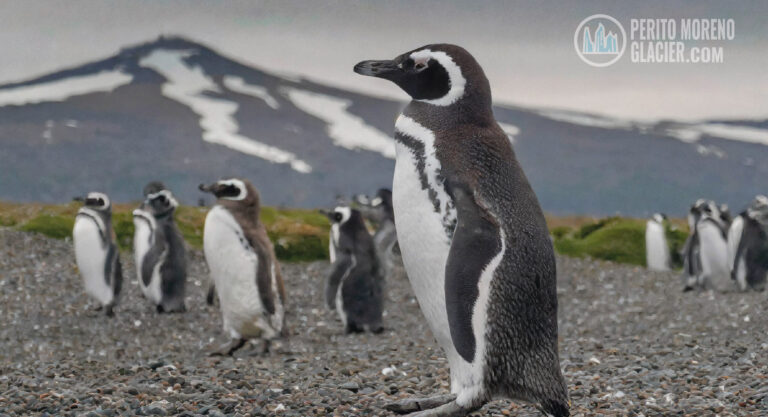
Beagle Channel Navigation: Sea Lions Island + Martillo Island Penguin Rookery
Enjoy a wonderful Beagle Channel Navigation from Ushuaia including the penguin rookery of Martillo Island
Electrical Voltage and Plug Adapters
Japan uses approximately 100 volts, while Argentina uses approximately 220 volts.
This difference is important. A plug adapter changes only the plug shape; it does not convert voltage.
Check Every Device
Modern phone, tablet and camera chargers often accept 100–240V, but verify the small printed label on each charger.
Devices designed only for Japanese voltage may be damaged if connected directly to an Argentine outlet.
Travel with:
- A high-quality universal adapter.
- Enough USB ports.
- A portable power bank.
- Spare camera batteries.
- A voltage converter only when genuinely required.
Argentina commonly uses Type C and Type I outlets. Availability may vary between properties, so a universal adapter is safer than carrying only one plug shape.
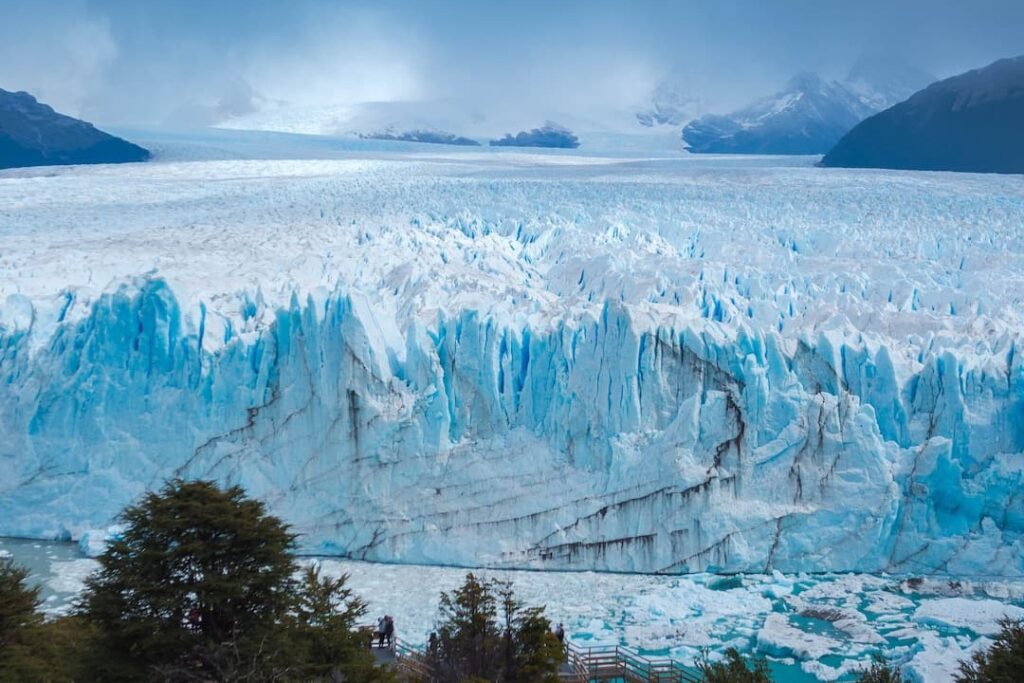
Visiting Perito Moreno Glacier
Guided Excursion
A regular guided excursion is the easiest option for many Japanese visitors. It generally includes transportation between El Calafate and the glacier and provides a clear schedule.
Advantages include:
- Hotel pickup or an established meeting point.
- A guide.
- Assistance with timing.
- Information about the landscape.
- No need to drive.
- Coordination with optional navigation.
Ask whether English-language guiding is guaranteed. Japanese-speaking guides are less common and usually require advance arrangement.
Private Tour
A private tour may suit:
- Families.
- Senior travelers.
- Photographers.
- Travelers wanting a slower pace.
- Visitors with mobility requirements.
- Anyone preferring more detailed translation.
- Travelers who want to avoid multiple hotel pickups.
Through PeritoMorenoGlacier.com, a travel designer can coordinate transfers, park admission arrangements, guided visits and optional activities in one reservation.
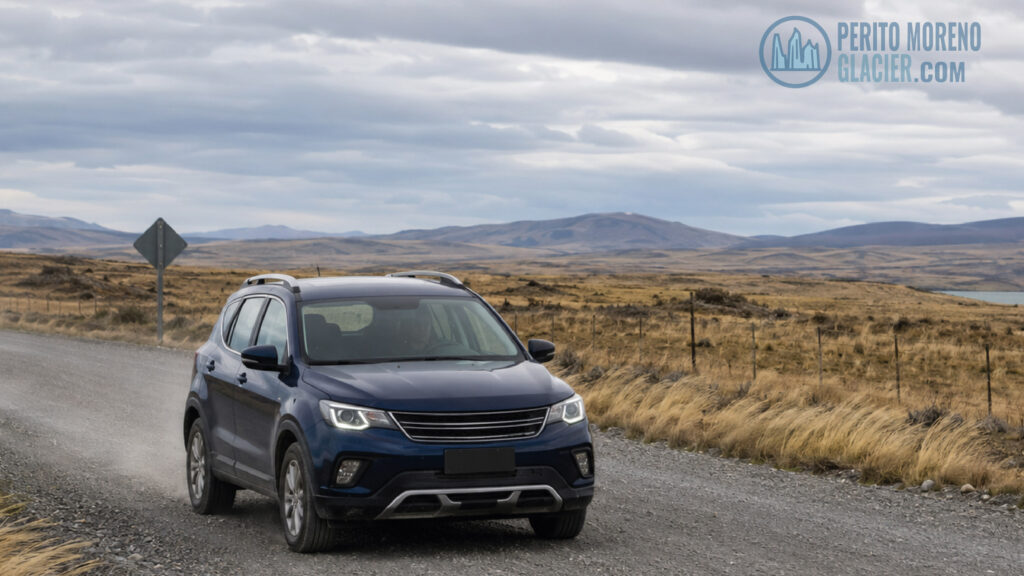
Rental Car
Driving independently offers flexibility, but visitors should consider:
- Left-hand-drive vehicles.
- Driving on the right side of the road.
- Road signs in Spanish.
- Patagonia’s wind.
- Winter ice.
- Limited services outside town.
- Fatigue after international travel.
Japan drives on the left, so adapting to right-side driving requires concentration.
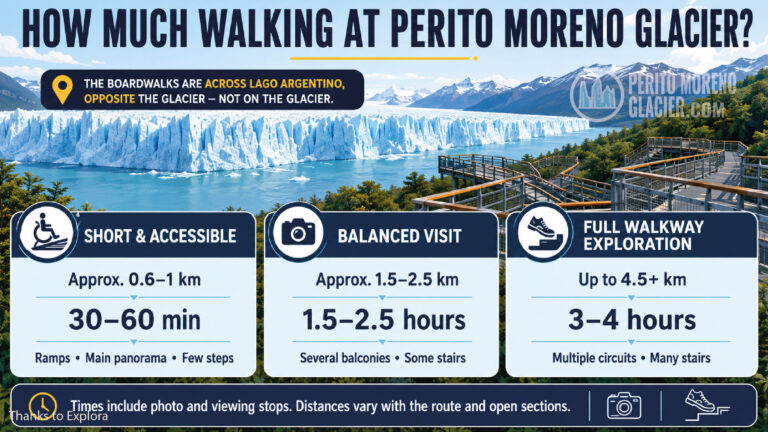
Understanding the Walkways
The walkway network contains routes of different lengths and difficulty levels. Visitors do not need to complete every circuit.
Expect:
- Panoramic balconies.
- Ramps.
- Stairs.
- Metal-grate flooring.
- Rest areas.
- Signage.
- Changing angles of the glacier.
- Crowded and quiet sections.
The national park reports an accessible ramped trail in the Perito Moreno sector. A wheelchair is also available for the walkway circuit but requires assistance.
Take Time to Observe
Japanese travelers may appreciate the opportunity to practise 自然観察 — shizen kansatsu, attentive nature observation.
Remain at one balcony for several minutes. The longer you observe, the more likely you are to notice changes in light, sound and ice movement.
Glacier Calving Cannot Be Scheduled
No operator can guarantee that a large piece of ice will collapse during a particular visit. Calving is natural and unpredictable.
Do not become so focused on waiting for a major collapse that you overlook the landscape as a whole.

Boat Navigation
A boat trip can complement the walkways by presenting the glacier from lake level.
Before booking, confirm:
- Which face of the glacier is visited.
- Boarding location.
- Navigation duration.
- Whether transportation is included.
- Indoor and outdoor seating.
- Toilet availability.
- Meal or snack arrangements.
- Weather policy.
The boat respects a safe distance from the glacier. It does not land directly beside the ice wall.
Advice for Motion-Sensitive Travelers
Lago Argentino can become choppy in windy conditions. If you are susceptible to motion sickness, consult a healthcare professional before traveling and carry any medication prescribed for you.

Glacier Trekking
Ice trekking is a separate adventure activity with age, health and operational restrictions. It involves specialist equipment, physical effort and uneven surfaces.
Reserve well in advance and verify:
- Age limits.
- Medical restrictions.
- Required fitness.
- Total duration.
- Clothing requirements.
- Cancellation conditions.
- Language of safety instructions.
The standard walkway visit does not include walking on the glacier.
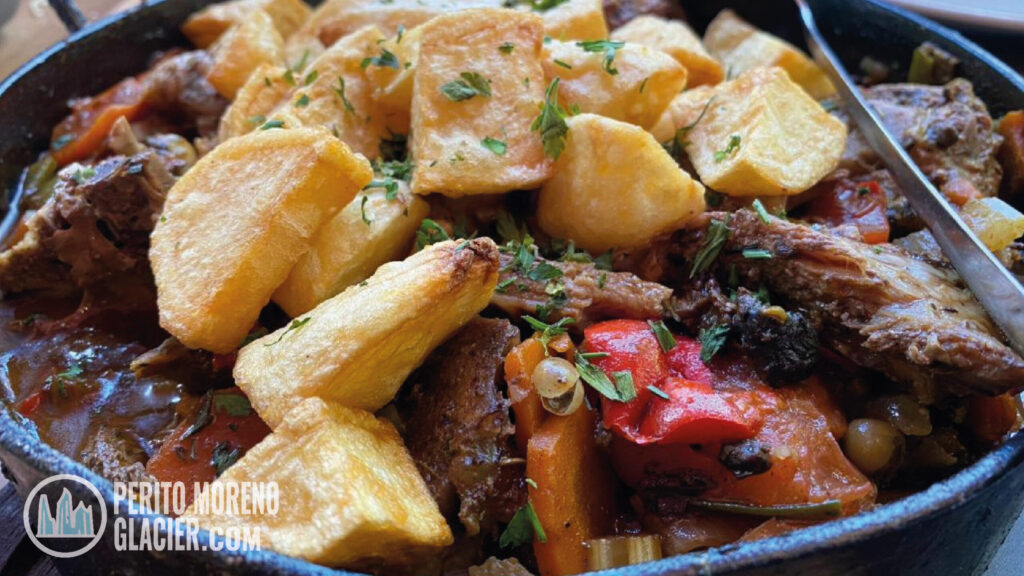
Food in El Calafate
Argentine meal times and restaurant customs can differ considerably from Japan.
Dinner Is Usually Later
Many restaurants become busy later than Japanese visitors may expect. Dinner around 8:00 or 9:00 p.m. is normal, while some residents dine even later.
Travelers who prefer an early meal should:
- Check opening times.
- Reserve when possible.
- Eat a substantial lunch.
- Keep snacks at the hotel.
- Confirm whether the hotel offers early dining.
Complete Tour to Perito Moreno Glacier: Boat Navigation & Lunch
Enjoy a Perito Moreno Glacier tour from el Calafate in a full day, with lunch and boat navigation included
Patagonian Lamb
Cordero patagónico is one of the region’s signature dishes. It is often roasted slowly and served in generous portions.
Japanese travelers who enjoy grilled meat may appreciate the simplicity of the preparation and smoky flavor.
Argentine Beef
Steaks are generally larger than typical Japanese portions. Couples may prefer to ask whether a dish can be shared.
Useful terms include:
- Jugoso: rare or juicy.
- A punto: medium.
- Bien cocido: well done.
Cooking interpretations vary, so show the desired level visually if necessary.
Trout and Fish
Patagonian trout appears on some menus. Seafood availability is more limited than in coastal Japan, and diners should not expect the variety found in Japanese cities.
Empanadas
Empanadas are filled pastries that may contain:
- Beef.
- Chicken.
- Cheese.
- Vegetables.
- Lamb.
They make a convenient casual meal but usually contain wheat and may also include egg or dairy products.
Calafate Berries
The calafate berry is used in jams, desserts, ice cream, liqueurs and sauces.
Local tradition says that anyone who eats calafate will return to Patagonia:
“El que come calafate, vuelve.”
Mate
Mate is a traditional herbal infusion shared socially in Argentina. It differs from Japanese green tea in flavor and preparation.
If offered mate, it is acceptable to try it, but visitors who prefer not to share the drinking straw can decline politely.
Japanese Food in El Calafate
Do not plan the trip around finding a Japanese meal every day. International and Asian-style food may be available, but menus and opening times change.
Travelers who prefer rice at breakfast or have a restricted diet should discuss this with the hotel in advance.

El Calafate Standard Pass
This pass will save you money and organize your trip. A basic package of services for visiting El Calafate and Perito Moreno in 2, 3, or 4 days!
Dietary Restrictions and Food Allergies
Vegetarian, vegan and gluten-free options can be found in El Calafate, but availability varies.
Learn these expressions:
- Vegetarian: vegetariano/vegetariana
- Vegan: vegano/vegana
- Gluten-free: libre de gluten / sin TACC
- Food allergy: alergia alimentaria
- No dairy: sin lácteos
A menu label does not necessarily guarantee protection from cross-contact. Travelers with serious allergies or celiac disease should speak directly with the restaurant and carry a translated allergy card.
Breakfast Differences
A typical Argentine hotel breakfast may include:
- Coffee.
- Tea.
- Milk.
- Bread.
- Croissants or medialunas.
- Jam.
- Cheese and ham.
- Fruit.
- Yogurt.
- Eggs in some hotels.
Do not assume that breakfast will include:
- Rice.
- Miso soup.
- Grilled fish.
- Pickled vegetables.
- Japanese tea.
- A large savory selection.
Travelers with strong breakfast preferences can bring suitable packaged products, subject to Argentine customs rules.
Restaurants, Service and Tipping
Service Style
Restaurant service may feel more relaxed and less formal than in Japan. A server may not bring the bill until requested.
Say:
La cuenta, por favor.
The bill, please.
Tipping
Unlike Japan, tipping is customary in Argentina. Leaving approximately 10% in restaurants is common when service is satisfactory. The Argentine Embassy in Japan also advises Japanese visitors that tipping is customary. Official Argentina visitor information for Japan
Confirm whether service has already been included.
Money and Payments
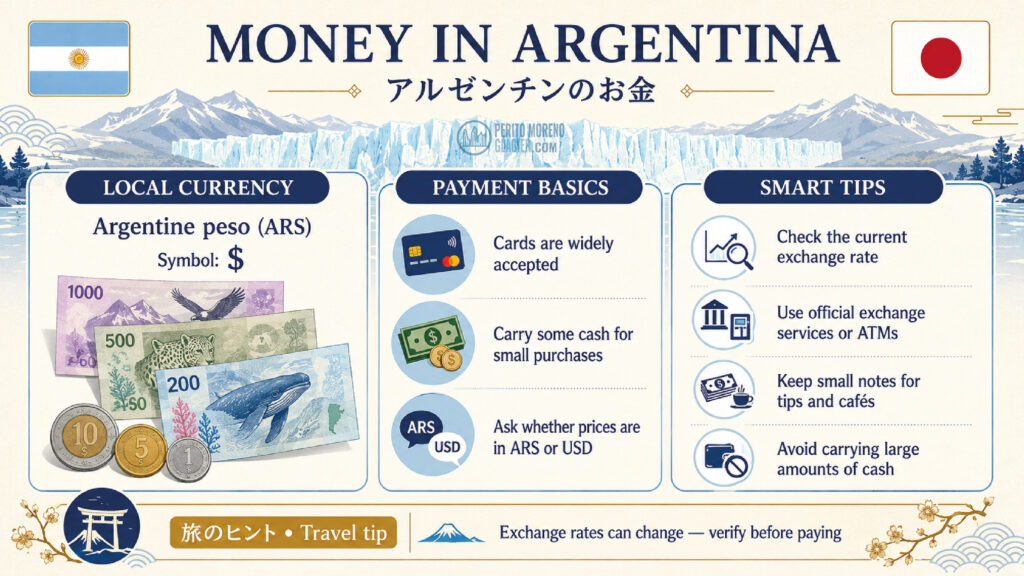
Argentina uses the Argentine peso.
Cards
Credit and debit cards are widely used in established tourism businesses, hotels and restaurants, but travelers should carry some pesos for small purchases or unexpected connectivity problems.
Visa and Mastercard generally have wider acceptance than JCB. Do not assume a JCB card will be accepted everywhere.
Bring:
- More than one international card.
- Cards stored separately.
- A small amount of local currency.
- Bank contact information.
- A method of receiving verification messages.
Tell the issuing bank that the cards will be used in Argentina if required.
Currency Values Can Change
Exchange rates and payment rules in Argentina can change. Check current information shortly before traveling and avoid relying on old blog posts or screenshots.
Language
Spanish is Argentina’s principal language. English is used in many tourism businesses, but Japanese is not widely spoken.
Useful Japanese, English and Spanish Phrases
| Japanese | English | Spanish |
|---|---|---|
| こんにちは | Hello | Hola |
| ありがとうございます | Thank you | Gracias |
| お願いします | Please | Por favor |
| 英語を話せますか? | Do you speak English? | ¿Habla inglés? |
| トイレはどこですか? | Where is the toilet? | ¿Dónde está el baño? |
| 集合場所はどこですか? | Where is the meeting point? | ¿Dónde está el punto de encuentro? |
| 何時に出発しますか? | What time do we leave? | ¿A qué hora salimos? |
| 写真を撮ってもらえますか? | Could you take our photo? | ¿Puede sacarnos una foto? |
| これはいくらですか? | How much is this? | ¿Cuánto cuesta? |
| クレジットカードは使えますか? | Can I pay by card? | ¿Puedo pagar con tarjeta? |
| 水をお願いします | Water, please | Agua, por favor |
| 助けが必要です | I need help | Necesito ayuda |
Download Spanish in an offline translation application before traveling.
Punctuality and Time Expectations
Japanese visitors are accustomed to extremely precise transportation. In Argentina, excursion pickups may be expressed as a time window rather than an exact minute.
If the confirmation says pickup between 8:00 and 8:30:
- Be ready at 8:00.
- Wait inside the hotel lobby when instructed.
- Do not assume the vehicle has been missed at 8:05.
- Contact the operator if the entire window has passed.
Domestic flights can also experience schedule adjustments. Avoid a short, unprotected connection to an international departure.
Amazing Patagonia: Ushuaia, El Calafate & Torres del Paine National Park
Book this amazing tour including Ushuaia, El Calafate, and the unique Torres del Paine National Park
Cultural Etiquette
Greetings
Argentine interaction may be warmer and more physically expressive than in Japan.
Friends may greet with a cheek kiss. Tourism staff generally understand that international visitors have different customs, and a smile or handshake is acceptable.
Personal Space and Conversation
Conversation may be animated, and people may stand closer than is typical in Japan. This is not generally intended as aggressive behavior.
Queues
Lines may feel less rigidly organized than in Japan. When uncertain, ask:
¿Esta es la fila?
Is this the line?
Quiet in Nature
Japanese visitors’ respect for shared natural spaces fits well with national park guidance. Avoid loud music, do not feed animals and take all waste away.
Shoes Inside Accommodation
Argentine hotels do not normally require guests to remove shoes at the entrance. Use indoor slippers in your room if preferred, but do not leave footwear in a public corridor.
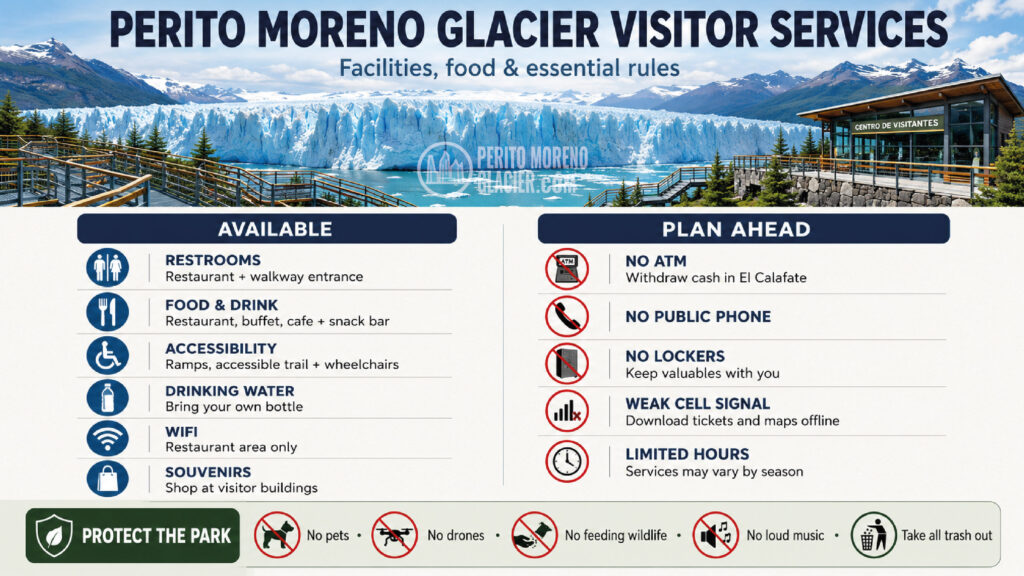
Toilets and Visitor Services
At the glacier, the official visitor area includes:
- Toilets.
- Restaurant.
- Snack bar.
- Potable water.
- Sheltered eating space.
- Ramped access.
- Wi-Fi at the glacier restaurant.
Do not expect Japanese-style washlets, heated toilet seats or extensive electronic toilet functions.
Carry tissues and hand sanitizer, particularly during long excursions. There are no continuous public facilities along the entire road between El Calafate and the glacier.
Internet, SIM Cards and Connectivity
Visitors can use:
- International roaming.
- A local physical SIM.
- An eSIM.
- Hotel Wi-Fi.
Confirm that the phone is unlocked and compatible before leaving Japan.
Mobile service may become weak or unavailable outside El Calafate. The national park reports Wi-Fi at the glacier restaurant, but it should not be considered full coverage across the walkways. Los Glaciares National Park services
Download:
- Park tickets.
- Tour vouchers.
- Hotel address.
- Offline maps.
- Flight details.
- Translation files.
- Emergency contacts.

Big Ice Trekking on Perito Moreno Glacier From El Calafate
Join our Big Ice Trekking Tour on Perito Moreno Glacier. Explore ice formations & rugged beauty. Book now for an unforgettable experience.
Photography Advice
Camera Equipment
A useful setup may include:
- Wide-angle lens for the complete glacier.
- Standard zoom.
- Telephoto lens for ice details.
- Polarizing filter.
- Lens cloth.
- Spare battery.
- Rain cover.
- Secure camera strap.
Protect Batteries from Cold
Cold conditions can reduce battery performance. Carry a spare battery in an inside pocket.
Avoid Blocking the Walkways
Tripods can obstruct narrow or busy areas. Use them only where safe and permitted, and never place equipment beyond barriers.
Ask Before Photographing People
Request permission before taking identifiable photographs of guides, staff or other visitors.
写真を撮ってもいいですか?
May I take a photograph?
In Spanish:
¿Puedo sacar una foto?
Both Sides of Southern Patagonia: El Calafate & Puerto Natales
Wonderful 6-night program to combine El Calafate and Perito Moreno Glacier with Puerto Natales and Torres del Paine National Park
Health and Travel Insurance
The journey from Japan is long and may include several flights. Travelers should consider:
- Jet lag.
- Dehydration.
- Long periods of sitting.
- Motion sickness.
- Sun exposure.
- Cold and wind.
- Existing medical conditions.
- Prescription medication documentation.
Carry medication in original packaging and keep essential doses in hand luggage. Travelers requiring controlled or injectable medication should verify airline, transit-country and Argentine entry rules.
Travel insurance should include:
- Medical treatment.
- Emergency transportation.
- Trip interruption.
- Baggage delay.
- Flight disruption.
- Medical evacuation where applicable.
Safety
El Calafate is generally manageable for visitors, but normal precautions remain appropriate.
- Use confirmed transfers.
- Keep passports secure.
- Avoid carrying all cards together.
- Store digital document copies.
- Do not leave cameras unattended.
- Follow park barriers.
- Check the weather.
- Keep meeting information offline.
- Allow enough time to return to the vehicle.
Patagonia’s weather and distances can create more problems than urban crime. Preparation is essential.
Australis Expedition Cruise from Punta Arenas to Ushuaia – 1 Night Free
Embark on a 4-Night Cruise Adventure Through Remote Patagonia: Includes Complimentary Night Stay in Punta Arenas or Ushuaia!
Accessibility and Senior Japanese Travelers
The park’s ramped sector makes it possible to enjoy the glacier without completing the stair-heavy circuits.
Travelers with reduced mobility should:
- Explain requirements before booking.
- Request a suitable vehicle.
- Prioritize the accessible route.
- Allow additional time.
- Avoid icy winter conditions when possible.
- Confirm assistance requirements.
A private tour may provide greater flexibility for multigenerational Japanese families traveling with grandparents.
What to Pack from Japan
Clothing
- Familiar base layers.
- Fleece or sweater.
- Waterproof and windproof jacket.
- Supportive walking shoes.
- Warm socks.
- Beanie and gloves.
- Sun hat.
- Sunglasses.
Electronics
- Universal plug adapter.
- Voltage converter only if required.
- Phone.
- Camera.
- Power bank.
- Charging cables.
- Spare camera batteries.
- Offline documents.
Personal Items
- Prescription medication.
- Travel insurance details.
- Sunscreen.
- Lip balm.
- Reusable water bottle.
- Familiar snacks.
- Small daypack.
- Spanish phrase card.
- Copies of passport and reservations.
El Calafate Tour Package: 1–3 Nights
Enjoy visiting Perito Moreno Glacier and other amazing attractions in the area. Choose between our 1-2-3 night packages and discover Patagonia
Recommended Four-Day Itinerary
Day 1: Arrive and Recover
Transfer to the hotel, have a light meal and avoid major activities. Walk briefly through the town center if energy permits.
Day 2: El Calafate
Explore the town, visit a local interpretation center and prepare for the glacier excursion. Check batteries, clothing and the next morning’s pickup.
Day 3: Perito Moreno Glacier
Travel to Los Glaciares National Park, explore the walkways and add a boat navigation if desired. Keep the evening free for rest.
Day 4: Additional Patagonian Experience
Choose an estancia visit, a longer lake navigation, Laguna Nimez or another regional experience according to interests and available time.
A fifth day provides useful protection against flight or weather disruptions.
Frequently Asked Questions
Do Japanese citizens need a visa for Argentina?
Japanese passport holders currently do not require a tourist visa for stays of up to 90 days. Check the latest official information before departure.
Is there a direct flight from Japan to El Calafate?
No. The journey requires at least one international connection and normally a domestic flight within Argentina.
Can I find a Japanese-speaking guide?
Japanese-speaking guides are limited and should be requested far in advance. An English-speaking private guide is usually easier to arrange.
Is Perito Moreno Glacier suitable for senior travelers?
Yes, particularly when using the ramped accessible sector and flexible transportation. Some circuits contain many stairs.
Can I visit without trekking on the ice?
Yes. The official walkways provide excellent panoramic views. Ice trekking is an optional separate activity.
Is Japanese food available in El Calafate?
Some Asian-style dishes may be available, but Japanese cuisine should not be expected at every hotel or restaurant.
Can I use a Japanese electrical device?
Only if its voltage specification is compatible with Argentina’s approximately 220V supply or if an appropriate converter is used. A plug adapter alone does not convert voltage.
Is tipping required?
It is customary rather than legally mandatory. Approximately 10% is common in restaurants when service is satisfactory.
Is tap water available at the glacier?
The national park reports potable water, but visitors are advised to carry their own and not drink from natural watercourses.
Is the glacier visit available in Japanese?
Park information and standard excursions may not be available in Japanese. Carry offline translation tools or arrange a Japanese-speaking guide well in advance.
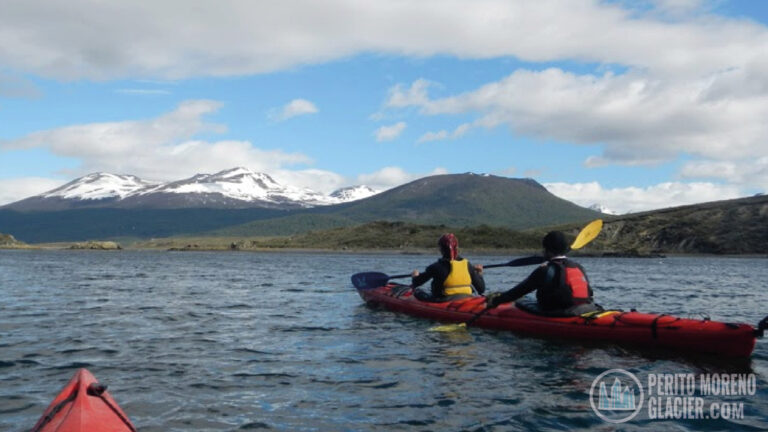
2-day Kayaking Expedition in the Beagle Channel with Camping
An incredible two-day tour to enjoy kayaking in the Beagle Channel, in the remote Patagonia!
Final Advice for Japanese Travelers
A successful Patagonia journey begins with accepting that El Calafate will not operate exactly like Japan. Distances are longer, schedules may be more flexible, dinner is later and service styles are different.
That contrast is part of the experience.
Prepare for the long journey, allow time for jet lag, dress in adjustable layers and organize essential services before leaving Japan. Once at the glacier, slow down and listen. The movement, colors and sounds of Perito Moreno reward patient observation.
PeritoMorenoGlacier.com can coordinate airport transfers, accommodation, park arrangements, guided visits, navigations and private services through one travel designer. For Japanese-speaking assistance or a highly customized itinerary, request it as early as possible.
素晴らしいパタゴニアの旅を!— Have a wonderful journey through Patagonia!
El Calafate, Perito Moreno & Estancia Cristina – 4 Nights
A wonderful 4-night program to visit Perito Moreno Glacier from El Calafate and visit the Estancia Cristina in the national park!
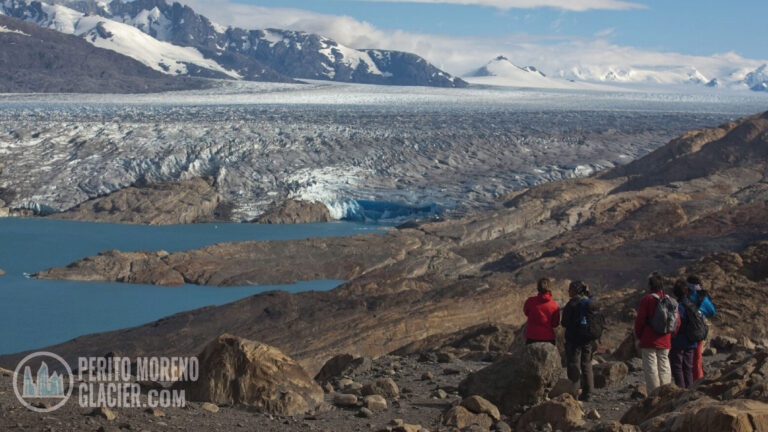
El Calafate, Perito Moreno Glacier, Glaciers Gourmet Cruise & Estancia Nibepo Aike
A wonderful 4-night program to visit Perito Moreno, navigate the Lake Argentino and staying in a typical Patagonian Ranch!