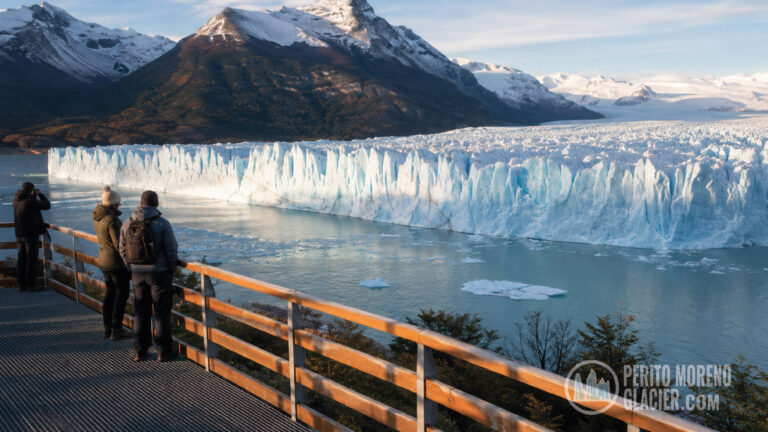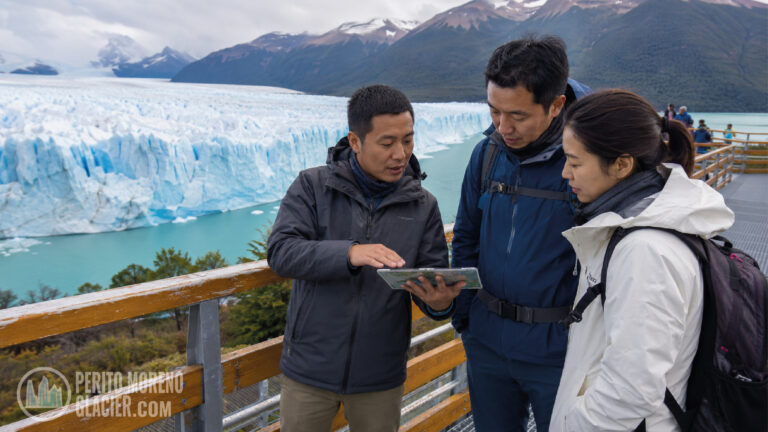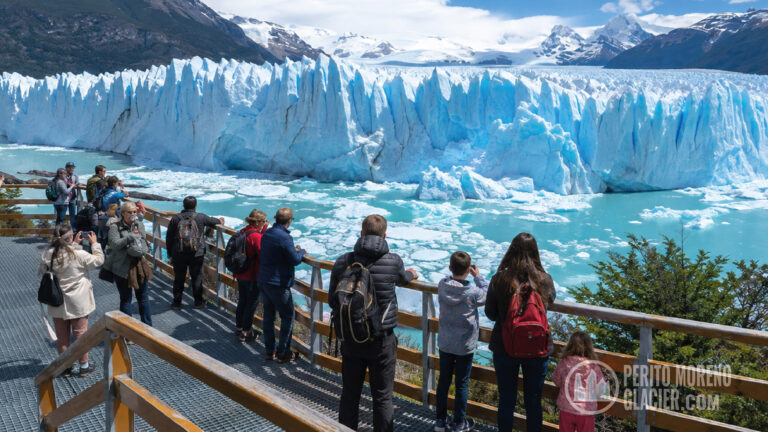
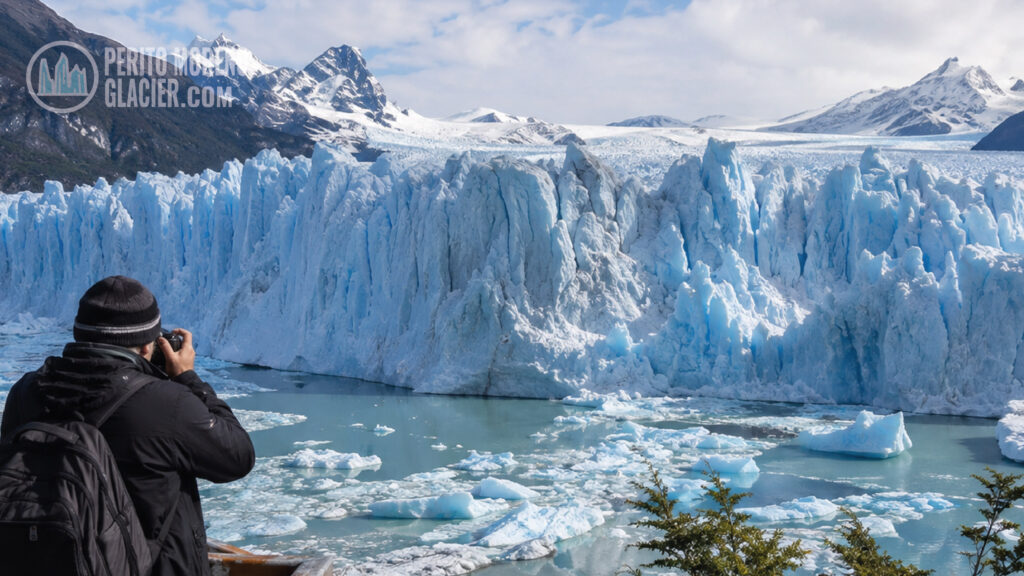
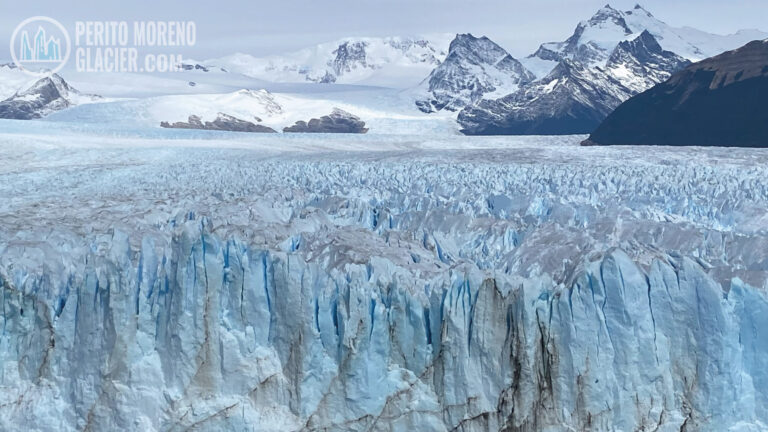
The Perito Moreno Glacier is one of the most photogenic natural landmarks in South America. Towering ice walls, constantly changing light, floating icebergs, dramatic mountain backdrops and one of the few advancing glaciers on Earth create endless opportunities for photographers of every skill level.
Whether you are carrying a professional DSLR, a mirrorless camera, a compact camera or simply your smartphone, this guide will help you return home with memorable images while avoiding the most common mistakes visitors make.
Unlike general visitor guides, this article focuses entirely on photography: composition, equipment, lighting, creative ideas, camera settings and practical techniques specifically for photographing the Perito Moreno Glacier.
Why Perito Moreno Glacier Is a Photographer’s Paradise
Few glaciers in the world are as accessible as Perito Moreno. Without helicopters, difficult hikes or specialized expeditions, visitors can photograph an immense glacier from multiple elevations and distances.
What makes the glacier particularly attractive for photography includes:
- A 5-kilometer-wide ice front
- Constant movement that creates new ice formations every day
- Deep blue tones hidden inside compressed glacial ice
- Floating icebergs of different shapes
- Reflections on Lago Argentino
- Native forests surrounding the glacier
- Dramatic Patagonian skies
- Frequent calving events during warmer months
No two visits ever produce exactly the same photographs.
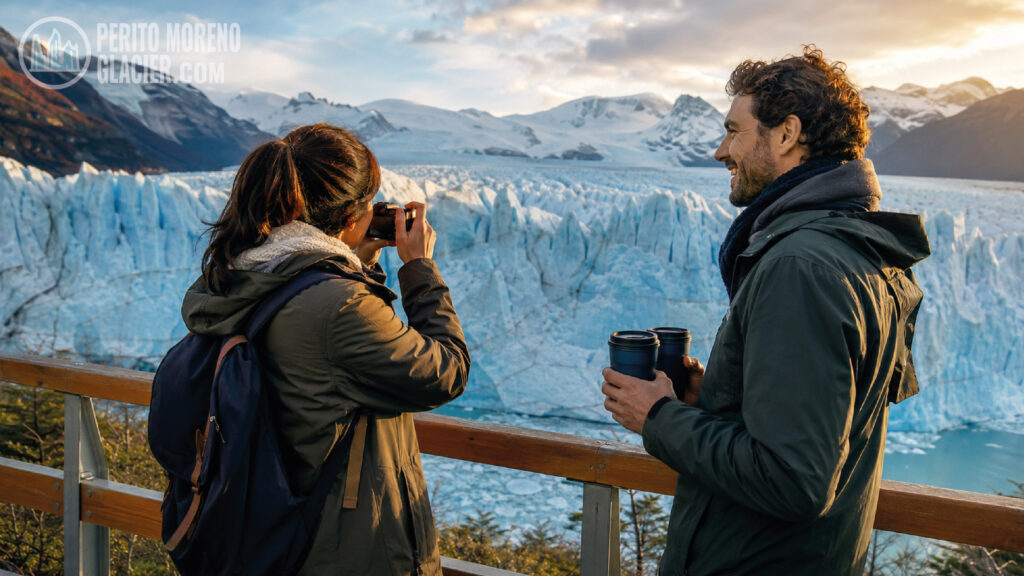
Understanding the Light at the Glacier
Light changes continuously throughout the day, completely transforming the appearance of the glacier.
Early Morning
Morning usually offers:
- Softer light
- Cooler blue colors
- Fewer visitors
- Better opportunities for clean landscape photography
The glacier often appears calmer, allowing photographers to carefully compose wide landscapes.
Midday
Many photographers avoid midday light elsewhere, but glaciers behave differently.
The strong overhead sunlight can reveal:
- Transparent blue ice
- Sharp textures
- Deep crevasses
- Brilliant white highlights
Using a polarizing filter becomes particularly useful during these hours.
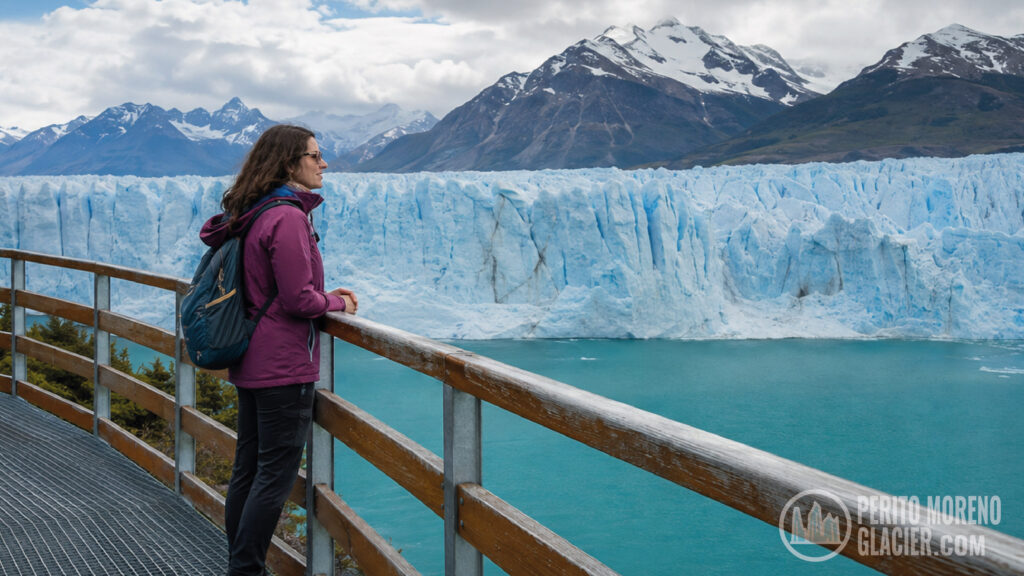
Afternoon
Afternoon sunlight often illuminates different sections of the glacier, producing stronger contrasts between illuminated walls and shaded areas.
This is an excellent time to photograph:
- Ice textures
- Shadows inside cracks
- Floating icebergs
- Visitors interacting with the landscape
Golden Hour
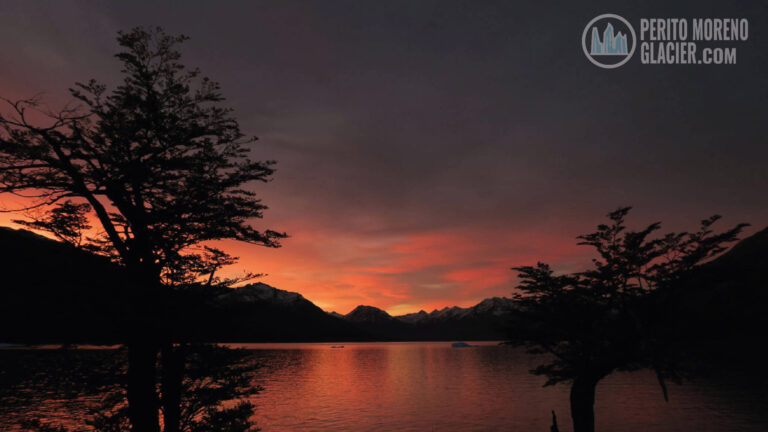
Although direct sunrise and sunset light does not always strike the glacier dramatically because of the surrounding mountains, the warm tones reflected on clouds and surrounding peaks can produce beautiful landscape images.
Choosing the Right Equipment
The best camera is always the one you actually bring.
Fortunately, Perito Moreno Glacier can be photographed successfully with almost any device.
Smartphones
Modern smartphones are excellent for:
- Panoramas
- Wide landscapes
- HDR photography
- Social media content
- Short videos
Use the widest available lens whenever possible.
Mirrorless Cameras
Ideal for travelers because they combine:
- Excellent image quality
- Lower weight
- Fast autofocus
- High dynamic range
Argentinian & Chilean Patagonia: Ushuaia, El Calafate, El Chalten and Puerto Natales
Enjoy visiting Ushuaia and the end of the world... El Calafate and Perito Moreno Glacier... El Chalten and the Fitz Roy Mount and Puerto Natales and Torres del Paine National Park!
DSLR Cameras
Professional photographers will appreciate:
- Larger sensors
- Extensive lens options
- Superior battery life
- Better handling in cold weather
Recommended Lenses
Different lenses create completely different interpretations of the glacier.
Wide-Angle (14–24 mm)
Perfect for:
- Large landscapes
- Walkways
- Panoramic views
- Including visitors in the scene
Complete Tour to Perito Moreno Glacier: Boat Navigation & Lunch
Enjoy a Perito Moreno Glacier tour from el Calafate in a full day, with lunch and boat navigation included
Standard Zoom (24–70 mm)
Probably the most versatile option.
Excellent for:
- General landscapes
- Ice formations
- Environmental portraits
- Documentary photography
Telephoto (70–200 mm or longer)
A telephoto lens reveals details invisible to the naked eye.
Ideal for:
- Cracks
- Ice textures
- Falling ice
- Birds flying near the glacier
- Abstract compositions
Many visitors only photograph the entire glacier, but telephoto images often become the most artistic photographs of the trip.
Camera Settings for Glacier Photography
There is no universal setting, but these recommendations provide an excellent starting point.
Landscapes
- Aperture: f/8 to f/11
- ISO: 100–200
- Tripod optional
- Focus approximately one-third into the scene
Ice Details
- Aperture: f/5.6–f/8
- Slight exposure compensation if necessary
- Spot focus on textured ice
Calving Events
Ice collapses happen without warning.
Recommended settings:
- Continuous autofocus
- High-speed burst mode
- Shutter speed above 1/1000 second
- Wide framing to avoid missing the action
Both Sides of Southern Patagonia: El Calafate & Puerto Natales
Wonderful 6-night program to combine El Calafate and Perito Moreno Glacier with Puerto Natales and Torres del Paine National Park
Photographing the Glacier’s Blue Ice
Many first-time visitors wonder why their photos sometimes fail to reproduce the glacier’s spectacular blue colors.
The secret lies in photographing areas where:
- Fresh ice has recently fractured
- Shadows reveal deeper ice layers
- Sunlight enters compressed ice
Avoid overexposing the image.
Slight underexposure often preserves richer blues that can later be adjusted during editing.
Composition Ideas Beyond the Classic Postcard
Most visitors stand at the first viewpoint and take the same photograph.
Instead, look for more creative compositions.
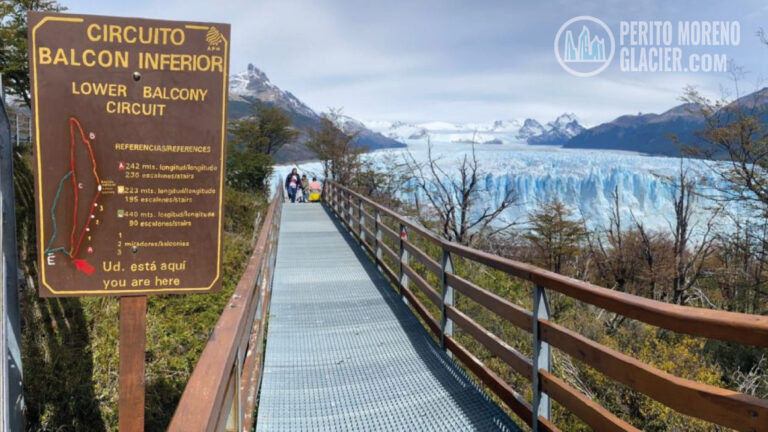
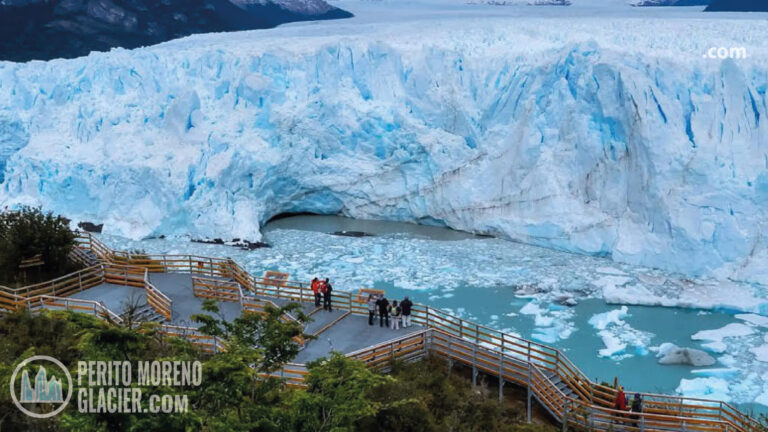
Include the Walkways
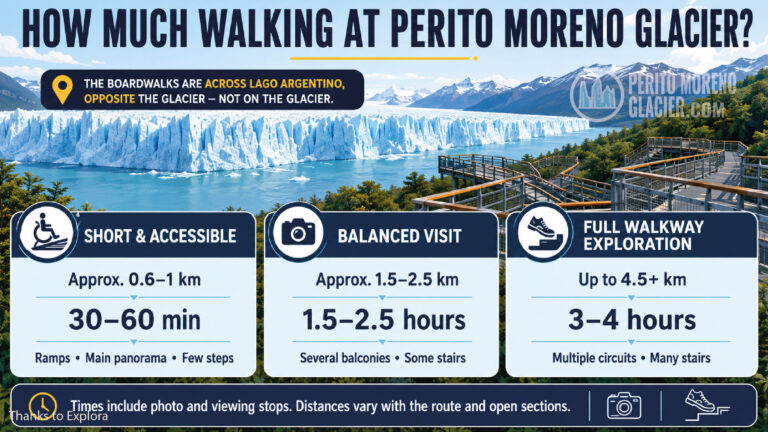
The network of viewing platforms can become part of the composition, adding scale and leading lines.
Frame the Glacier Through Trees
The nearby lenga forest offers natural framing opportunities that make photographs feel more immersive.
Use Icebergs as Foreground Subjects
Floating ice can create strong depth when placed in the foreground.
Show Human Scale
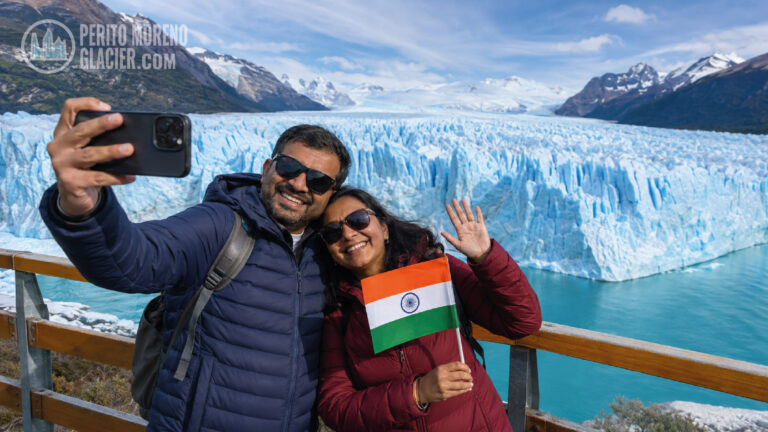
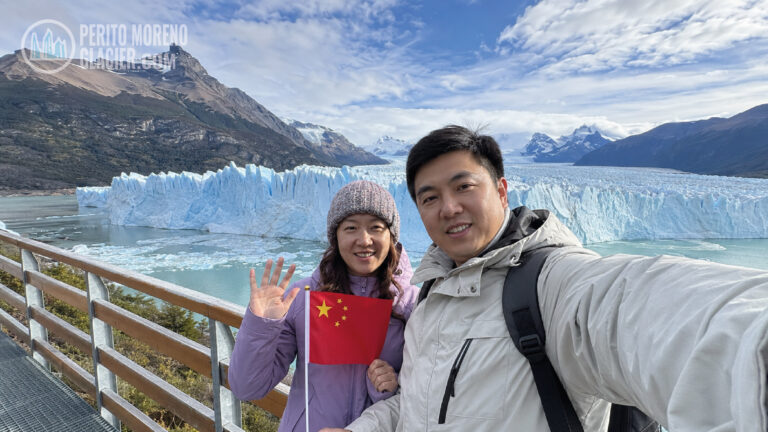
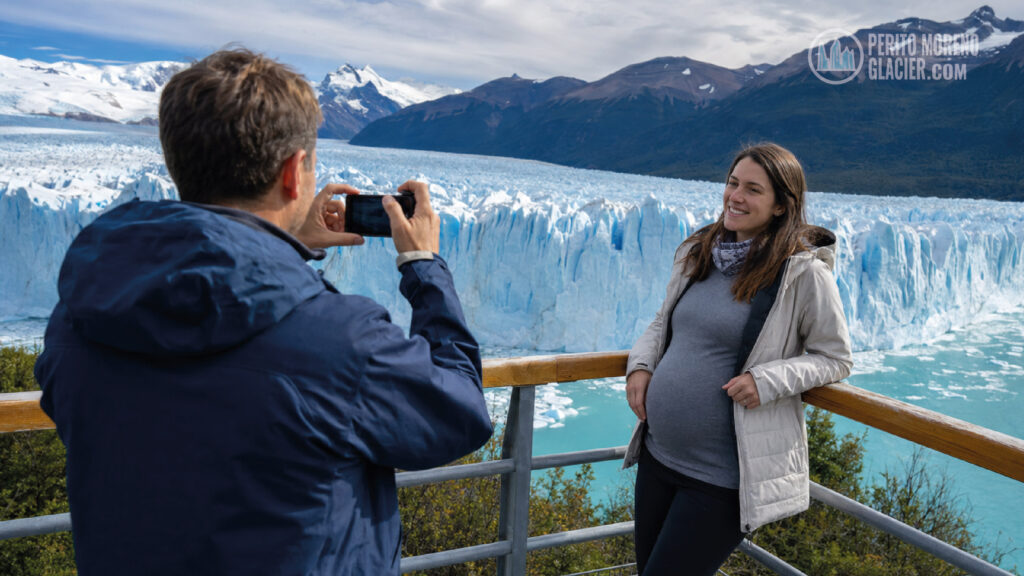
Including people in the image emphasizes the enormous size of the glacier.
A tiny figure standing on the viewing platforms instantly communicates scale far better than an empty landscape.
Enjoy Ushuaia, El Calafate and Torres del Paine staying in luxury hotels
Enjoy visiting Ushuaia and the amazing "end of the world city" with Arakur, the amazing Patagonian Steppe with Eolo and Torres del Paine NP with Tierra Patagonia.
Capturing Wildlife Together with the Glacier
Many photographers focus exclusively on the glacier and overlook Patagonia’s wildlife.
Depending on the season, you may photograph:
- Caracaras
- Upland geese
- Kelp gulls
- Andean condors soaring overhead
- Austral parakeets in nearby forests
Combining wildlife with glacial scenery creates much more distinctive travel photographs.
Weather Creates Better Pictures
Many travelers hope for perfectly sunny skies.
Ironically, changing weather often produces more dramatic images.
Clouds can add:
- Mood
- Texture
- Light rays
- Contrast
- Atmospheric depth
Light rain or approaching storms frequently create unforgettable photography conditions.
Enjoy the “O” Trekking Circuit in Torres del Paine National Park – 7 Nights
The most complete trekking program in Torres del Paine. A week to enjoy this amazing place in Patagonia!
Protecting Your Equipment
Patagonia’s weather changes rapidly.
Bring:
- Waterproof camera cover
- Microfiber cloth
- Lens cleaning kit
- Extra batteries
- Waterproof backpack
Cold temperatures reduce battery performance, so keep spare batteries inside an inner jacket pocket.
Photography During Boat Navigation
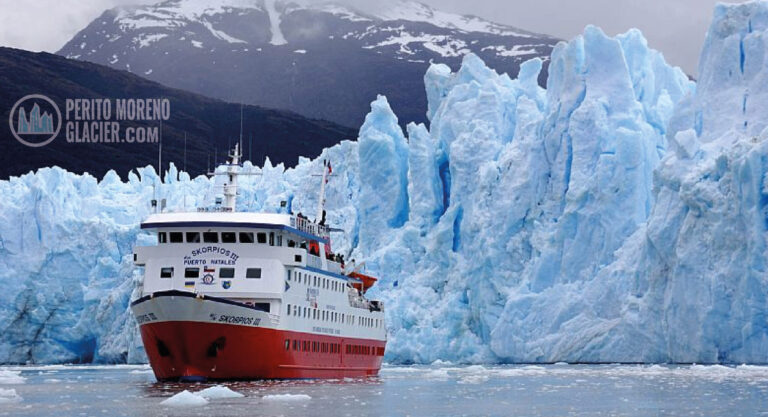
Boat excursions provide perspectives unavailable from the walkways.
Because the boat moves continuously:
- Increase shutter speed
- Use image stabilization
- Avoid changing lenses if conditions are windy
- Protect equipment from water spray
A telephoto lens becomes especially valuable for isolating patterns in the glacier’s vertical ice walls.
El Calafate Tour Package: 1–3 Nights
Enjoy visiting Perito Moreno Glacier and other amazing attractions in the area. Choose between our 1-2-3 night packages and discover Patagonia
Ice Trekking Photography Tips
If you participate in Minitrekking or Big Ice, you’ll have unique photographic opportunities directly on the glacier.
Focus on:
- Ice caves
- Small meltwater pools
- Air bubbles trapped inside ancient ice
- Crampons against blue ice
- Wide panoramas from the glacier surface
Always prioritize guide instructions over photography, especially when walking on uneven ice.

Drone Photography: Is It Allowed?
Many photographers wonder whether drones are permitted.
In general, recreational drone flights are not allowed inside Los Glaciares National Park without proper authorization due to environmental regulations and visitor safety. Always verify the latest National Park regulations before planning aerial photography.
Editing Glacier Photos
Minimal editing usually produces the most natural results.
Recommended adjustments:
- Recover highlights
- Slightly increase contrast
- Add moderate texture
- Carefully adjust white balance
- Avoid oversaturating blue tones
The glacier already provides extraordinary colors without excessive editing.
Perito Moreno Glacier & Pristine Luxury Camp – 4 Nights
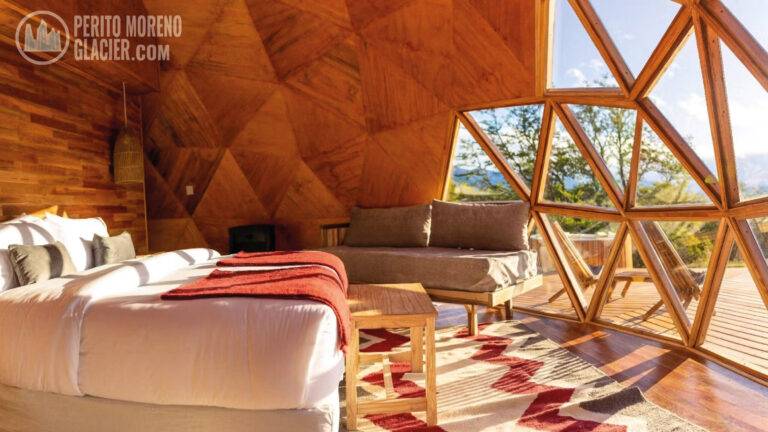
A wonderful 4-night program to visit Perito Moreno Glacier from El Calafate and finalizing with a glamping experience!
Common Photography Mistakes
Avoid these frequent errors:
- Photographing only from eye level
- Ignoring foreground elements
- Overexposing white ice
- Forgetting extra batteries
- Cleaning lenses with clothing instead of microfiber
- Waiting only for calving instead of exploring details
- Taking only horizontal photographs
A combination of horizontal, vertical and panoramic images creates a much stronger travel portfolio.
Photography Tips for Smartphone Users
Today’s smartphones can produce excellent glacier images.
For the best results:
- Clean the lens before every session
- Tap to expose on the ice instead of the sky
- Use panorama mode sparingly
- Avoid excessive digital zoom
- Shoot in RAW if available
- Enable HDR only when necessary
A small portable tripod can also dramatically improve low-light photographs.
Frequently Asked Questions
Do I need professional equipment?
Not at all. Many outstanding photographs of Perito Moreno Glacier are taken using smartphones or entry-level cameras.
Which lens should I bring if I only carry one?
A 24–70 mm equivalent zoom is the most versatile option for almost every visitor.
Can I photograph calving events?
Yes, but timing is unpredictable. Keep your camera ready whenever you hear loud cracking sounds, as ice collapses can occur without warning.
Should I bring a tripod?
A lightweight travel tripod is useful for panoramas, low-light photography and creative compositions, although it is not essential for most daytime visitors.
Cañadon Experience: Trekking & Stay
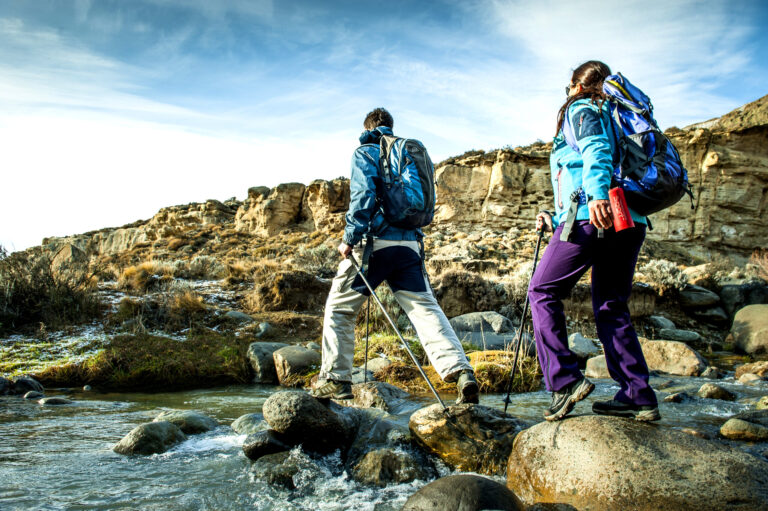
Discover Patagonia's hidden canyons on a 7 km trek with marine fossils, wildlife sightings, and a local meal at 800 meters.
Final Comments
Photographing the Perito Moreno Glacier is about much more than documenting a famous landmark. The glacier constantly changes with light, weather, movement and season, rewarding patient observers with images that can never be repeated exactly the same way.
Rather than rushing between viewpoints, slow down, experiment with different focal lengths, look for unexpected details, and allow the landscape to reveal itself. The most memorable photograph is often not the widest panorama, but the image that captures the unique character and immense scale of one of Patagonia’s greatest natural wonders.
Big Ice & Estancia Cristina Adventure – 3 Nights
Enjoy visiting Perito Moreno Glacier, walking over the ice of the glacier and a wonderful trekking or horseback riding in a remote estancia in the national park

El Calafate, Puerto Natales, Torres del Paine and Skorpios III Cruise
Wonderful 10-day program to combine El Calafate and Perito Moreno Glacier with Puerto Natales and Torres del Paine National Park and also the amazing Skorpios III Cruise