Seeing an Andean condor above the Patagonian landscape is often a matter of noticing one dark shape at precisely the right moment. At first it may resemble a distant aircraft or a large black-chested buzzard-eagle. Then the wings remain almost perfectly still, the bird begins to circle upward and its white markings catch the light. The scale becomes unmistakable.
The Andean condor (Vultur gryphus) is present in the mountains and open country around El Calafate, but it is a wide-ranging wild scavenger rather than an attraction that appears on schedule. Travelers improve their chances by choosing suitable terrain, understanding how wind and rising air shape its flight, and allowing enough time to scan the sky carefully.
This guide focuses exclusively on that experience: where to look, when conditions may help, how to distinguish a condor from other large birds and how to observe it without disturbing its natural behavior.
Can You See Andean Condors Around El Calafate?
Yes. Andean condors occur across southern Patagonia, including the Andean foothills, high plateaus, cliffs, open steppe and ranch country around El Calafate and Los Glaciares National Park. Sightings are possible on ordinary sightseeing days, especially where roads or excursions reach elevated terrain with uninterrupted views.
However, possible does not mean guaranteed. A condor may cover a huge area while searching for carrion and can pass very high overhead. Visibility, wind direction, cloud, food availability and the position of roosting or nesting sites all influence what a visitor sees.
The best strategy is to treat condor watching as a landscape-based activity. Choose ridges and slopes where large birds can use rising air, watch patiently and combine the search with an excursion that remains worthwhile even if the condors are elsewhere.
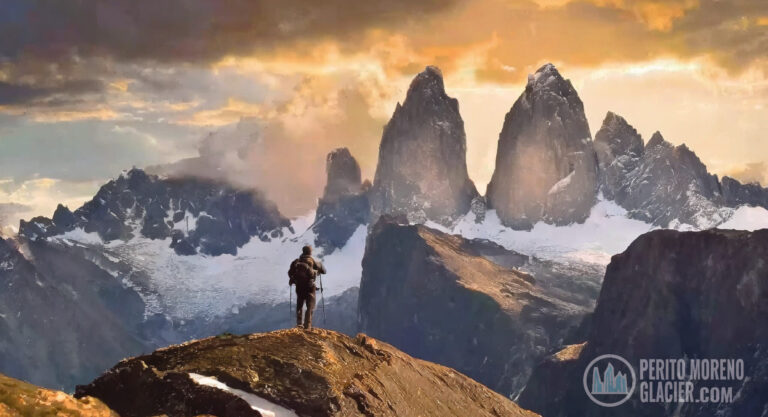
Argentinian & Chilean Patagonia: Ushuaia, El Calafate, El Chalten and Puerto Natales
Enjoy visiting Ushuaia and the end of the world... El Calafate and Perito Moreno Glacier... El Chalten and the Fitz Roy Mount and Puerto Natales and Torres del Paine National Park!
Why El Calafate Is Good Condor Country
The region brings together several conditions favored by the species:
- Rocky slopes and cliffs that offer roosting and nesting habitat.
- Strong winds and rising air along ridges, which reduce the energy needed for flight.
- Vast open terrain where carrion can be located from the air.
- Ranching landscapes and wild guanaco habitat that provide potential food sources.
- The nearby Andes, high plateaus and deep glacier-shaped valleys.
Condors are scavengers. They do not normally hunt healthy guanacos or livestock, and their ecological role is to consume carcasses. By removing decaying organic matter, they help recycle nutrients and limit potential sources of disease.
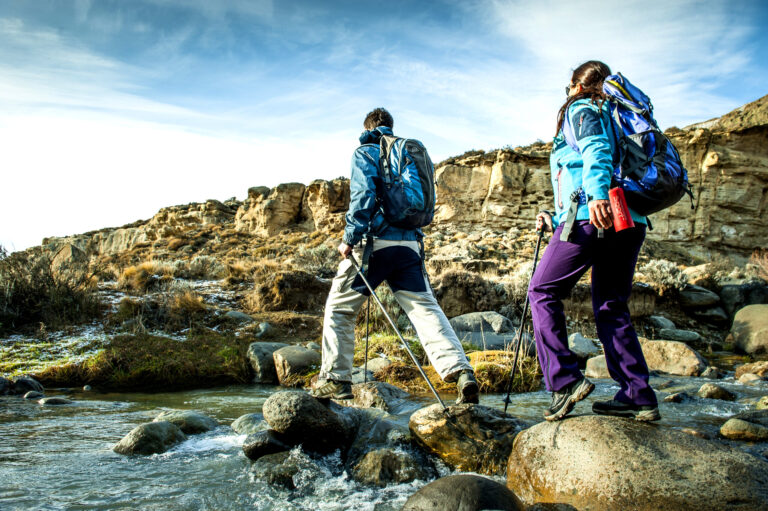
Cañadon Experience: Trekking & Stay
Discover Patagonia's hidden canyons on a 7 km trek with marine fossils, wildlife sightings, and a local meal at 800 meters.
Best Places to Look for Condors Near El Calafate
There is no single official “condor viewpoint” where a sighting is assured. The following environments give travelers sensible opportunities while also offering excellent Patagonian scenery.
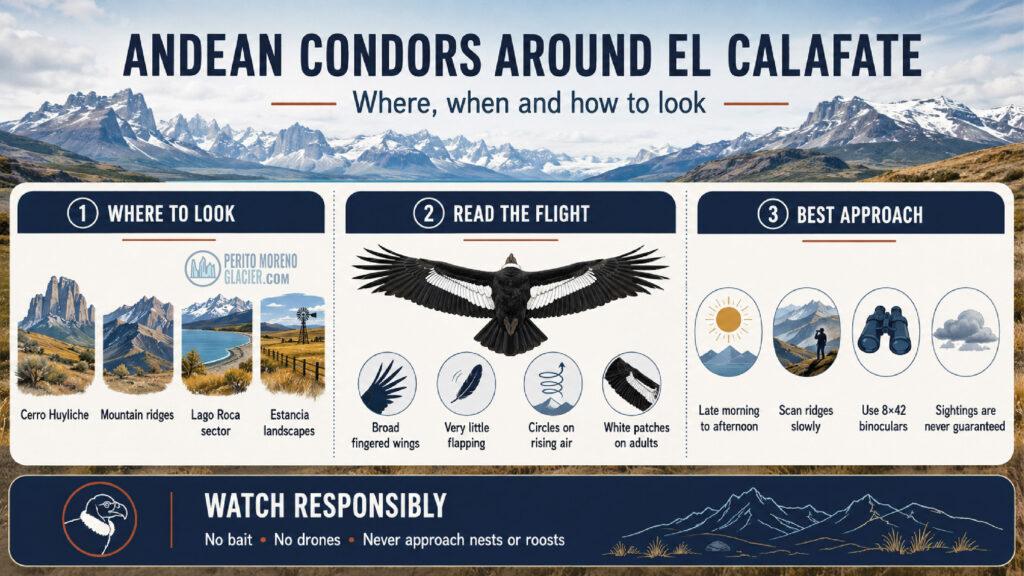
Cerro Huyliche and the Balcones de El Calafate
The high ground south of town is one of the most practical areas for purposeful observation. Excursions commonly known as Balcones de El Calafate or Cerro Huyliche tours climb from the steppe to elevated viewpoints, usually in 4×4 vehicles.
The advantage is not simply altitude. From the ridges, observers can scan broad airspace above slopes, valleys and Lago Argentino. Condors and other raptors may use the upward flow generated when wind meets the terrain. A bird that would appear as a speck from the town may sometimes be seen closer to eye level from a high viewpoint.
This is a strong option for travelers who want a half-day nature experience without committing to a long hike. Wildlife remains unpredictable, so select the excursion for its geology and panoramic views as well as its condor potential.

Calafate Balcony Tour in a 4×4 Vehicle
Enjoy the amazing views of El Calafate and Lake Argentino in the Calafate Balcony.
The Road Toward Perito Moreno Glacier
The journey between El Calafate and the Perito Moreno Glacier crosses open steppe before entering more mountainous and forested terrain. Passengers should scan distant ridgelines, cliff faces and the sky above broad valleys rather than staring only at the road verge.
Sightings may occur along the route or within the national park, but stopping is only appropriate in authorized, safe areas. Drivers must never brake suddenly or park on narrow shoulders for a bird. An organized excursion allows passengers to watch while a professional remains focused on the road.
The glacier walkways themselves are designed for viewing the ice, not as a dedicated bird hide. A condor overhead is a fortunate addition to the day, not something the site promises.
Lago Roca and Southern Los Glaciares National Park
The Lago Roca sector combines open water, forest edges, mountain slopes and ranch country. It is quieter than the principal Perito Moreno corridor and offers extensive skies where large soaring birds can be detected.
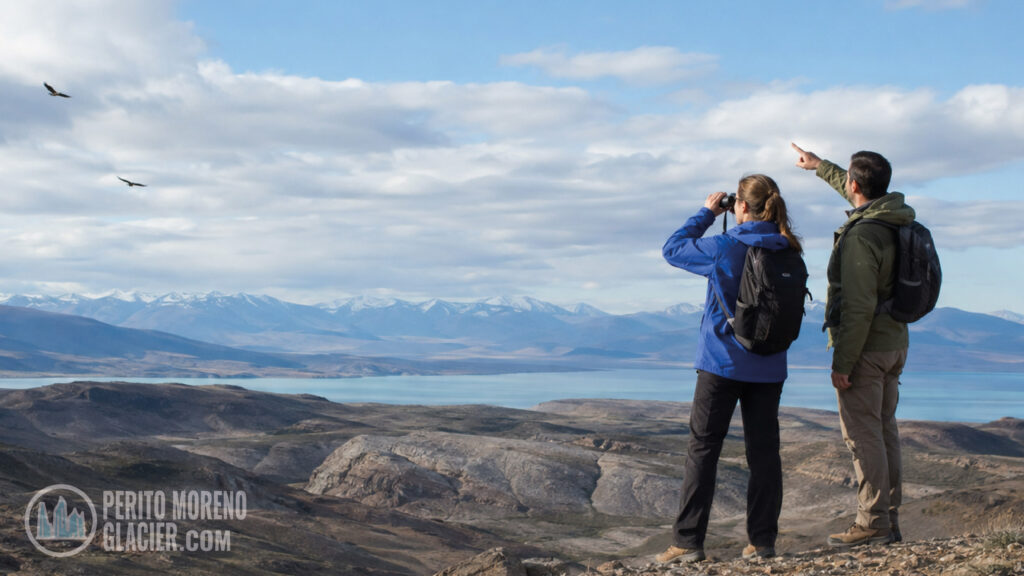
Travelers visiting the area for hiking, estancia experiences or scenery can carry binoculars and periodically scan above cliffs and ridges. The setting is particularly valuable because it allows observation away from the busiest visitor areas.
Estancia and Steppe Landscapes
Working ranches and rural excursions around El Calafate pass through wide feeding territories used by scavenging birds. Condors may be seen soaring above plateaus or traveling between the steppe and the Andes.
Estancia Nibepo Aike and other rural experiences should not be described as condor guarantees. Their advantage lies in time spent outdoors, open horizons and knowledgeable local staff who can point out recent wildlife activity.
Never ask guides or ranch workers to place food or carcasses to attract birds. Artificial feeding can alter behavior, concentrate wildlife and create conservation problems.
El Chaltén as a Valuable Extension
Travelers with additional days can include El Chaltén, approximately 220 kilometers by road from El Calafate. Its steep valleys, granite massifs and mountain air currents create excellent soaring-bird habitat. Condors may be observed from trails and open viewpoints around the Fitz Roy area.
El Chaltén is not a quick condor excursion from central El Calafate. It is best treated as a separate two- or three-night trekking destination. This distinction also prevents the new article from duplicating the site’s existing hiking guides.
Places That Are Excellent for Birds but Not Specifically for Condors
Laguna Nimez Reserve
Laguna Nimez is one of El Calafate’s most accessible birdwatching sites, particularly for flamingos, swans, ducks, grebes and other wetland species. A condor could pass overhead, but the reserve’s principal habitats and observation experience are not centered on condors.
Visit it for wetland diversity, not as the first choice for a targeted condor search. This distinction helps travelers choose the correct site for the birds they hope to see.
For the broader regional checklist, add an internal link to Birds of El Calafate & Perito Moreno Glacier.
What Is the Best Time of Day to See a Condor?
There is no universal hour, because Patagonia’s wind can create lift without strong sunshine. Nevertheless, the most productive period is often after the ground and slopes have begun to warm, from late morning into the afternoon. Rising warm air and slope lift allow a heavy bird to gain height while barely flapping.
Early morning may still be useful near known roosting terrain, when birds leave cliffs after conditions become favorable. Late afternoon can produce sightings as condors travel back toward resting areas. Access to roosts should never be attempted without specialist conservation guidance.
Read the Air, Not Only the Clock
Look for these signs:
- Other raptors circling in one area.
- Cumulus clouds developing above sunlit slopes.
- Wind striking a ridge and being deflected upward.
- Large birds appearing repeatedly along the same mountain face.
A completely calm, cold morning may require more patience. Extreme wind, low cloud or heavy precipitation can reduce visibility even when condors are active elsewhere.
What Is the Best Season?
Condors live in Patagonia throughout the year. For most travelers, October through April provides easier access, longer daylight and the broadest selection of excursions. Summer is not automatically better for the birds; it is simply more practical for visitors.
Autumn can offer beautiful light and quieter viewpoints. Winter sightings remain possible, but short days, snow, ice and seasonal closures may limit access to elevated locations. Always verify current excursion schedules and road conditions.
How to Identify an Andean Condor in Flight
Size and Silhouette
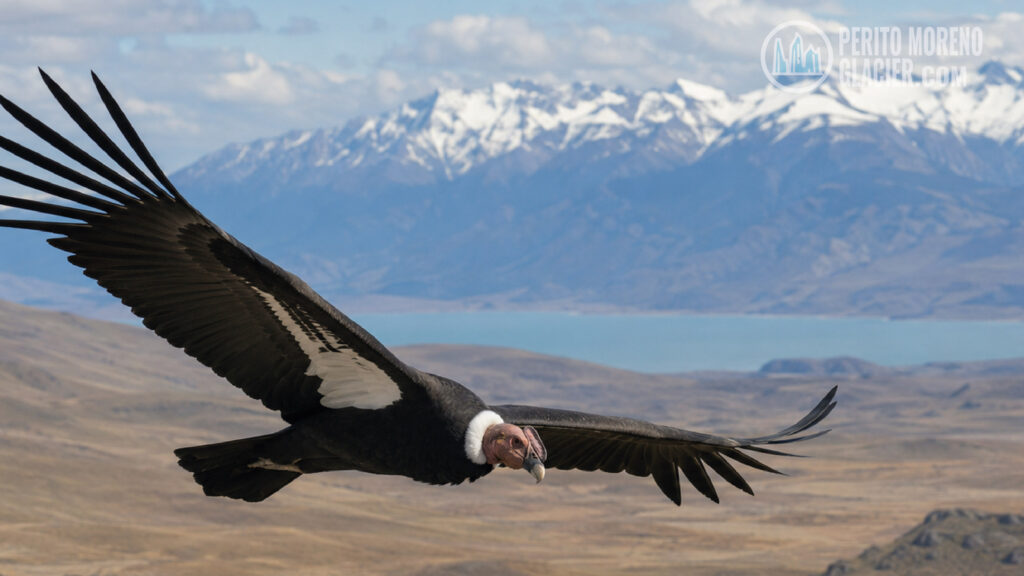
The Andean condor is among the world’s largest soaring land birds, with a wingspan that can exceed three meters in the largest individuals. At distance, however, apparent size is deceptive. Shape and flight style are more reliable than scale alone.
Look for:
- Very broad, long wings.
- Clearly separated primary feathers forming “fingers” at the tips.
- A relatively small head projecting from a massive body.
- Prolonged gliding and circling with remarkably little flapping.
- Wings held broadly level rather than in a pronounced V.
Adult Plumage
Adults are predominantly black. They have a white neck ruff, and mature males display conspicuous white areas on the upper wings. From below and at long range, light and angle can make these markings appear different, so use several features together.
Juvenile Condors
Young condors are browner and lack the crisp adult pattern. They can therefore be more difficult to identify. A photograph, even if not technically perfect, can help a guide or experienced birder confirm the sighting later.
Male and Female
Adult males have a fleshy comb on the head; females do not. This difference is usually visible only at close range or through strong optics. It is rarely the best field mark for a high-flying bird.
Argentinian & Chilean Patagonia: Ushuaia, El Calafate, El Chalten and Puerto Natales
Enjoy visiting Ushuaia and the end of the world... El Calafate and Perito Moreno Glacier... El Chalten and the Fitz Roy Mount and Puerto Natales and Torres del Paine National Park!
Condor or Black-Chested Buzzard-Eagle?
The black-chested buzzard-eagle is another large, frequently observed Patagonian raptor and the species most likely to cause confusion.
| Feature | Andean condor | Black-chested buzzard-eagle |
|---|---|---|
| Overall build | Immense, heavy and broad-winged | Large but visibly more compact |
| Flight | Long soaring sequences; very little flapping | More frequent flapping and active maneuvering |
| Wing tips | Deeply fingered primaries | Fingered, but on a shorter-winged silhouette |
| Tail | Relatively short compared with the wings | More evident tail in proportion to the body |
| Adult pattern | Black with white neck ruff and wing patches | Contrasting dark chest and pale lower body/tail pattern |
| Feeding role | Primarily scavenger | Predator and scavenger |
Distance can erase color details. If uncertain, record the shape, behavior and direction of travel instead of forcing an identification.
Calafate Balcony Tour in a 4×4 Vehicle
Enjoy the amazing views of El Calafate and Lake Argentino in the Calafate Balcony.
Binoculars and Photography Equipment
Binoculars
An 8×42 binocular is an excellent general choice: wide enough to locate a moving bird and bright enough for variable conditions. A 10×42 provides more reach but is slightly harder to hold steady in strong wind.
Camera and Lens
A zoom reaching approximately 300–500 mm equivalent is useful for flight photography, but technique matters more than maximum focal length. A shorter zoom often makes it easier to acquire the bird before zooming in.
Try these starting settings:
- Shutter speed around 1/1600 second or faster for a nearby moving bird.
- Continuous autofocus with subject tracking if available.
- Burst mode in short, controlled sequences.
- Auto ISO with an upper limit appropriate to the camera.
- Exposure compensation when a dark bird is silhouetted against a bright sky.
Keep watching with your eyes as well. Spending the entire encounter searching through a narrow viewfinder is an easy way to lose the bird.
A Simple Condor-Watching Method
- Choose an open, safe viewpoint with a wide view of ridges and slopes.
- Spend several minutes scanning with the naked eye before raising binoculars.
- Search along ridge lines, then above sunlit or wind-facing slopes.
- Investigate any bird that circles without frequent wingbeats.
- Use binoculars to confirm shape and plumage.
- Note time, direction, number of birds and behavior.
- Remain at least 20–30 minutes; a condor can appear after a long empty interval.
Patience is more productive than constantly changing locations.
Responsible Condor Watching
Condors mature slowly and reproduce at a low rate, which makes disturbance and preventable mortality especially serious.
- Never approach nests, roosts or birds feeding on a carcass.
- Do not use food, bait, recorded calls or drones to provoke a response.
- Stay on established routes and respect private property.
- Keep noise low and avoid surrounding a perched bird.
- Do not publish precise nest coordinates.
- Follow national-park and local drone restrictions.
- Report injured or grounded wildlife to park rangers or the appropriate local authority; do not attempt to handle it.
Poisoned carcasses, lead contamination, persecution and habitat pressures are major conservation concerns. Responsible tourism should reward observation of natural behavior rather than staged proximity.

El Calafate Half Day Tour & Visit to the Walichu Caves
Walk through history in El Calafate with a tour of ancient caves and historic town sites.
Are Condors Dangerous to Travelers?
No. Andean condors do not view people as prey. They are adapted to locating carrion and generally avoid close human activity. Their size can seem intimidating when they pass nearby, but the correct response is simply to remain calm, give the bird space and enjoy the encounter.
Can You Book a Condor-Watching Tour from El Calafate?
Some 4×4, wildlife, estancia and birding excursions visit landscapes where condors may be observed. Before booking, ask:
- Is wildlife observation an important part of the itinerary?
- Does the guide carry binoculars or a spotting scope?
- How much time is spent outside the vehicle?
- Is the tour suitable for photographers?
- What happens if weather closes the high route?
- Does the operator follow a no-feeding, no-disturbance policy?
Avoid any provider promising a guaranteed wild-condor encounter unless it involves a legitimate managed observation site with clearly explained conservation practices.
A Suggested Half-Day Plan
For a focused attempt, choose a guided Cerro Huyliche or elevated wildlife excursion operating from late morning or during the afternoon, depending on seasonal conditions. Carry binoculars, a windproof layer, gloves and sun protection. Ask the guide to identify likely lift zones and distinguish condors from buzzard-eagles.
For a broader wildlife day, combine careful sky-watching on a Perito Moreno or Lago Roca itinerary with attention to guanacos, foxes and steppe birds. Do not sacrifice the main glacier experience by waiting in one place for a bird that may not appear.

El Calafate Basic Pass
Buy El Calafate Basic Pass a get special discounts!
Frequently Asked Questions
Are condors commonly seen in El Calafate town?
They may pass over or near town, but elevated outskirts, open ranch country and mountain corridors offer more useful observation conditions than busy central streets.
Are condors seen at Perito Moreno Glacier?
They can be seen in the wider national-park landscape, including during a glacier visit, but the walkways are not a guaranteed condor-viewing site.
Can I see condors at Laguna Nimez?
A flyover is possible, but Laguna Nimez is better known for wetland and shore birds. Choose it for overall bird diversity rather than targeted condor watching.
Do condors flap their wings?
Yes, especially during takeoff or when lift is poor, but they are extraordinarily efficient soarers and can remain airborne for long periods with very few wingbeats.
Are Andean condors eagles?
No. They are New World vultures and primarily scavengers, although their enormous size and broad wings can make casual observers call them eagles.
Is a sighting guaranteed on a tour?
No ethical operator can guarantee that a free-ranging condor will appear. Guides can improve the odds by selecting suitable terrain and interpreting current conditions.
Final Tips for Seeing Condors Around El Calafate
The most effective approach is simple: reach open high ground, understand the air, scan slowly and wait. Cerro Huyliche and the Balcones provide the clearest targeted half-day option close to town. The routes toward Perito Moreno, Lago Roca and rural estancias add opportunities within more complete sightseeing days, while El Chaltén rewards travelers who can extend their stay.
Most importantly, allow the encounter to remain wild. A distant condor using a ridge exactly as it has for generations is more meaningful than a closer bird attracted, pursued or disturbed for a photograph.
Suggested Related Articles
- Birds of El Calafate & Perito Moreno Glacier
- Fauna and Flora in El Calafate and the Perito Moreno Glacier Area
- The Patagonian Steppe
- Lago Argentino: Perito Moreno Glacier Area
- Five Things to Do in El Chaltén
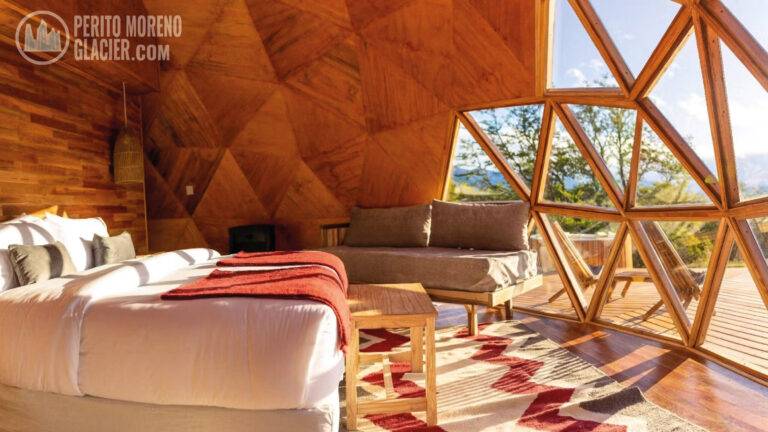
Perito Moreno Glacier & Pristine Luxury Camp – 4 Nights
A wonderful 4-night program to visit Perito Moreno Glacier from El Calafate and finalizing with a glamping experience!
El Calafate, El Chalten & Puerto Natales – 7 Nights Tour Package
Discover the best of Patagonia with El Calafate and Perito Moreno Glacier; El Chalten and the Fitz Roy Mount and Puerto Natales and Torres del Paine National Park!