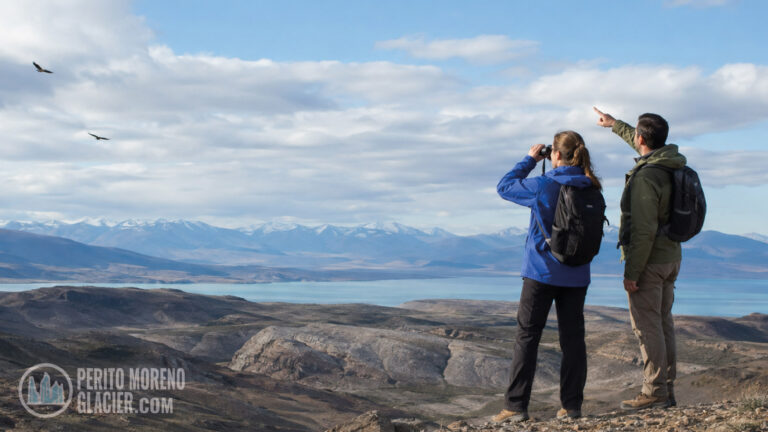
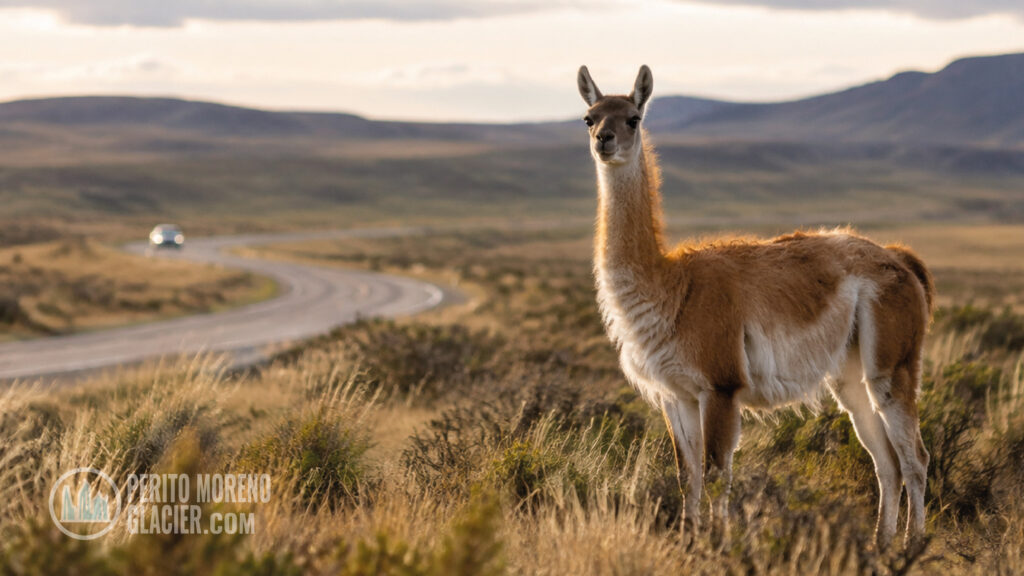
Guanacos are part of the visual identity of Patagonia. Their cinnamon-colored bodies, long necks and alert silhouettes seem perfectly designed for the open steppe surrounding El Calafate. You may see a solitary animal standing on a ridge, a family grazing among coirón grasses or a larger bachelor group moving across an estancia.
They are wild animals, however—not scenery arranged beside the road. Sightings depend on habitat, season, weather, human activity and simple luck. The best experience comes from knowing where to look, recognizing what the animals are doing and allowing them to continue that behavior without interference.
This guide explains how to identify guanacos, where they are most likely to appear around El Calafate and Los Glaciares National Park, how their social groups work, what travelers can observe and how to photograph them responsibly.
Are there guanacos around El Calafate?
Yes. Wild guanacos live in the Patagonian steppe around El Calafate and in suitable open habitats across the wider Los Glaciares region. They are much better adapted to dry grasslands, shrublands and open foothills than to dense Andean forest.
This distinction matters for trip planning. Travelers often expect to find guanacos directly beside Perito Moreno Glacier because the glacier is the region’s best-known attraction. Occasional sightings may occur during the journey, but the forested final approach and busy walkway area are not usually the most reliable guanaco habitat. Your chances often improve on the open steppe before reaching the mountains, along rural routes or during estancia-based experiences.
Los Glaciares National Park protects more than glaciers. Its enormous territory includes both Patagonian forest and Patagonian steppe environments. The guanaco belongs primarily to that more open eastern landscape.
What is a guanaco?
The guanaco (Lama guanicoe) is a wild South American camelid. It is related to the vicuña and to the domesticated llama and alpaca, but it is a distinct species with its own appearance, ecology and behavior.
Guanacos once occupied a vast range of open habitats across South America. Patagonia now contains many of the species’ most important populations. In Argentina, the species is protected and managed under national and provincial wildlife frameworks; international trade is regulated through CITES Appendix II.
How to identify a guanaco
Look for the following combination:
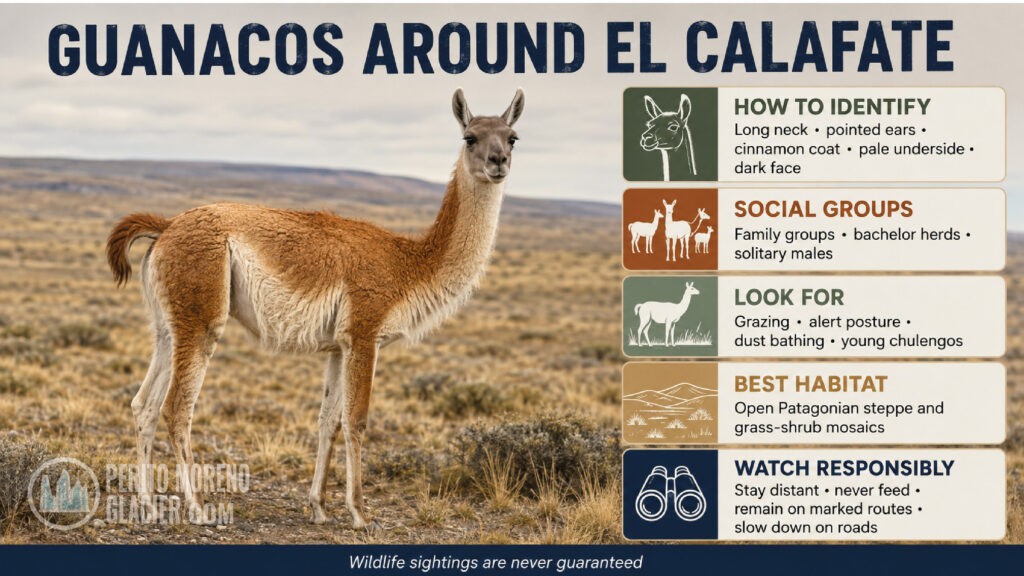
- a long, slender neck;
- a relatively small head with pointed, mobile ears;
- a cinnamon, tawny or light-brown upper coat;
- a pale or white underside, chest and inner legs;
- a darker grey or blackish face;
- long, slim legs and a compact tail;
- a leaner, less woolly appearance than most domestic llamas and alpacas.
Color and coat thickness vary with age, season, light and weather. Wild guanacos do not have horns or a camel-like hump.
Guanaco, llama or alpaca?
Visitors sometimes use these names interchangeably, but the animals are different.
| Animal | Wild or domestic? | Typical appearance | Around El Calafate |
|---|---|---|---|
| Guanaco | Wild | Lean body, short cinnamon coat, dark face | Native to the regional steppe |
| Llama | Domestic | Larger, variable colors, often heavier coat | May occur on farms or tourism properties |
| Alpaca | Domestic | Smaller and usually much woollier | Not characteristic wild fauna of the area |
| Vicuña | Wild | Smaller and more delicate than a guanaco | Associated mainly with high Andean and Puna environments farther north |
If an animal is roaming freely across the steppe near El Calafate, has the classic brown-and-white pattern and looks athletic rather than woolly, it is most likely a guanaco.

Big Ice Trekking on Perito Moreno Glacier From El Calafate
Join our Big Ice Trekking Tour on Perito Moreno Glacier. Explore ice formations & rugged beauty. Book now for an unforgettable experience.
Why guanacos thrive in the Patagonian steppe
The environment east of the Andes is cold, dry and famously windy. Vegetation is low and scattered, winter conditions can be severe, and water and high-quality forage are not distributed evenly. Guanacos cope with this environment through a combination of flexible feeding, efficient movement and social awareness.
They graze on grasses such as coirón and browse low shrubs and other plants. Their split upper lip helps them select vegetation with precision. Because they evolved alongside Patagonian plant communities, their grazing is part of the native ecosystem rather than an imported pressure.
Open terrain also supports their survival strategy. A guanaco can lift its head, scan a wide horizon and detect danger from far away. Speed, agility and early warning are essential where the principal native predator is the puma.
For a fuller explanation of the vegetation, climate and landforms that create this habitat, highlight this related guide:
Related reading: The Patagonian Steppe – El Calafate
Best places to see guanacos around El Calafate
There is no official “guanaco viewpoint” and no location can guarantee a sighting. The useful approach is to prioritize suitable habitat and spend time observing it.
The open steppe outside El Calafate
The broad plains and low hills around town offer the right combination of grasses, shrubs and long sightlines. Guanacos may appear singly or in small groups well away from buildings. Scan ridgelines and sheltered depressions instead of watching only the road edge.
The outskirts are generally more promising than central El Calafate. Never enter private property or stop on an unsafe roadside shoulder simply because an animal is visible.
The road toward Perito Moreno Glacier
The journey from El Calafate toward the glacier crosses a striking ecological transition. The first portion passes through open and semi-open steppe; farther west, the landscape becomes more humid and forested.
Guanacos are more likely in the open sections than near the final walkway area. This route should be treated as a scenic transfer with a chance of wildlife, not as a dedicated safari. Drivers must concentrate on the road, while passengers can scan the surroundings.
The Lago Roca and estancia sector
The southern zone around Lago Roca and rural properties such as Nibepo Aike combines steppe, grassland, lake shore, forest edges and working-estancia landscapes. The mosaic can produce good wildlife opportunities, including guanacos, rheas and birds of prey.
Organized estancia visits provide access to landscapes that independent travelers cannot simply enter. They also help visitors understand the long and sometimes complicated relationship between native herbivores, sheep ranching and conservation.
Related reading: Estancia Nibepo Aike: A Journey to Authentic Patagonian Life
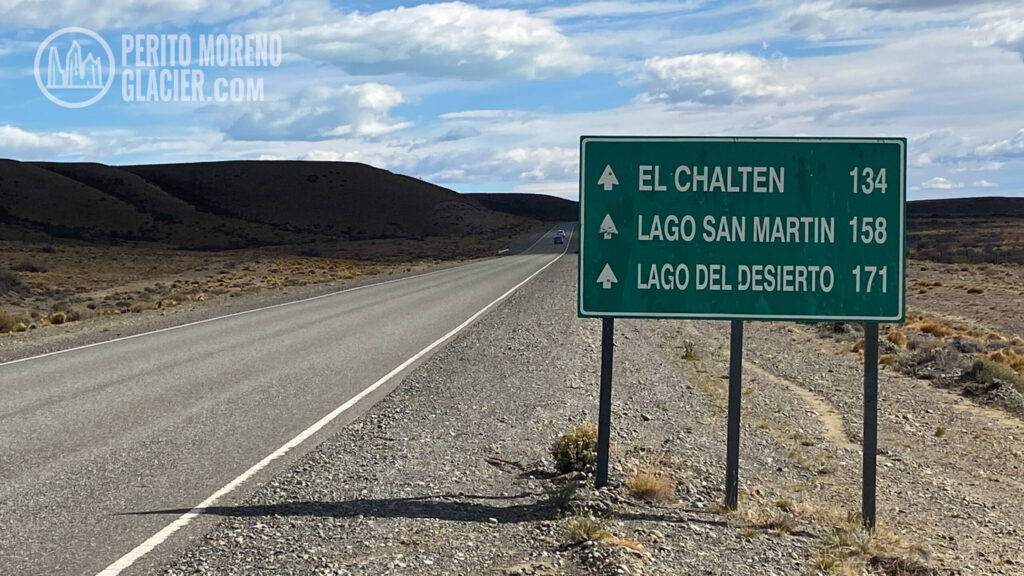
The route between El Calafate and El Chaltén
The long road north crosses extensive steppe, river valleys and estancia country before approaching the mountains. Guanacos may be observed along this corridor, especially in open areas with limited disturbance.
The distance should not encourage rushing from one sighting to another. Wildlife near fast roads can change direction suddenly. Use designated stops or safe pull-offs and never block traffic.
Rural excursions and private reserves
Guided nature, photography and estancia experiences can be more productive than general sightseeing because guides know local land access, recent animal movements and suitable observation points. Ask explicitly whether an excursion includes wildlife interpretation; not every rural tour is designed around fauna.
Can you see guanacos inside Los Glaciares National Park?
Yes, but the answer requires geographical context. Los Glaciares is a vast protected area containing glaciers, mountains, forests, lakes and steppe. Guanacos use suitable open habitats, particularly toward the eastern and transitional sectors. They are not distributed uniformly across the park.
Around Perito Moreno Glacier, visitors spend most of their time in forested or heavily visited areas. Those habitats support a different mix of wildlife and make guanacos harder to detect. A lack of sightings at the walkways does not mean guanacos are absent from the wider national park landscape.
The park’s fauna is much broader than a single species. Its official biodiversity information highlights native mammals such as huemul, puma and red fox, along with condors, woodpeckers and other birds. Use the site’s general wildlife article for the wider inventory rather than repeating it here:
Related reading: Fauna and Flora in El Calafate and Perito Moreno Glacier Area
Understanding guanaco social groups
Guanaco behavior becomes more interesting when you recognize the group in front of you.
Family groups
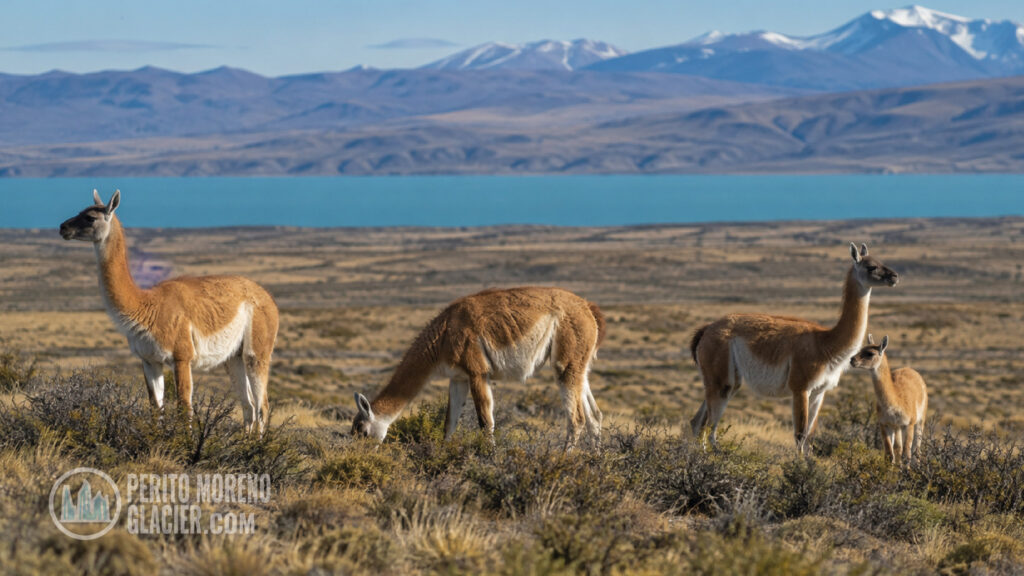
A territorial adult male may live with several females and their young. These groups often graze within a defended area during the reproductive season. The male spends considerable time watching the surroundings and responding to rival males.
Bachelor groups
Young and non-territorial males may form larger, more fluid herds. These groups can look less orderly than a family unit, with frequent movement and interaction among individuals.
Solitary males
Some males live alone, particularly when moving between territories or outside the main reproductive period. A solitary guanaco is not necessarily lost, abandoned or ill.
Young guanacos: chulengos
A baby guanaco is commonly called a chulengo in Patagonia. Most births occur during the austral summer, when conditions and forage are generally more favorable. Chulengos can stand and move soon after birth but remain dependent on their mothers.
Never position yourself between a mother and young animal. If a chulengo appears alone, observe from far away; the mother may be nearby and temporarily out of view.
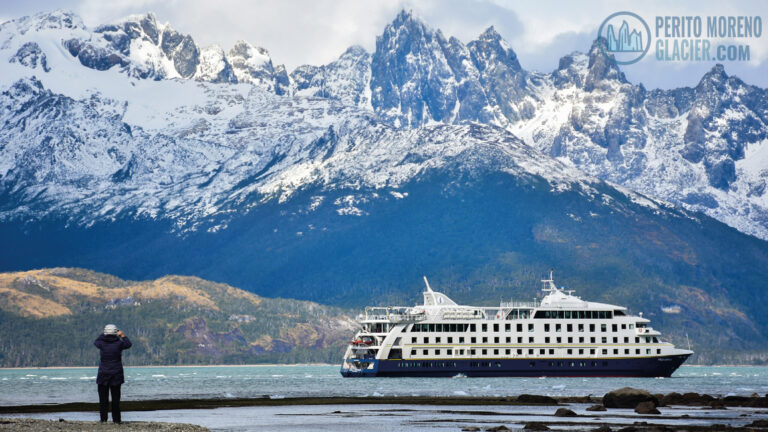
Australis Expedition Cruise from Ushuaia to Punta Arenas – 1 Night Free
Embark on a 4-Night Cruise to Discover the Unique Landscapes of Remote Patagonia - Plus, Enjoy a Free Night's Stay!
What guanaco behavior can travelers observe?
Grazing and browsing
Feeding is the most common behavior. Individuals alternate between lowering their heads and scanning the landscape. In a group, one or more animals may remain especially alert while others feed.
Alarm posture and calls
An upright neck, fixed attention and ears directed toward a disturbance indicate vigilance. Guanacos can make loud alarm calls that alert the group. If several animals stop feeding and focus on you, you are already affecting their behavior and should increase the distance.
Running
Guanacos are fast, agile runners. Watching a herd cross the steppe can be impressive, but travelers should never cause this response. Running wastes energy and can separate adults from young.
Dust bathing and communal dung piles
Guanacos may roll in dry soil or use dust-bathing areas. They also repeatedly deposit dung in shared latrine sites. These piles play a role in communication and nutrient concentration and may remain visible long after the animals have moved away.
Territorial encounters
Males may posture, chase, bite or kick during disputes. Such behavior can appear dramatic but is part of their social system. Do not approach or try to alter the interaction.

Calafate Balcony Tour in a 4×4 Vehicle
Enjoy the amazing views of El Calafate and Lake Argentino in the Calafate Balcony.
Best time of year and day for guanaco watching
Guanacos can be present throughout the year. There is no single season when they “arrive” around El Calafate.
Spring and summer
Long daylight hours improve visibility and make rural travel easier. Summer is also the period when chulengos may be seen. Tourist traffic is heavier, however, and strong afternoon winds can make observation and photography more difficult.
Autumn
Softer light, quieter roads and autumn colors near the forest-steppe transition can produce rewarding conditions. Temperatures decline and daylight becomes shorter.
Winter
Snow may make guanacos easier to see against the landscape, but road conditions, limited daylight and severe weather complicate access. Animals also face greater energetic stress, making distance and non-disturbance particularly important.
Morning or evening?
Early morning and late afternoon often provide the best photographic light and lower winds, although this is not guaranteed in Patagonia. Guanacos may feed throughout the day. Habitat and low disturbance matter more than following a rigid schedule.
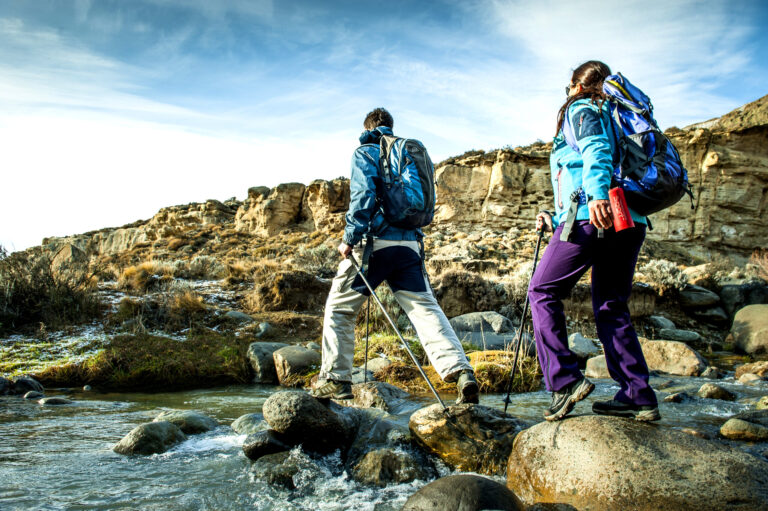
Cañadon Experience: Trekking & Stay
Discover Patagonia's hidden canyons on a 7 km trek with marine fossils, wildlife sightings, and a local meal at 800 meters.
How to watch guanacos responsibly
Keep enough distance for normal behavior
There is no universal number that fits every setting. Use the animals’ response as your guide. If they stare continuously, group tightly, stop feeding, move away or run, you are too close.
Binoculars and telephoto lenses produce better experiences without intrusion. Stay on marked trails, public areas or locations authorized by landowners and guides.
Never feed them
Human food is inappropriate and feeding changes wildlife behavior. Animals attracted to vehicles and people face a higher risk of road collisions, conflict and dependence.
Do not call, whistle or chase for a photograph
An image of a guanaco looking directly into the camera is not worth disturbing it. Photograph natural behavior rather than manufacturing attention.
Keep dogs controlled
Dogs can chase guanacos, separate young animals and cause severe stress. Follow park, municipal and private-property rules; in protected wildlife areas, pets may be restricted or prohibited.
Leave drones grounded unless explicitly authorized
Drones can disturb wildlife and their use is regulated in national parks. Aerial footage should never be pursued by flying toward a herd.
Guanacos and road safety
Roadside guanacos deserve special caution. They may stand calmly and then cross without warning, particularly when one part of a group is separated from another.
- Reduce speed whenever animals are visible near the road.
- Check mirrors before slowing and avoid abrupt stops in the traffic lane.
- Use a designated pull-off or a wide, stable shoulder where stopping is legal and safe.
- Never surround an animal with several vehicles.
- Do not get out if doing so would push it toward the road.
- At dusk, dawn and in poor visibility, assume wildlife may be present even when you cannot see it yet.
Photography tips
Bring the right focal length
A telephoto zoom is more useful than a wide-angle lens for portraits and behavioral details. A wider lens can work when animals are far away and you want to show their scale within the steppe.
Use a fast shutter speed
Wind moves both the animal’s coat and your equipment. Guanacos can also transition from stillness to running quickly. A faster shutter speed helps preserve detail.
Photograph at eye level when possible
Without leaving authorized routes or approaching, use the terrain or your vehicle position to avoid always shooting downward. Never lie close to an animal or crawl toward it for a lower perspective.
Show behavior and habitat
Portraits are appealing, but a guanaco feeding among coirón, watching a ridge or moving through a family group tells a richer ecological story.
Stay inside the vehicle when it functions as a hide
If safely parked, the vehicle can be less disturbing than several people getting out. Turn off the engine if appropriate, keep voices low and avoid slamming doors.

El Calafate Full Pass
A full package service to El Calafate and Perito Moreno! This full pass will save you money and organize your trip.
Guanacos, pumas and the steppe ecosystem
Guanacos are major native herbivores and an important prey species for pumas. Their grazing, movement, dung and carcasses connect plants, predators, scavengers, insects and soil processes.
Andean condors and other scavengers may use guanaco carcasses as food. Pumas influence how guanacos use the landscape, while group vigilance helps guanacos detect danger. These relationships make the species ecologically significant, not merely photogenic.
For travelers interested in observing the region’s great scavenger, highlight the dedicated companion article:
Related reading: Andean Condors Around El Calafate: Where and How to See Them
Guanacos and people in Patagonia
For thousands of years, guanacos were fundamental to Indigenous peoples of Patagonia, providing food and materials for clothing, tools and shelter. The animal also appears in archaeological records, oral traditions and the broader cultural history of the steppe.
After the expansion of sheep ranching, fencing, hunting and land-use change transformed both the landscape and human attitudes toward guanacos. They were often viewed primarily as competitors for forage. Modern research presents a more complex social-ecological picture in which conservation, livestock production, animal welfare and sustainable management must be considered together.
Travelers should avoid simplifying this history into either “too many guanacos” or “completely untouched wilderness.” Populations and management conditions vary between regions, private lands and protected areas.
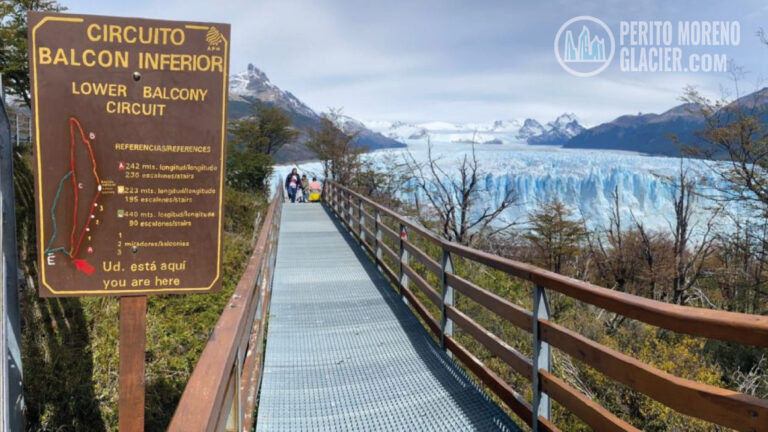
Complete Tour to Perito Moreno Glacier: Boat Navigation & Lunch
Enjoy a Perito Moreno Glacier tour from el Calafate in a full day, with lunch and boat navigation included
Frequently asked questions
Are guanacos dangerous?
They usually avoid people. Like any wild animal, a cornered or threatened guanaco can kick, bite or spit. Maintain distance and never attempt to touch one.
Do guanacos spit like llamas?
Yes, guanacos can spit, especially during social disputes or when threatened. Responsible viewers should never be close enough to provoke that response.
Can I see guanacos at Perito Moreno Glacier?
It is possible in the wider area, particularly along open steppe sections of the journey, but sightings at the forested walkways are not reliable. Do not choose a glacier excursion solely as a guanaco-watching activity.
Are guanaco sightings guaranteed on estancia tours?
No. Some rural locations offer better habitat and access, but guanacos remain free-ranging wildlife. Ask the operator about recent sightings and whether the itinerary includes dedicated observation time.
What is a baby guanaco called?
A young guanaco is commonly called a chulengo.
What is a group of guanacos called?
In English, “herd” is the usual general term. Biologists may distinguish family groups, bachelor groups and solitary territorial males.
Can I feed a guanaco from my car?
No. Feeding is harmful, changes natural behavior and encourages animals to remain near dangerous roads.
Are guanacos protected?
They are native wildlife subject to conservation and management laws. Their international trade is regulated under CITES Appendix II, while specific rules vary by jurisdiction and protected area.
A symbol of open Patagonia
Seeing a guanaco in its natural habitat is less dramatic than watching a glacier calve, but it can be equally revealing. The animal’s alert posture, efficient movement and social organization express the same forces that define the landscape: wind, distance, scarce shelter and constant adaptation.
The best encounter is one that leaves no trace. Watch from afar, allow the herd to choose its direction and continue your journey knowing that the animals remained wild after you passed.
Highlighted related articles
- Essential habitat guide: The Patagonian Steppe – El Calafate
- Regional biodiversity overview: Fauna and Flora in El Calafate and Perito Moreno Glacier Area
- Protected-area context: Los Glaciares National Park in Argentina: All You Need to Know
- Wildlife and rural landscapes: Estancia Nibepo Aike: A Journey to Authentic Patagonian Life
- Lakeside geography and wildlife: Lago Argentino: Perito Moreno Glacier Area
- Companion species guide: Andean Condors Around El Calafate: Where and How to See Them
Amazing Patagonia: Ushuaia, El Calafate & Torres del Paine National Park
Book this amazing tour including Ushuaia, El Calafate, and the unique Torres del Paine National Park
El Calafate Special Adventure Program: Big Ice and Horseback Riding or Trekking in Estancia Cristina
Enjoy visiting Perito Moreno Glacier, walking over the ice of the glacier and a wonderful trekking or horseback riding in a remote estancia in the national park