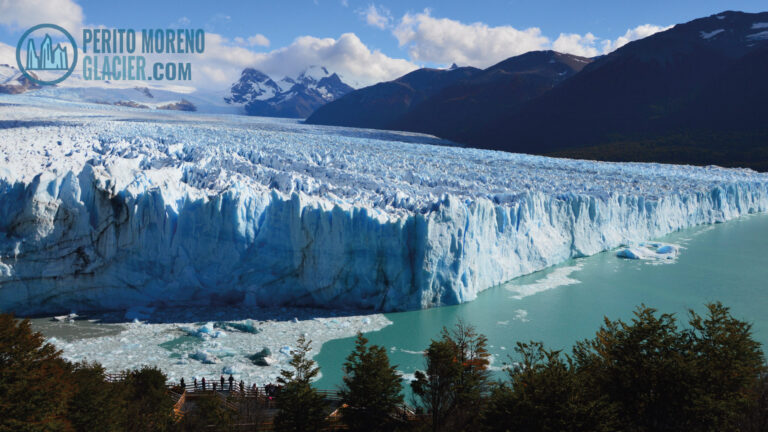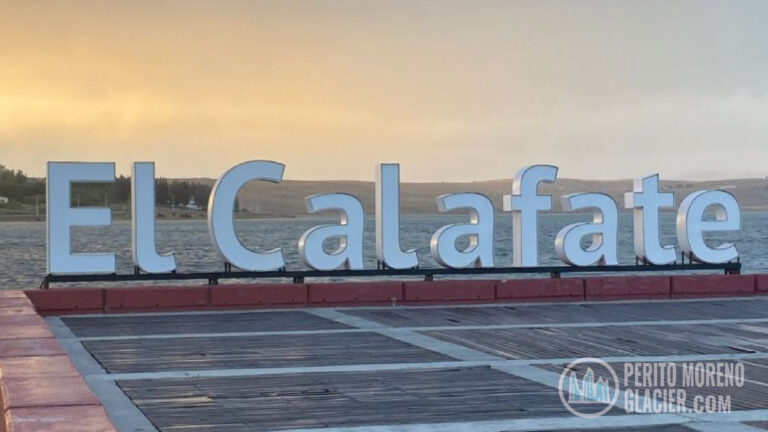
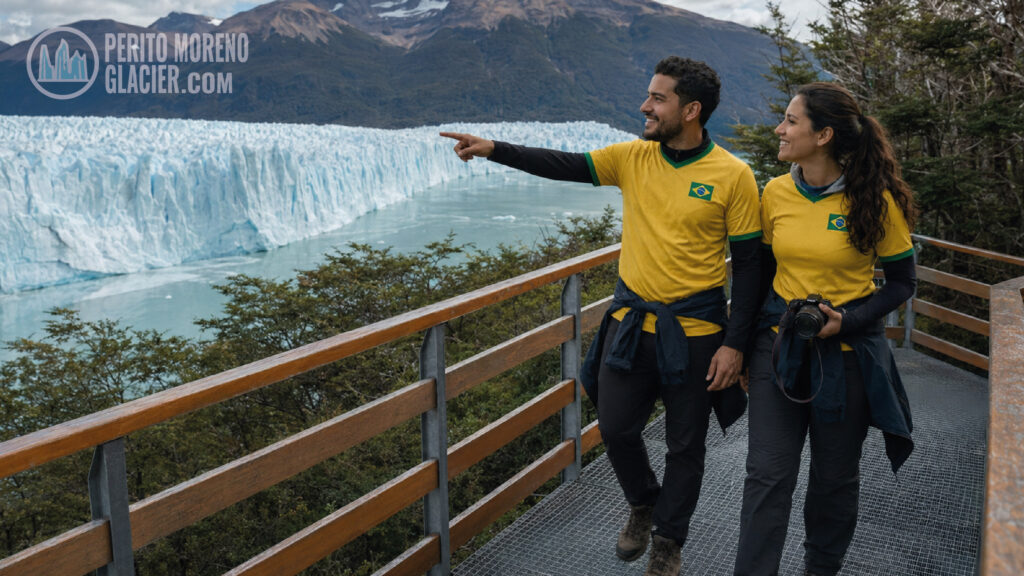
El Calafate is one of the most impressive destinations in Argentina for Brazilian travellers. Surrounded by the Patagonian steppe, turquoise lakes and the Andes, the town is the main gateway to Perito Moreno Glacier and the southern section of Los Glaciares National Park.
For visitors arriving from Brazil, the contrast is immediate. El Calafate offers dry, cold and windy weather, enormous open spaces and landscapes that feel completely different from Brazil’s tropical and subtropical regions.
The destination is relatively easy to organize, but good preparation is essential. Flights may involve a connection in Buenos Aires, temperatures can change within hours and some excursions should be reserved well in advance.
This complete guide covers flights, entry documents, language, currency, weather, clothing, activities, food and practical advice—along with a few useful expressions in Portuguese.
Argentinian & Chilean Patagonia: Ushuaia, El Calafate, El Chalten and Puerto Natales
Enjoy visiting Ushuaia and the end of the world... El Calafate and Perito Moreno Glacier... El Chalten and the Fitz Roy Mount and Puerto Natales and Torres del Paine National Park!
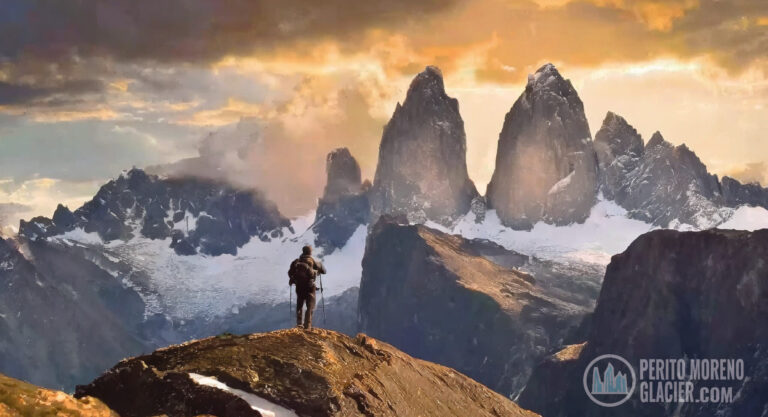
Why Should Brazilian Travellers Visit El Calafate?
El Calafate is particularly attractive to Brazilian visitors because it combines several experiences rarely found in Brazil:
- Enormous glaciers
- Ice trekking
- Snow-covered mountains
- Patagonian estancias
- Turquoise glacial lakes
- Cold, dry weather
- Open steppe landscapes
- Easily accessible panoramic trails
- Navigation among glaciers and icebergs
Perito Moreno Glacier is the principal attraction, but it is not the only reason to visit. Travellers can also navigate Lake Argentino, spend a day at a working estancia, travel to El Chaltén or add Torres del Paine in Chile.
The destination works well for couples, families, senior travellers, photographers and small groups. It is adventurous without requiring every visitor to complete a difficult trek.
In Portuguese, the simplest description may be:
El Calafate é uma viagem para contemplar, explorar e sentir a imensidão da Patagônia.
Where Is El Calafate?
El Calafate is in Santa Cruz Province in southern Argentina, close to the Andes and the Chilean border.
It is located on the southern shore of Lake Argentino, Argentina’s largest lake. The town serves as the principal tourism base for the southern section of Los Glaciares National Park.
Approximate distances include:
- El Calafate Airport to town: 23 kilometres
- El Calafate to Perito Moreno Glacier: 80 kilometres
- El Calafate to Puerto Bandera: 47 kilometres
- El Calafate to El Chaltén: approximately 220 kilometres
- El Calafate to Río Gallegos: approximately 315 kilometres
- El Calafate to Torres del Paine: approximately 270 kilometres, including an international border crossing
These distances may look manageable on a map, but travel times in Patagonia are influenced by wind, road conditions and border procedures.

El Calafate Half Day Tour & Visit to the Walichu Caves
Walk through history in El Calafate with a tour of ancient caves and historic town sites.
How to Get from Brazil to El Calafate
Seasonal Direct Flights from São Paulo
A seasonal direct connection between São Paulo Guarulhos Airport and El Calafate is planned for the 2026–2027 summer season.
GOL announced flights from São Paulo to El Calafate operating three times per week—on Tuesdays, Thursdays and Saturdays—from November 26, 2026, through March 27, 2027. The scheduled outbound flight leaves São Paulo shortly after midnight and reaches El Calafate early in the morning.
The operation is seasonal and forms part of a triangular route involving El Calafate and Ushuaia. Schedules and operating dates should therefore be reconfirmed directly with the airline before booking other non-refundable services.
For Brazilian visitors travelling during the operating period, this direct flight can eliminate the need to change airports or spend several hours connecting in Buenos Aires.
Flying Through Buenos Aires
Outside the direct-flight period, the most common route is:
- Brazil to Buenos Aires
- Buenos Aires to El Calafate
Brazil has flights to Buenos Aires from cities including:
- São Paulo
- Rio de Janeiro
- Porto Alegre
- Curitiba
- Florianópolis
- Brasília
- Salvador
- Belo Horizonte
- Recife, depending on seasonal schedules
The domestic flight from Buenos Aires to El Calafate generally takes around three hours.
Check the Buenos Aires Airport
Buenos Aires has two principal airports:
- Aeroparque Jorge Newbery — AEP
- Ezeiza International Airport — EZE
Many domestic flights to El Calafate depart from Aeroparque, while some international services from Brazil arrive at Ezeiza. Other flights may use Aeroparque for both segments.
Before purchasing the itinerary, verify whether you must change airports.
The road transfer between Ezeiza and Aeroparque can take from approximately one hour to considerably longer during traffic congestion. Immigration, luggage collection and check-in time must also be considered.
Whenever possible:
- Purchase both flights on one reservation
- Select a connection using the same airport
- Leave a generous interval between separate tickets
- Confirm whether luggage is checked through
- Avoid an airport change during a short connection
In Portuguese:
Confira sempre se a conexão chega e sai do mesmo aeroporto.
Can You Combine Buenos Aires and El Calafate?
Yes. For first-time visitors to Argentina, a combination of Buenos Aires and El Calafate works extremely well.
A comfortable itinerary could include:
- Three or four nights in Buenos Aires
- Four nights in El Calafate
- An optional extension to El Chaltén or Ushuaia
The combination offers culture, gastronomy, tango and urban experiences followed by glaciers and Patagonian landscapes.
Argentinian & Chilean Patagonia: Ushuaia, El Calafate, El Chalten and Puerto Natales
Enjoy visiting Ushuaia and the end of the world... El Calafate and Perito Moreno Glacier... El Chalten and the Fitz Roy Mount and Puerto Natales and Torres del Paine National Park!
Entry Requirements for Brazilian Citizens
Brazilian citizens travelling to Argentina for tourism can generally enter with:
- A valid Brazilian passport, or
- An accepted physical Brazilian identity card in good condition
Argentina’s immigration authority accepts a valid passport or eligible identity document from Brazilian tourists.
Brazil’s Federal Police advises that travellers using an identity card should carry one issued within the previous ten years and containing a photograph that still identifies the holder clearly.
Is a CNH Accepted?
No. A Brazilian driver’s licence—or Carteira Nacional de Habilitação—is not accepted as the sole immigration document for entering Argentina.
The same applies to professional cards such as OAB, CRM or similar credentials.
Bring either:
- Your passport, or
- An accepted physical identity card
A passport is often the simplest option, particularly for travellers continuing to Chile.
Argentinian & Chilean Patagonia: Ushuaia, El Calafate, El Chalten and Puerto Natales
Enjoy visiting Ushuaia and the end of the world... El Calafate and Perito Moreno Glacier... El Chalten and the Fitz Roy Mount and Puerto Natales and Torres del Paine National Park!
Can You Use a Digital Identity Document?
Do not rely exclusively on a digital document. Brazilian authorities currently recommend carrying the physical identity card for international Mercosur travel. A digital CIN displayed on a telephone may not be accepted at immigration.
Do Brazilians Need a Tourist Visa?
Brazilian citizens do not normally require a tourist visa for a standard visit to Argentina.
Immigration may authorize tourist stays of up to three months. Different requirements apply to employment, study, residence or other non-tourist activities.
Travelling with Children
Children must carry an accepted travel document. Additional authorization may be required when a minor travels:
- With only one parent
- Without either parent
- With another relative
- With a school or organized group
Confirm the requirements with the Brazilian Federal Police, the airline and Argentine immigration before departure.
If the trip includes Chile, verify Chilean requirements separately.
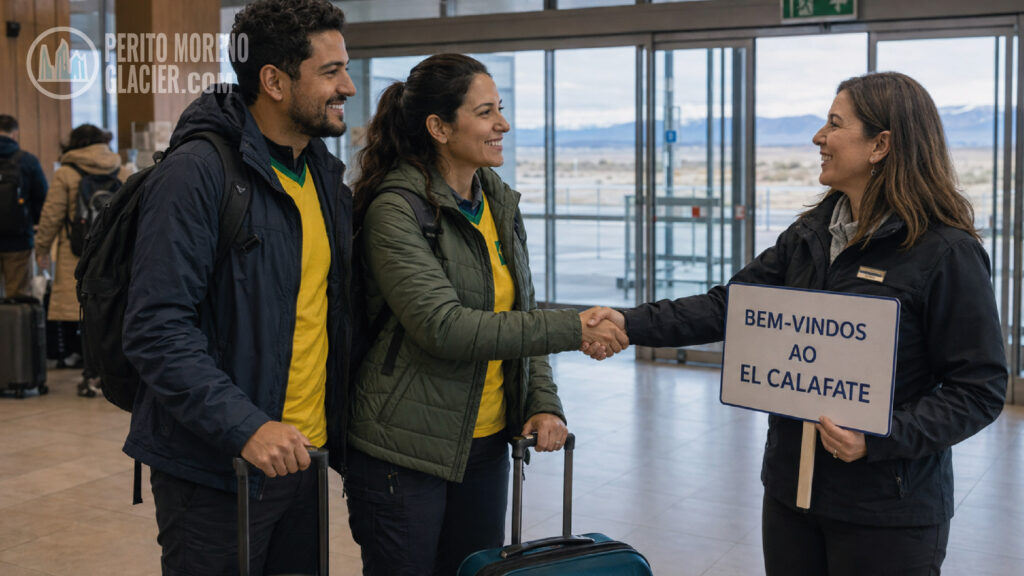
Arriving at El Calafate Airport
Comandante Armando Tola International Airport is approximately 23 kilometres from El Calafate’s town centre.
The journey usually takes 20–30 minutes, depending on weather, traffic and hotel location.
Transportation options include:
- Shared airport shuttle
- Private transfer
- Taxi or remis
- Rental car
Private Airport Transfers
A prearranged transfer is the easiest option for first-time visitors, particularly after an international journey.
The driver or guide normally waits in the arrivals area with a sign displaying the passenger’s name.
A useful phrase is:
Onde encontro o meu motorista?
Where do I meet my driver?
Provide the travel company with:
- Passenger names
- Flight number
- Arrival time
- Hotel
- WhatsApp contact
- Details of any flight change

Calafate Balcony Tour in a 4×4 Vehicle
Enjoy the amazing views of El Calafate and Lake Argentino in the Calafate Balcony.
Should You Rent a Car at the Airport?
A rental car may be useful when you plan to explore independently, but it is not essential.
Most major excursions offer transportation from El Calafate hotels. If your itinerary includes organized activities every day, the car may remain parked for most of the trip.
Renting a car makes more sense when you want to visit:
- Perito Moreno Glacier independently
- Lago Roca
- El Chaltén
- Rural accommodations
- Estancias outside standard transfer routes
What Is the Best Time for Brazilians to Visit El Calafate?
October and November
Spring offers increasing daylight, relatively quiet trails and attractive landscapes.
Possible advantages include:
- Fewer visitors than peak summer
- Long daylight hours
- Good excursion availability
- Snow remaining on the mountains
- Comfortable conditions for photography
The weather remains cold and windy.
December to February
Summer is the most popular season.
Visitors can expect:
- The longest days
- The widest selection of excursions
- Better access to outdoor areas
- Peak hotel demand
- More visitors at the glacier
- Strong Patagonian wind
- Rapidly changing temperatures
Summer in Patagonia does not mean Brazilian-style heat. A sunny afternoon may feel pleasant, but cold wind can reduce the perceived temperature considerably.
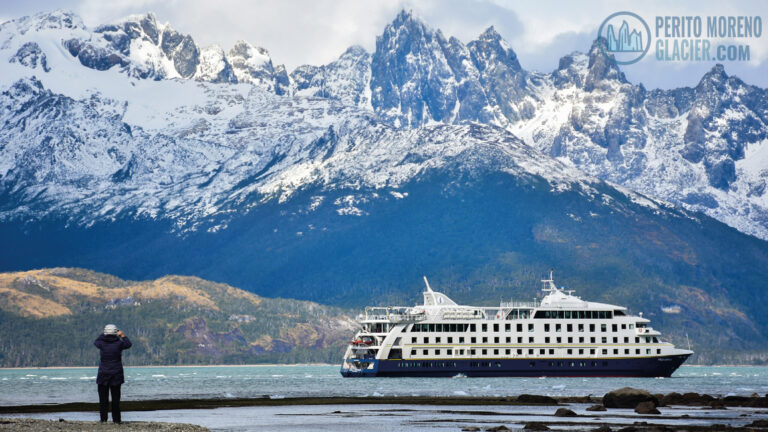
Australis Expedition Cruise from Ushuaia to Punta Arenas – 1 Night Free
Embark on a 4-Night Cruise to Discover the Unique Landscapes of Remote Patagonia - Plus, Enjoy a Free Night's Stay!
March and April
Early autumn offers beautiful colours and fewer visitors.
March is often an excellent compromise between good excursion availability and lower demand. By April, daylight becomes shorter and some seasonal services may reduce frequency.
May to September
Winter provides a quieter and colder experience.
Possible conditions include:
- Snow
- Ice
- Short daylight hours
- Reduced excursion schedules
- Temporary road restrictions
- Temperatures below freezing
- Fewer navigation options
El Calafate town is not guaranteed to remain covered in snow throughout winter. Travellers seeking a permanently snowy city may be disappointed, although snow and ice are common in the region.
Understanding the Weather
El Calafate has a cold, dry and windy Patagonian climate.
Unlike many regions of Brazil, humidity is generally low. Rainfall is limited, but the weather can change quickly.
Visitors may experience sunshine, clouds, wind, light rain and cold temperatures during the same day.
Summer Temperatures
Summer afternoons may feel mild, especially in sheltered areas. However, early mornings, evenings and exposed lake areas can be cold.
Do not pack according to the season alone. Prepare for wind and sudden temperature changes.
Winter Temperatures
Winter mornings and nights can fall below freezing. Ice may affect roads and walking surfaces.
Tours may still operate, but schedules depend on daylight, weather and road conditions.
The Patagonian Wind
Wind is one of the defining characteristics of El Calafate. It is especially noticeable:
- Beside Lake Argentino
- On open steppe roads
- At panoramic viewpoints
- Near ports
- Around the glacier
- In El Chaltén
A windproof jacket is more useful than a heavy coat without wind protection.
In Portuguese:
O vento muda completamente a sensação térmica.
What Should Brazilian Travellers Pack?
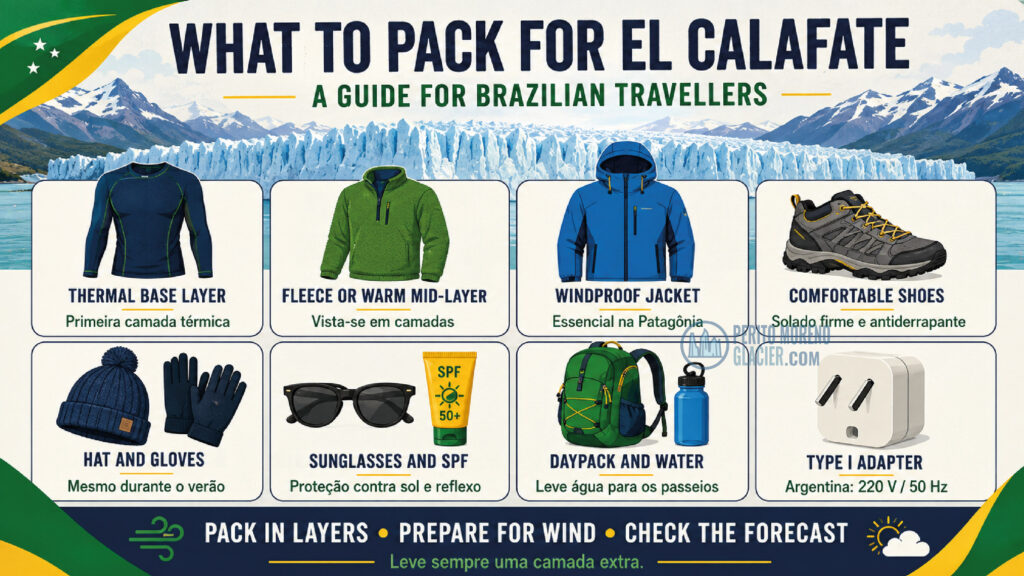
The best strategy is to dress in layers—vestir-se em camadas.
Essential Clothing
Bring:
- Thermal or moisture-wicking base layer
- Fleece or warm mid-layer
- Waterproof and windproof outer jacket
- Comfortable walking trousers
- Waterproof or resistant footwear
- Warm socks
- Gloves
- Hat or beanie
- Sunglasses
- Sun protection
Should You Wear a Heavy Winter Coat?
A heavy coat can be useful in winter, but a flexible layering system is generally better.
Indoor spaces are heated, and conditions can vary considerably throughout the day. Layers allow you to adjust without carrying an unnecessarily heavy jacket.
Can You Wear a Brazilian Football Jersey?
Of course. A Brazilian football jersey is a fun way to represent your country and frequently creates friendly conversations.
However, wear it over a thermal base layer and keep a windproof jacket nearby. A football shirt alone is not suitable for the glacier, even during summer.
Footwear
You do not need technical mountaineering boots for the Perito Moreno walkways.
Comfortable shoes with:
- Good grip
- Stable soles
- Water resistance
- Enough room for warm socks
are normally sufficient.
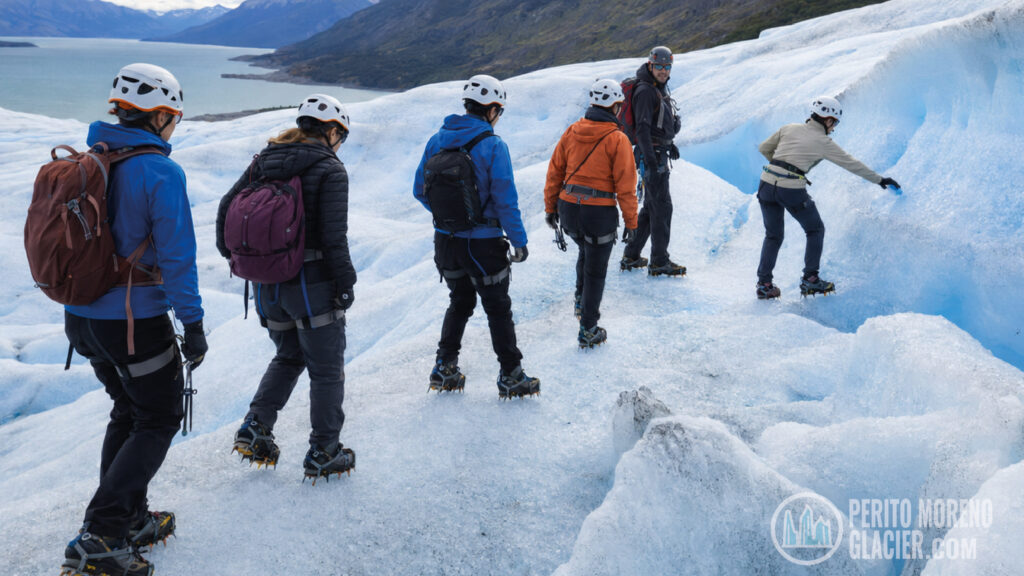
Specialized ice-trekking operators provide the technical equipment required for their activity.
The Essential Experience: Perito Moreno Glacier
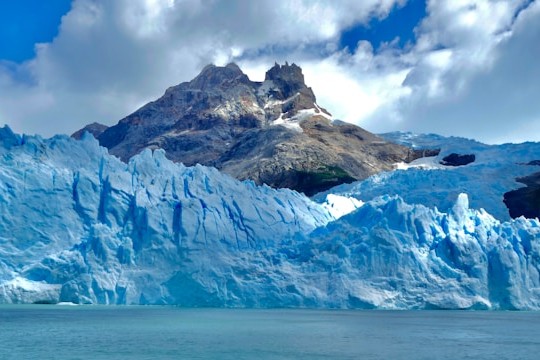
Perito Moreno Glacier is approximately 80 kilometres from El Calafate.
The standard visit includes the scenic drive through Los Glaciares National Park and several hours exploring the panoramic walkway system.
The Glacier Walkways
The walkways provide different views of the glacier’s front, lateral areas and surrounding forest.
Visitors can select shorter or longer routes according to:
- Available time
- Fitness
- Mobility
- Weather
- Personal interest
There are steps and changes in elevation, but accessible alternatives are available in part of the visitor area.
How Long Should You Spend at the Glacier?
Allow at least three hours around the walkways if you want to explore without rushing.
Photography enthusiasts may want longer, particularly because glacier calving cannot be scheduled. Sometimes nothing happens for a considerable period; then a large section of ice suddenly falls into the lake.
Can You Hear the Glacier?
Yes. Perito Moreno Glacier produces cracks, deep rumbles and sudden explosive sounds as the ice moves.
In Portuguese:
Fique em silêncio por alguns minutos e escute o glaciar.
Can You Visit Independently?
Yes. The main road is paved, and parking is available near the visitor area.
However, a guided tour provides explanations about:
- Glacier formation
- Climate
- Geology
- Local forests
- Wildlife
- Conservation
- Regional history
First-time visitors often benefit from a guide.
Boat Trips Near Perito Moreno Glacier
Short navigations allow visitors to observe one side of the glacier from the water.
Depending on the selected service, boats may approach:
- The southern face
- The northern face
- Other authorized viewing areas
The boat maintains a safe distance because ice can fall without warning and generate waves.
A short navigation works well in combination with the walkways because the two experiences provide very different perspectives.
Bring your windproof jacket. The exterior deck can feel significantly colder than the port.
Ice Trekking on Perito Moreno Glacier
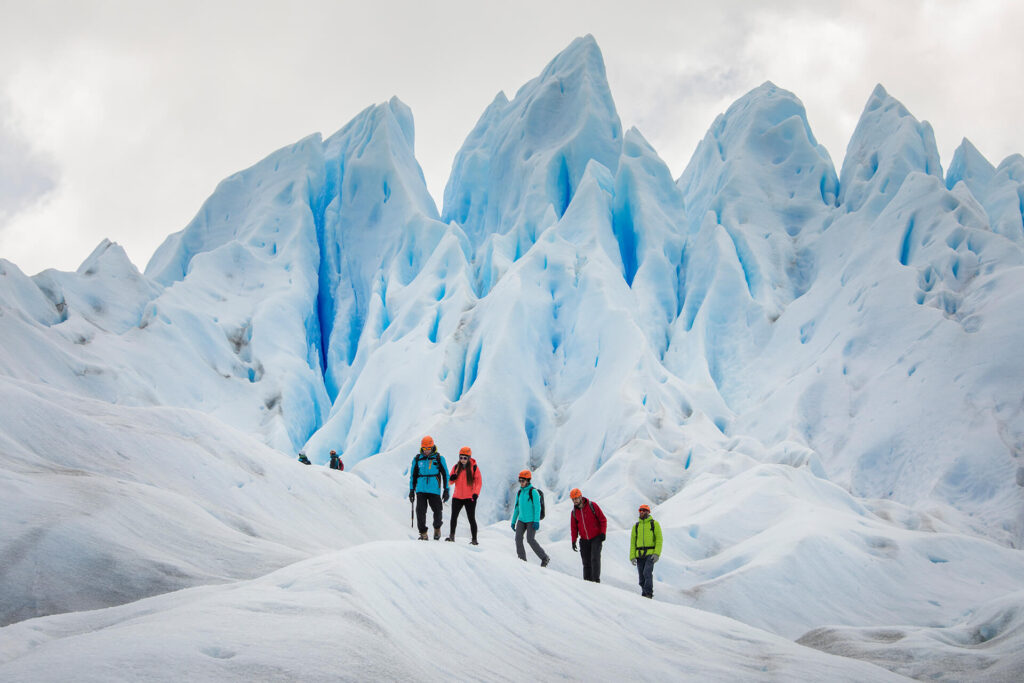
Walking on the glacier is one of El Calafate’s most memorable adventure experiences.
Ice trekking is available only through authorized operators. Visitors cannot independently enter the glacier.
Programs usually combine:
- Transportation
- Boat crossing
- Forest walk
- Safety briefing
- Crampons and technical equipment
- Guided time on the ice
- Glacier walkways, depending on the itinerary
Who Can Participate?
Age, health and fitness restrictions apply. These vary according to the selected program and may be strictly enforced.
Possible restrictions may involve:
- Minimum and maximum age
- Pregnancy
- Cardiovascular conditions
- Reduced mobility
- Recent surgery
- Physical fitness
- Maximum weight or other safety requirements
Read the conditions before purchasing. Do not assume that every traveller can participate simply because they can walk comfortably on the regular walkways.
Reserve Early
Availability is limited, particularly during summer. Reserve well in advance if ice trekking is a priority.
In Portuguese:
Reserve com antecedência—não deixe para comprar ao chegar.
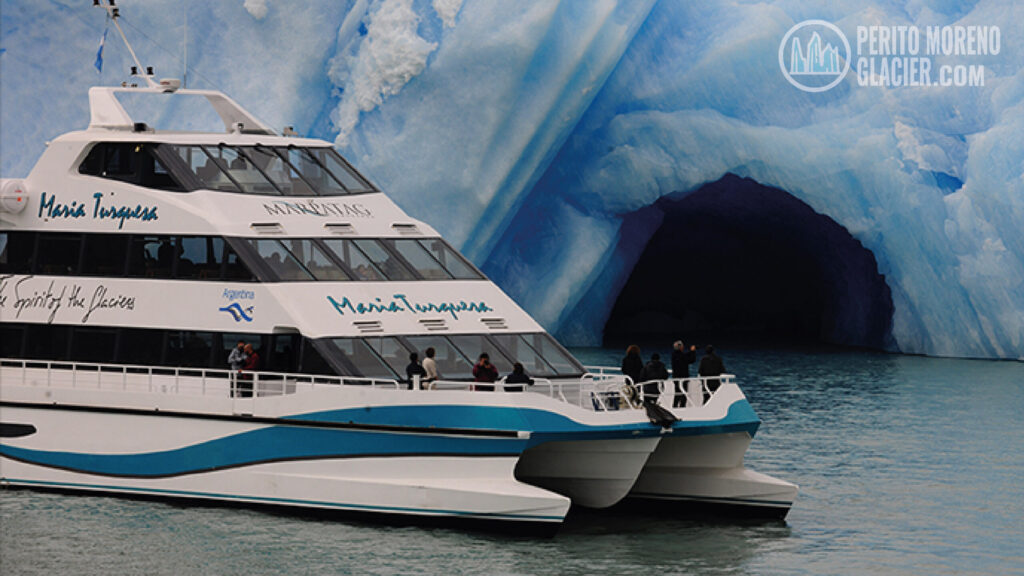
Glacier Navigations on Lake Argentino
Full-day navigations explore glacier areas that cannot be reached by road.
Possible highlights include:
- Icebergs
- Upsala Glacier area
- Spegazzini Glacier
- Patagonian forest
- Remote arms of Lake Argentino
- Mountain scenery
These excursions normally depart from Puerto Bandera, approximately 47 kilometres from El Calafate.
Hotel transfers may be included or offered separately. Confirm:
- Departure time
- Port transfer
- Meals
- Seating category
- Outdoor deck access
- National Park admission
- Cancellation conditions
The weather on the lake can be colder and windier than in town.

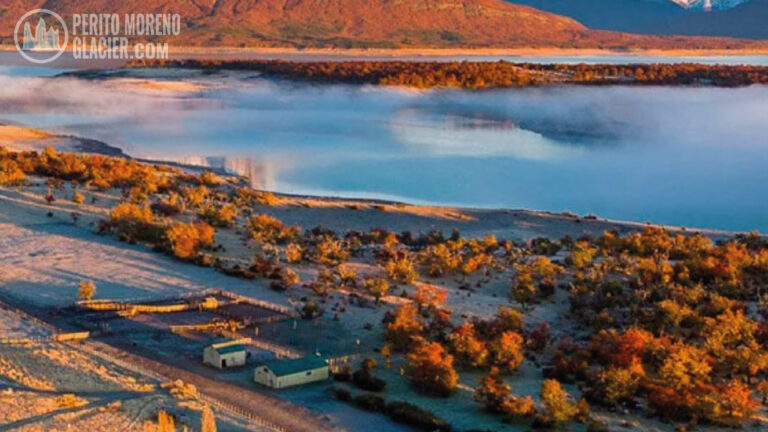
Patagonian Estancias
An estancia visit provides a cultural complement to the glaciers.
Programs may include:
- Rural landscapes
- Sheep-shearing demonstrations
- Horseback riding
- Short walks
- Historical interpretation
- Traditional lunch or dinner
- Patagonian lamb
Some estancias are located near El Calafate, while others require longer transfers or navigation.
Brazilian travellers often appreciate the combination of scenery, hospitality and regional food.
A useful expression:
Gostaríamos de conhecer uma estância patagônica tradicional.

Estancia Nibepo Aike Tour from El Calafate
Experience rural Patagonia through hands-on traditions and local cuisine.
Visiting El Chaltén
El Chaltén is approximately 220 kilometres from El Calafate and is Argentina’s best-known trekking destination.
The journey takes around three hours in normal conditions.
Is a Day Trip Worth It?
A day trip is possible, particularly for travellers who want scenic views and a short walk. However, six hours of round-trip driving leaves limited hiking time.
Stay at least two nights when possible.

Popular Activities
Options include:
- Laguna de los Tres
- Laguna Torre
- Chorrillo del Salto
- Mirador de los Cóndores
- Lago del Desierto
- Shorter trails around town
Many trails begin directly in El Chaltén, so a car is not always necessary once you arrive.
Weather in El Chaltén
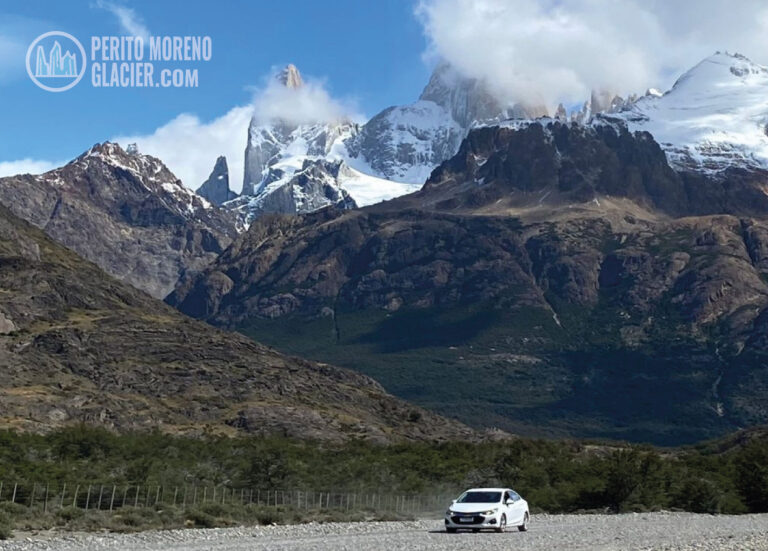
Mountain visibility changes quickly. Fitz Roy may be completely hidden even when El Calafate has clear skies.
Build flexibility into the itinerary and avoid judging the entire visit according to one weather forecast.
Can You Visit Torres del Paine?
Yes. Torres del Paine National Park in Chile can be visited from El Calafate.
A full-day excursion is long and includes:
- Early departure
- Argentine exit procedures
- Chilean immigration and customs
- Several hours of driving
- Scenic stops
- Return border procedures
Brazilian travellers must meet Chile’s entry requirements even if visiting only for the day.
Passport or Identity Card?
An accepted physical identity card may be sufficient for eligible Brazilian tourists, but carrying a valid passport simplifies documentation and is strongly advisable for multi-country Patagonia itineraries.
Chilean Food Restrictions
Chile maintains strict controls on agricultural and animal products.
Declare food when requested. Fresh fruit, meat, dairy products, plants, seeds and homemade items may be restricted.
Do not hide food in your luggage or daypack.
El Calafate, Perito Moreno & Estancia Nibepo Aike – 4 Nights
A wonderful 4-night program to visit Perito Moreno, navigate the Lake Argentino and staying in a typical Patagonian Ranch!
How Many Days Do You Need?
Three Nights
Suitable for:
- Arrival
- Perito Moreno Glacier
- One navigation or estancia
- Departure
This is the minimum comfortable stay.
Four Nights
Recommended for most first-time visitors:
- Perito Moreno Glacier
- Navigation or ice trekking
- Estancia or adventure activity
- Free time or weather contingency
Five or More Nights
Best for visitors adding:
- El Chaltén
- Torres del Paine
- Additional glacier experiences
- Photography
- Lago Roca
- Independent driving
Argentinian & Chilean Patagonia: Ushuaia, El Calafate, El Chalten and Puerto Natales
Enjoy visiting Ushuaia and the end of the world... El Calafate and Perito Moreno Glacier... El Chalten and the Fitz Roy Mount and Puerto Natales and Torres del Paine National Park!
Suggested Four-Day Itinerary
Day 1: Arrival in El Calafate
Meet your guide or driver at the airport and transfer to the hotel.
Depending on arrival time, explore Avenida del Libertador, visit local shops or walk near Laguna Nimez.
Day 2: Perito Moreno Glacier
Take a full-day guided excursion to Los Glaciares National Park.
Explore the walkways and add a short boat trip for views from the lake.
Day 3: Navigation or Ice Trekking
Choose a full-day glacier navigation or an authorized ice-trekking experience.
These activities should be reserved in advance.
Day 4: Patagonian Estancia
Visit a traditional estancia, enjoy the landscape and experience local food and rural culture.
Day 5: Departure
Transfer to the airport or continue toward El Chaltén, Ushuaia, Buenos Aires or Chile.
Spanish and Portuguese: Will Brazilians Be Understood?
Spanish is the official language. English is widely used in hotels and tourism services, and some guides speak Portuguese.
Portuguese and Spanish share many similarities, but speaking quickly in Portuguese may still create misunderstandings.
Practical Communication Tips
- Speak slowly
- Use short sentences
- Avoid Brazilian slang
- Confirm times and prices
- Write important information
- Keep reservations on your phone
- Learn basic Spanish phrases
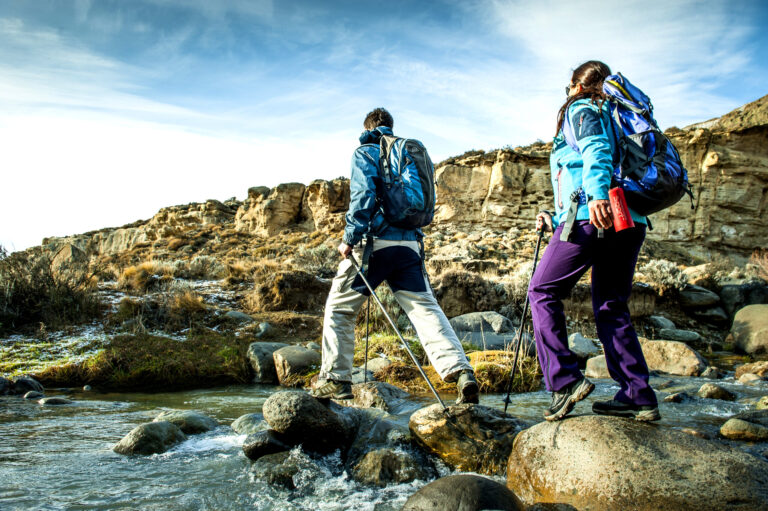
Cañadon Experience: Trekking & Stay
Discover Patagonia's hidden canyons on a 7 km trek with marine fossils, wildlife sightings, and a local meal at 800 meters.
Useful Portuguese and Spanish Expressions
Bom dia / Buenos días
Good morning.
Boa tarde / Buenas tardes
Good afternoon.
Obrigado / Gracias
Thank you.
Onde fica o hotel? / ¿Dónde está el hotel?
Where is the hotel?
Que horas começa o passeio? / ¿A qué hora comienza la excursión?
What time does the tour begin?
O traslado está incluído? / ¿Está incluido el traslado?
Is the transfer included?
A entrada do parque está incluída? / ¿Está incluida la entrada al parque?
Is National Park admission included?
Aceitam cartão? / ¿Aceptan tarjeta?
Do you accept cards?
Está muito frio hoje? / ¿Hace mucho frío hoy?
Is it very cold today?
Precisamos levar almoço? / ¿Tenemos que llevar almuerzo?
Do we need to bring lunch?
A friendly “Hola, somos brasileiros” usually starts the conversation well.
El Chaltén Tour Package: 1–3 Nights
Enjoy visiting El Chaltén, a place to discover the Fitz Roy Massif, and wonderful adventure activities
Currency and Payments
Argentina’s currency is the Argentine peso.
Exchange conditions can change quickly, so travellers should verify the current situation shortly before departure.
Are Credit Cards Accepted?
Cards are widely accepted at:
- Hotels
- Restaurants
- Tour operators
- Supermarkets
- Established shops
- Rental companies
Carry at least one backup card because terminals or internet connections can occasionally fail.
Should You Carry Cash?
Yes, a modest amount of Argentine pesos is useful for:
- Small purchases
- Tips
- Taxis
- Snacks
- Places experiencing a card-system outage
Avoid carrying unnecessarily large amounts.
Can Brazilians Pay with Pix?
Some Argentine businesses accept Pix through payment intermediaries, particularly in destinations frequented by Brazilian visitors. However, it is not universal.
Do not rely on Pix as your only payment method. Ask:
Vocês aceitam Pix?
Before confirming, check:
- The exchange rate
- Additional fees
- The amount shown in reais
- The merchant’s identity
Brazilian Reais
Some businesses may accept reais, but the exchange rate may be unfavourable. Argentine pesos or cards are normally easier.

Big Ice Trekking on Perito Moreno Glacier From El Calafate
Join our Big Ice Trekking Tour on Perito Moreno Glacier. Explore ice formations & rugged beauty. Book now for an unforgettable experience.
Time Difference Between Brazil and El Calafate
Argentina uses UTC−3 throughout the year.
El Calafate is normally on the same time as Brasília, São Paulo, Rio de Janeiro and Porto Alegre because Brazil and Argentina currently do not apply seasonal daylight-saving changes.
Travellers from Brazilian regions using a different time zone should check before departure.
Electricity and Plugs
Argentina uses:
- 220 volts
- 50 hertz
- Type I plugs, with angled flat pins
- Type C plugs in some properties
Brazil commonly uses type N plugs and can have either 127 or 220 volts depending on the location.
Brazilian travellers should bring a universal adapter.
Most modern telephone, camera and laptop chargers accept 100–240 volts, but check the label before connecting.
Hairdryers, styling tools and other high-power devices may not be dual voltage.
In Portuguese:
Confira a voltagem antes de ligar o aparelho.
Internet, SIM Cards and Roaming
Wi-Fi is widely available in hotels, restaurants and cafés in El Calafate.
Mobile coverage is less reliable:
- Along remote roads
- Near Lago Roca
- Between El Calafate and El Chaltén
- Inside parts of Los Glaciares National Park
- Near the Chilean border
Brazilian travellers can use:
- International roaming
- An Argentine SIM card
- A regional eSIM
- Hotel and restaurant Wi-Fi
Download before departure:
- Offline maps
- Tour vouchers
- Flight information
- Hotel address
- Emergency contacts
- Spanish translation tools
WhatsApp is widely used by hotels, drivers and tour operators.
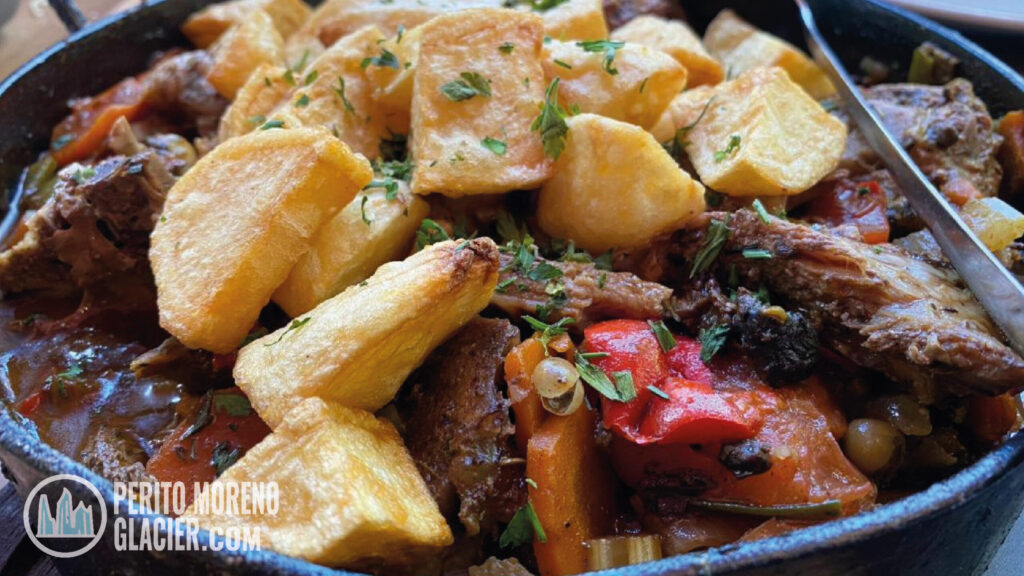
Food and Dining
El Calafate offers Argentine and Patagonian cuisine along with international options.
Foods to Try
Brazilian travellers may enjoy:
- Patagonian lamb
- Argentine beef
- Empanadas
- Locro
- Trout
- Provoleta
- Calafate-berry desserts
- Dulce de leche
- Argentine wine
- Craft beer
Meal Times
Dinner in Argentina often begins later than in many parts of Brazil. Restaurants may become busier after 8:30 or 9:00 p.m.
Lunch is commonly served from approximately noon onward, but excursion schedules may require a packed meal.
Vegetarian and Vegan Food
Vegetarian food is increasingly available, but options may be limited during remote excursions.
Inform the operator in advance:
Sou vegetariano/a. Há uma opção sem carne?
For allergies or strict dietary requirements, provide written information in Spanish.
Brazilian Coffee Expectations
Brazilian travellers accustomed to a small cafezinho should note that coffee styles and strength vary.
Useful options include:
- Café solo: espresso
- Cortado: espresso with a small amount of milk
- Café con leche: coffee with milk
- Americano: longer black coffee
Argentinian & Chilean Patagonia II: Ushuaia, El Calafate, El Chalten and Torres del Paine
Enjoy visiting Ushuaia and the end of the world... El Calafate and Perito Moreno Glacier... El Chalten and the Fitz Roy Mount and Torres del Paine National Park!
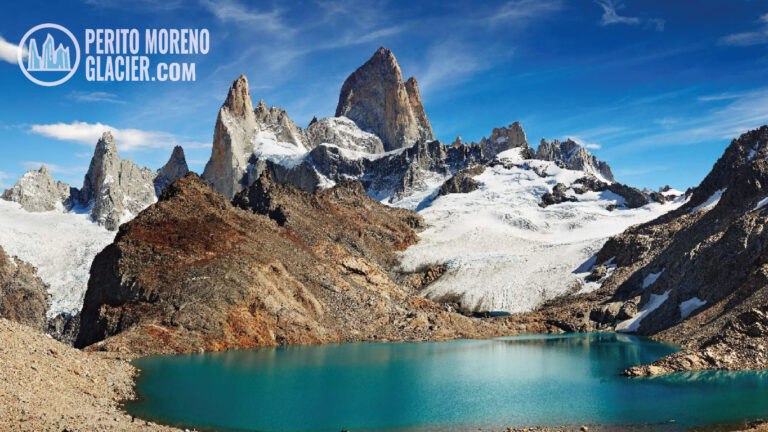
Travel Insurance
Travel insurance is strongly recommended, even for visitors making a short trip from Brazil.
Coverage should ideally include:
- Medical treatment
- Emergency evacuation
- Flight disruption
- Baggage delay
- Activity cancellation
- Outdoor activities
- Repatriation
- Pre-existing conditions, when applicable
If you plan ice trekking, kayaking, horseback riding or extended hiking, verify that the activity is covered.
A standard policy may exclude certain adventure activities.
Health and Altitude
El Calafate is not a high-altitude destination. Most visitors do not experience altitude sickness.
The principal health considerations are:
- Cold
- Wind
- Dehydration
- Sun exposure
- Physical activity
- Dry air
Drink water regularly even if you do not feel hot. Wind and low humidity can cause dehydration without obvious sweating.
Use sunscreen because ultraviolet exposure can remain strong in cool weather and may be reflected by snow and ice.
Calafate Balcony Tour in a 4×4 Vehicle
Enjoy the amazing views of El Calafate and Lake Argentino in the Calafate Balcony.
Safety in El Calafate
El Calafate is generally a relaxed tourism destination, but ordinary precautions remain appropriate.
- Keep passports secure
- Do not leave valuables visible in a car
- Use established transfer providers
- Confirm excursion pickup details
- Carry warm clothing
- Stay behind park railings
- Do not approach wildlife
- Avoid remote walks without preparation
- Follow guides’ instructions
Weather and isolation often present greater risks than crime.
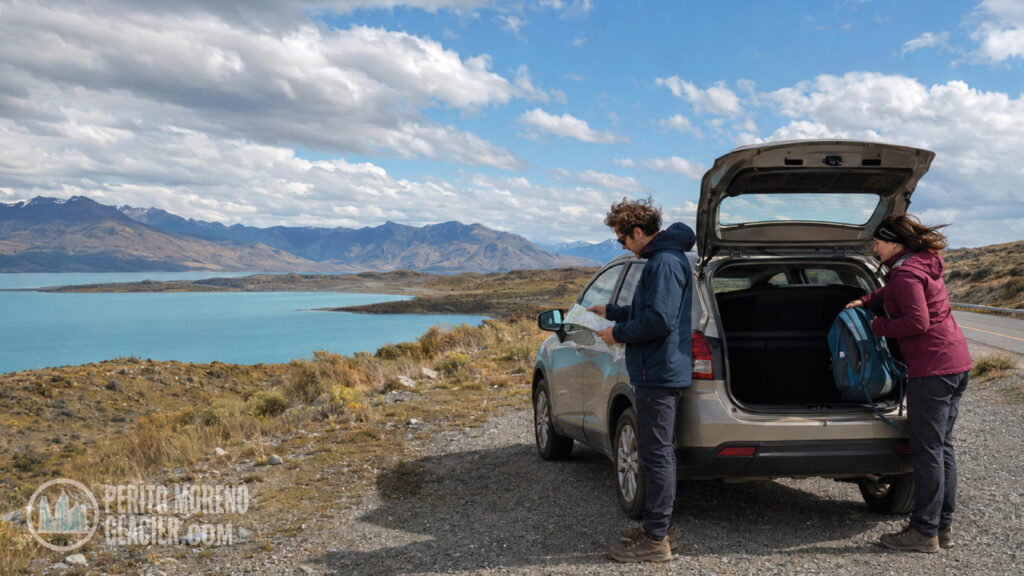
Driving Advice for Brazilian Visitors
Visitors accustomed to long Brazilian road trips should still take Patagonian conditions seriously.
Main hazards include:
- Strong crosswinds
- Gravel roads
- Wildlife
- Long distances without fuel
- Limited mobile coverage
- Snow and ice
- Driving fatigue
Fill the tank before leaving El Calafate and download offline maps.
A regular car is normally sufficient for Perito Moreno Glacier and El Chaltén because the main routes are paved. Lago Roca and secondary areas can include gravel.
Driving into Chile
A rental car may only cross into Chile with advance authorization, international insurance and the necessary customs documents.
Never assume that every rental vehicle can cross the border.
Cultural Similarities and Differences
Brazilian and Argentine culture share warmth, sociability, football enthusiasm and a strong appreciation for food and family.
Some differences may be noticeable:
- Argentine dinner begins relatively late
- Service may feel less hurried
- Portuguese is not automatically understood
- Tips may not be included
- Football rivalry creates jokes but is usually friendly
- Personal space and greetings vary according to the context
A Brazil football shirt will probably attract comments. Enjoy the rivalidade saudável, but keep conversations respectful.
Tips and Gratuities
Tipping practices can change according to the service.
Visitors may leave a gratuity for:
- Restaurant staff
- Guides
- Drivers
- Hotel personnel
- Private excursion teams
Ask your travel organizer for current recommendations. When paying a restaurant bill by card, the tip may sometimes need to be left in cash.
Shopping and Souvenirs
Popular souvenirs include:
- Calafate-berry products
- Local chocolates
- Wool garments
- Regional crafts
- Patagonian wine
- Books and photography
- Glacier-themed gifts
Check Brazil’s customs and food-entry regulations before bringing homemade or agricultural products home.
Frequently Asked Questions
Do Brazilians Need a Visa for El Calafate?
Brazilian tourists do not normally require a visa for a standard visit to Argentina.
Can Brazilians Enter Argentina with an Identity Card?
Yes, with an accepted physical identity document in good condition. A passport is also accepted and may be more convenient.
Is the CNH Valid for Entering Argentina?
No. A Brazilian driver’s licence is not accepted as the sole immigration document.
Are There Direct Flights from Brazil?
A seasonal São Paulo–El Calafate operation is scheduled for selected dates during the 2026–2027 summer season. Outside seasonal operations, travellers normally connect through Buenos Aires.
Is Portuguese Spoken in El Calafate?
Some tourism professionals speak Portuguese, but it should not be assumed everywhere. Spanish and English are more consistently available.
Is El Calafate Expensive for Brazilians?
It can be relatively expensive due to its remote location and specialized excursions. Booking accommodation and priority tours in advance helps control the budget.
Can You Use Pix?
Some businesses may accept Pix, but it is not universal. Carry cards and some Argentine pesos.
Is El Calafate Very Cold in Summer?
It can feel cold because of the wind, particularly during mornings, evenings and lake excursions. Bring layered clothing and a windproof jacket.
Is Snow Guaranteed?
No. Snow is not guaranteed in town, even during winter. The glacier remains visible throughout the year, but town conditions vary.
How Many Nights Are Recommended?
Four nights provide a balanced first visit. Add more time for El Chaltén or Torres del Paine.
Is Perito Moreno Glacier Suitable for Senior Travellers?
Yes. Visitors can select different walkway circuits, and accessible areas are available. A guided tour with appropriate pacing is recommended.
Can Children Visit the Glacier?
Yes. The regular walkways are suitable for families, provided children remain supervised. Ice-trekking programs have separate age restrictions.
Final Recommendations for Brazilian Travellers
El Calafate is an excellent first introduction to Argentine Patagonia. It offers dramatic landscapes, good tourism infrastructure and several ways to experience glaciers without requiring technical trekking experience.
For a successful trip:
- Reserve flights and priority excursions early
- Carry an accepted physical identity document or passport
- Do not use a CNH as your immigration document
- Dress in layers
- Bring a windproof jacket
- Carry a universal electrical adapter
- Keep cards and some Argentine pesos
- Download offline information
- Leave flexibility for weather changes
- Spend at least three or four nights
Most importantly:
Não tenha pressa. A Patagônia é um destino para observar, respirar e aproveitar cada paisagem.
Argentinian & Chilean Patagonia: Ushuaia, El Calafate, El Chalten and Puerto Natales
Enjoy visiting Ushuaia and the end of the world... El Calafate and Perito Moreno Glacier... El Chalten and the Fitz Roy Mount and Puerto Natales and Torres del Paine National Park!
El Calafate, El Chalten & Puerto Natales – 7 Nights Tour Package
Discover the best of Patagonia with El Calafate and Perito Moreno Glacier; El Chalten and the Fitz Roy Mount and Puerto Natales and Torres del Paine National Park!